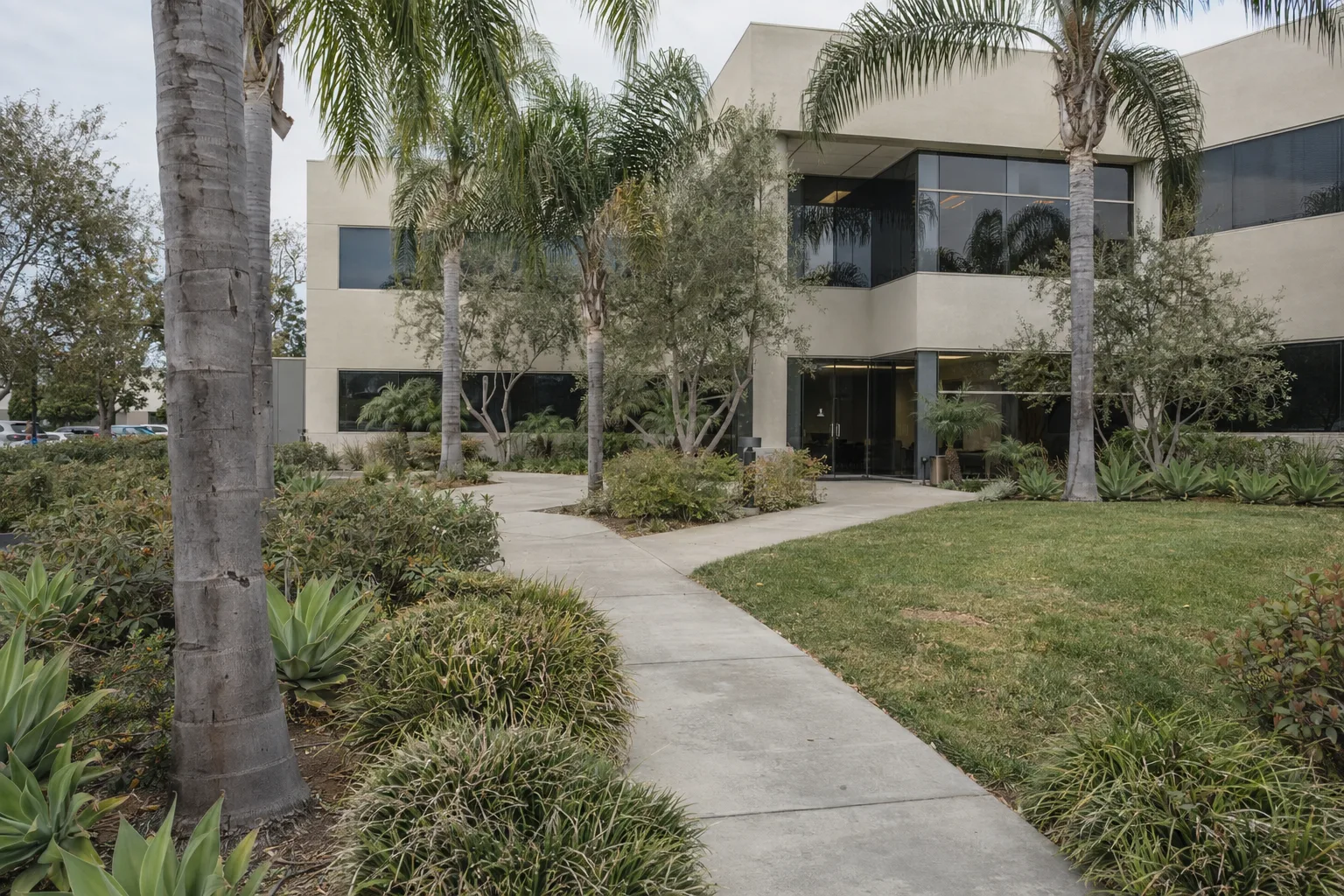
DIY vs Professional Commercial Landscape Maintenance in LA
Commercial landscape maintenance LA: the honest breakdown of what you can handle in-house, where DIY costs more than it saves, and when licensed crews are the only practical option for LA commercial properties.
- Real cost comparison for HOAs, office parks, and multi-family properties
- Where DIY creates liability exposure on commercial sites in LA County
- What professional crews do that untrained staff physically cannot replicate
Get a free quote
Tell us where the property is and we will walk it with you.
The Real Question Behind DIY vs Professional
Most property managers asking about DIY commercial landscape maintenance LA aren't trying to do the work themselves - they're trying to decide whether a staff member or a licensed crew makes more sense.
That's the honest version of the question. And it has a real answer, but it depends on your property type, square footage, irrigation complexity, and what your HOA governing documents or commercial lease actually require. A single-story office with a small entry planting and no turf has different options than a 200-unit condominium complex with common area turf, trees, poolscape plantings, and a multi-zone irrigation system. The Landscapers LA has maintained both kinds of properties across Greater LA since 2015, and the calculus is different in each case.
The short version: DIY commercial maintenance is viable in a narrow band of situations. Outside that band, it costs more than it saves.
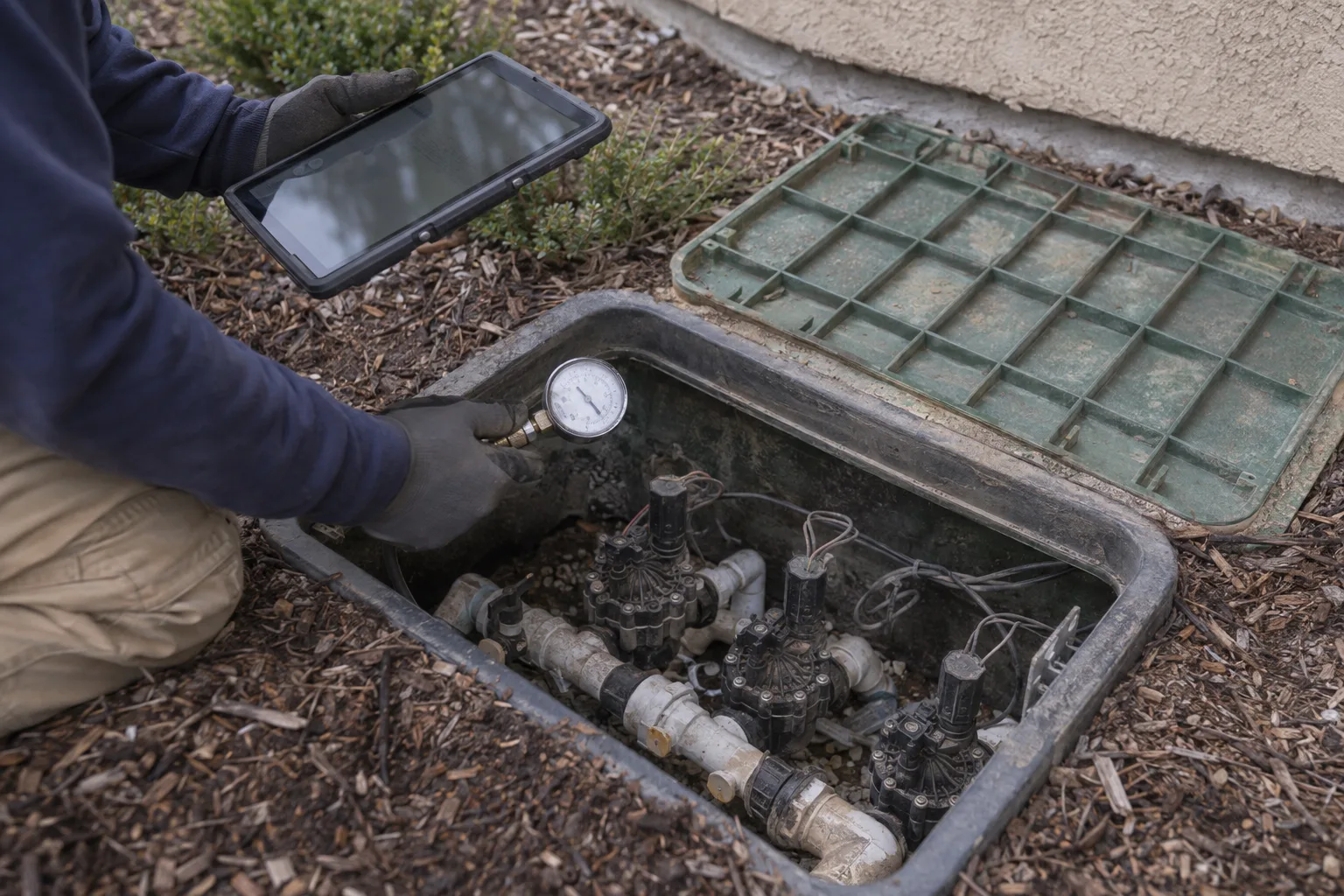
Crew Lead, The Landscapers LA
Why LA Commercial Properties Are a Different Category
Commercial landscape maintenance in LA isn't harder than elsewhere because the plants are different - it's harder because the regulatory environment, water rules, and liability exposure all compound.
LADWP Watering Rules
Odd/even schedules, time-of-day windows, and seasonal restrictions apply to commercial accounts and change without much notice. Violations generate fines, not warnings.
HOA Governing Documents
Most HOA CC&Rs specify minimum maintenance standards for common areas. Falling below those standards exposes the board - not the landscaper - to resident action.
Liability on Commercial Sites
A slip on a wet path, a tree limb that drops onto a car, an irrigation leak that damages a neighboring unit - these are liability events. An unlicensed or uninsured maintenance arrangement leaves the property owner exposed.
Commercial landscape maintenance LA is also physically more demanding than residential scale. A mid-size HOA common area might include 8,000 to 15,000 square feet of turf, dozens of planted beds, 40 or more trees, and a multi-zone drip and spray irrigation system. That's a full professional workday for a trained crew with commercial equipment, not a weekend task for a maintenance staff member with a push mower.
LA's climate adds another layer. The coastal zones around Santa Monica see marine layer humidity that encourages fungal issues in turf. The San Fernando Valley runs 110°F in summer, which stresses shallow-rooted plants and accelerates irrigation demands. Pasadena foothill properties deal with seasonal wind events that drop significant debris. Each zone requires adjusted maintenance timing and different plant health awareness - knowledge that takes years of on-the-ground LA experience to apply correctly. For properties weighing drought-tolerant planting strategies for LA properties, the right species selection also reduces ongoing maintenance demands significantly.
Where DIY Works and Where It Breaks Down
There are genuinely situations where some in-house landscape tasks make sense. Here's how to draw the line accurately.
DIY commercial maintenance is reasonable when:
- The property is a small commercial unit with a single planting bed under 200 square feet and no turf
- No irrigation system is present, or irrigation is a simple drip line a staff member has been trained to manage
- The property has no HOA or lease clause requiring licensed maintenance
- No trees over 15 feet are on the property (tree work at height requires trained personnel and specific equipment)
- The property generates no foot traffic risk from wet surfaces, uneven ground, or debris accumulation
DIY commercial maintenance breaks down when:
- Turf areas exceed a few hundred square feet - commercial edging, mowing, and blowing at scale requires commercial equipment and trained operators
- An irrigation system is present - programming errors, broken heads, and zone failures on a commercial system can waste thousands of gallons before anyone notices
- The property has trees - pruning cuts made at the wrong time or angle cause long-term structural damage; dead-wooding requires trained arborists for anything above ladder height
- The HOA or lease requires licensed and insured landscape contractors - this is a contractual requirement, not a suggestion
- The property is in a fire-prone area requiring defensible space compliance under LA County fire code
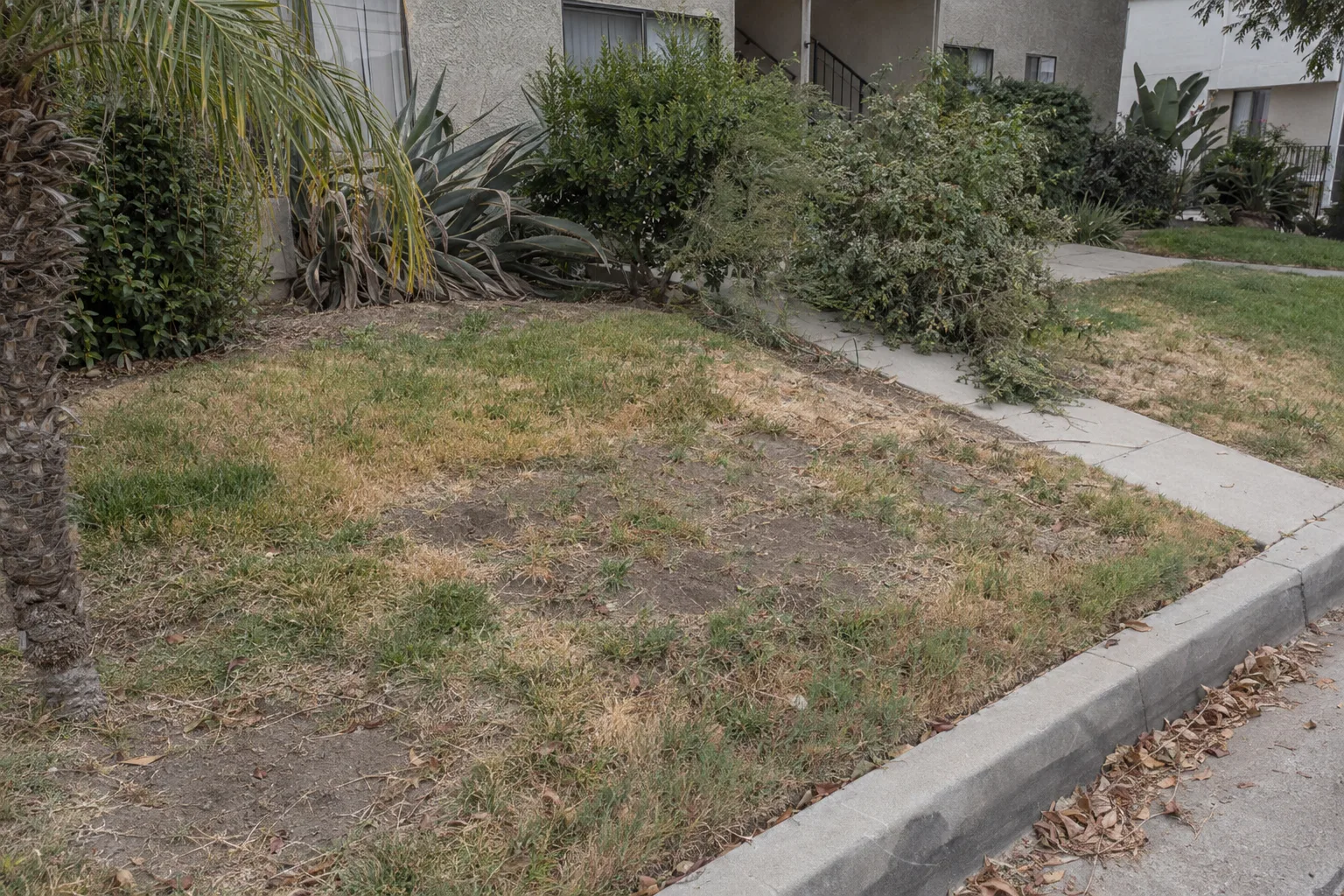
One pattern we see repeatedly: a property manager decides to cut costs by assigning landscape tasks to a maintenance staff member. Six months in, the turf is thin from incorrect mowing height, an irrigation head has been leaking undetected, and two shrubs are dead. Correcting that costs more than six months of professional service would have. The math doesn't work the way it looks on paper.
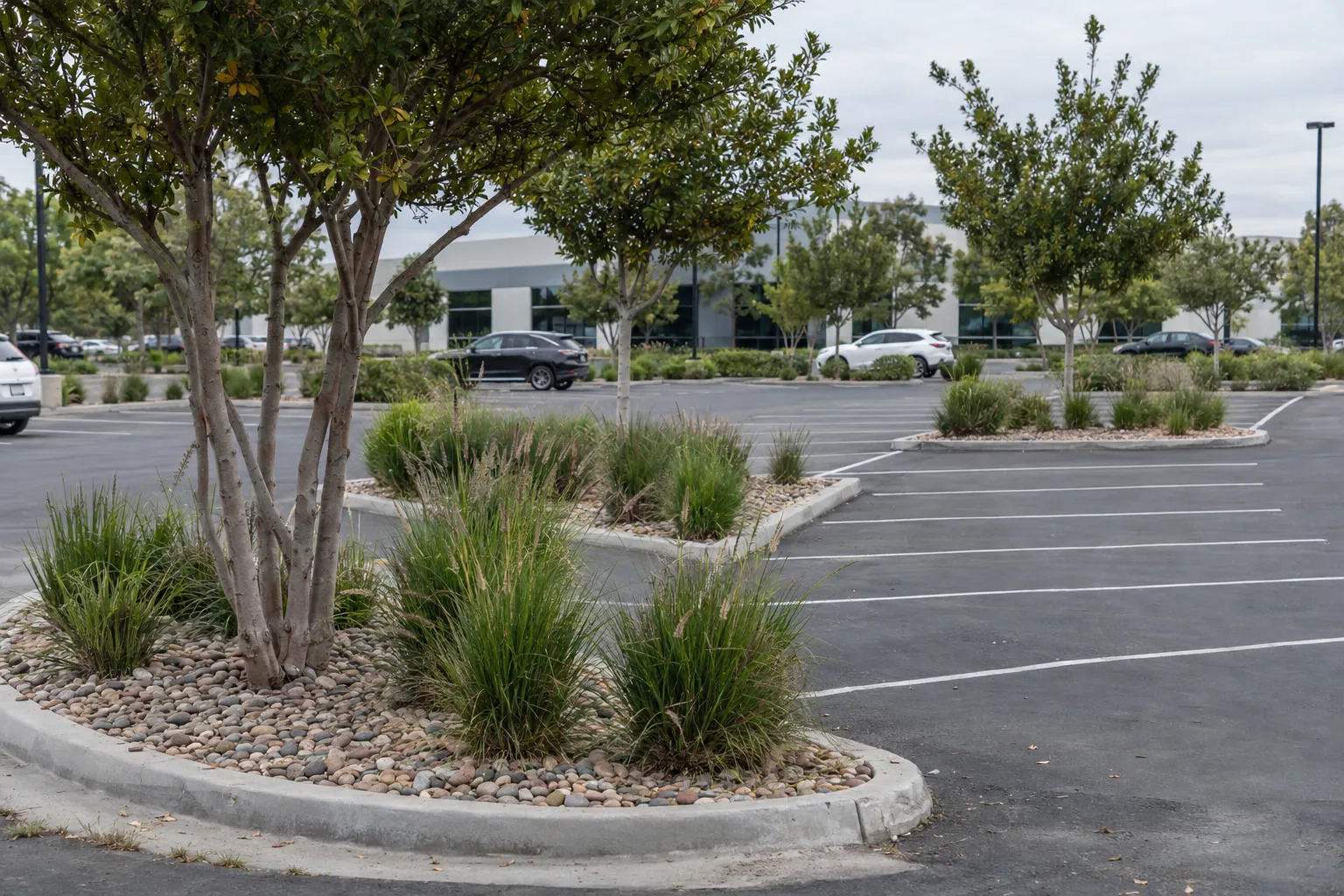
The Hidden Costs of In-House Maintenance
The real cost of DIY commercial landscape maintenance rarely shows up in the first month's budget comparison.
Equipment cost is the first surprise. A commercial zero-turn mower, edger, blower, hedge trimmer, and hand tools represent a capital investment of several thousand dollars before any labor cost. That equipment needs maintenance, storage, and eventual replacement. A licensed contractor amortizes that cost across dozens of accounts - you absorb it alone.
The second cost is LADWP compliance. Water agencies in Los Angeles levy fines for irrigation violations on commercial accounts. A staff member not trained in irrigation management may not recognize that a controller running on an outdated schedule is triggering watering during restricted hours. The Los Angeles Department of Water and Power updates commercial irrigation requirements periodically, and staying current takes active monitoring.
The third cost is liability. If an untrained staff member prunes a tree incorrectly and a limb drops on a tenant's vehicle, the property owner's general liability insurance may not cover the claim if the work was performed by a non-licensed individual. Verify your coverage terms before assigning tree work or any ground-level work near public walkways to staff. California's contractor licensing requirements for landscape work can be confirmed through the California Contractors State License Board.
The fourth cost is deferred plant health. A professional crew spots early signs of pest pressure, root rot, irrigation under-coverage, and turf disease during every visit. Staff without horticultural training don't know what they're not looking for. Problems that take two hours to correct when caught early become full replanting jobs when missed for a season.
HOA boards and property managers should also verify that any commercial landscape contractor they engage holds the proper credentials before signing a service agreement. Licensing status is publicly searchable through the CSLB database - always check before work begins. Learn more about why licensing matters for commercial landscape contracts before making a vendor decision.
What Professional Commercial Maintenance Actually Covers
Understanding what's included in a professional commercial landscape maintenance LA agreement helps clarify why the scope can't be replicated by untrained staff.
Professional commercial grounds maintenance, done properly and aligned with California Landscape Contractors Association standards, covers considerably more than mowing and blowing. Here's what a full-service commercial agreement should include:
Turf management
Mowing at species-appropriate height (Bermuda at 1-1.5 inches, fescue at 3-4 inches), edging all hardscape borders, blowing debris off walkways and parking areas. Frequency adjusts seasonally.
Irrigation monitoring
Every visit includes a visual check of visible heads and emitters. Controller programming is reviewed monthly and adjusted for LADWP seasonal restrictions. Broken heads are flagged in writing and repaired per scope.
Planted bed maintenance
Weeding, mulch refreshing, pruning to maintain clearance from walkways and structures, and seasonal color rotation in high-visibility areas.
Tree monitoring
Sucker removal, low-limb clearance for pedestrian access, and canopy health observation. Structural pruning and removal are separate scoped services.
Pest and plant health flagging
Crew leads document early signs of disease, pest pressure, and irrigation failure. Written reports go to the property manager, not verbal mentions that get forgotten.
Seasonal adjustment
LA's Mediterranean climate means winter rains bring weed pressure and fungal risk; summer heat requires increased irrigation cycles and heat-stressed plant monitoring. Our lawn care and maintenance services account for these seasonal shifts in every visit cycle.
How Professional Commercial Maintenance Gets Set Up
The setup process matters as much as the ongoing service - this is where scope drift is either prevented or guaranteed.
Step One: Property Walkthrough and Scope Documentation
Before any service agreement is signed, we walk the full property. Every maintained area is logged: turf square footage, planted bed dimensions, tree count and species, irrigation zone count and controller type, hardscape surface areas, and any existing problem areas. This takes between one and two hours on a mid-size commercial property. The result is a written scope of work both parties can reference.
This step is the single biggest difference between professional maintenance and DIY or informal arrangements. Without a documented scope, there's no standard to measure against. Scope drift - tasks quietly falling out of the routine - is inevitable without a written baseline.
Step Two: Service Agreement and Schedule
Once scope is confirmed, the Commercial Landscape Service Agreement specifies visit frequency, services included at each visit, documentation requirements, and the process for flagging and resolving issues outside normal scope. For most Greater LA commercial properties, weekly visits are standard during the growing season; bi-weekly may be appropriate in winter depending on turf type and irrigation activity.
Consistent crew assignment matters here. The same crew returns to your property every visit. They know the irrigation quirks, the plants that need extra attention, and the areas that accumulate debris after wind events. That continuity is something rotating staff or on-call contractors can't replicate. For properties with significant tree canopy, professional tree trimming and removal is bundled into commercial maintenance agreements to keep canopy management on the same schedule as routine grounds care.
Step Three: Ongoing Documentation and Annual Review
After every visit, the crew lead submits a written service record confirming what was completed and flagging anything requiring follow-up. That documentation goes to the property manager on file. For HOA boards that need to report to residents, it's a factual record of what was done and when.
Annual scope reviews are built into every long-term agreement. Properties change: new plantings, irrigation upgrades, HOA-mandated design changes, LADWP rebate-driven turf removal. The scope document updates in writing when the property does. For properties managing irrigation system upgrades, that process integrates directly into the maintenance schedule without a separate contractor relationship.
Areas We Serve
The Landscapers LA provides commercial landscape maintenance throughout Greater Los Angeles.
We currently serve commercial accounts in Los Angeles, Beverly Hills, West Hollywood, Culver City, Santa Monica, Burbank, Glendale, Pasadena, Torrance, Long Beach, Carson, Inglewood, El Segundo, Redondo Beach, Hawthorne, Downey, Whittier, Van Nuys, Thousand Oaks, and throughout the Inland Empire including Riverside, Rancho Cucamonga, Ontario, and San Bernardino. Contact us to confirm coverage for your specific property location.
Frequently Asked Questions
Can a property manager legally assign landscape work to a maintenance staff member in California?
It depends on the work. In California, landscape maintenance tasks performed by an employee of the property owner generally don't require a contractor's license - but tree work at height, irrigation system repair, and any work over a certain dollar threshold can trigger CSLB licensing requirements. More importantly, your commercial lease or HOA governing documents may independently require a licensed and insured contractor. Check both before making that decision.
What does professional commercial landscape maintenance actually cost in Greater Los Angeles?
Costs vary significantly with property size, service frequency, and scope. A small commercial entry planting on a bi-weekly schedule is priced very differently from a full HOA common area on a weekly schedule with irrigation management included. We provide itemized quotes after a property walkthrough - that's the only way to give you a number that reflects what your site actually requires, not a per-acre estimate that ignores your irrigation complexity or plant inventory.
How do I know if my HOA or lease requires a licensed landscaper rather than staff?
Check the CC&Rs for HOA properties and the maintenance clauses in your commercial lease. Both typically specify whether common area or exterior maintenance must be performed by licensed and insured contractors. If the documents are unclear, your property attorney or HOA management company can clarify. The CSLB license lookup tool lets you verify any contractor's current license status before signing an agreement.
What's the biggest maintenance mistake commercial properties make with DIY arrangements?
Irrigation neglect. An untrained staff member mowing turf will notice if the grass looks bad, but won't diagnose that the problem is a broken drip emitter or a zone running at the wrong frequency. Commercial irrigation systems on LA properties are complex: multiple zones, mixed head types, smart controller programming, and LADWP schedule compliance. When irrigation management falls to someone without specific training, water waste and plant loss follow quietly over months before anyone identifies the source.
Do you serve my neighborhood, or is your coverage limited to Beverly Hills and nearby cities?
We serve 50+ communities across Greater Los Angeles, from Santa Monica and Long Beach to Riverside and Oxnard. Our three locations (Beverly Hills, Rolling Hills Estates, Tarzana) let us dispatch crews across coastal, valley, hillside, and inland zones. Contact us with your property address to confirm which crew covers your area and availability for your project.
Ready to Get Started?
Contact our team today for a free consultation. Property managers and HOA boards across Greater LA can reach The Landscapers LA at 323-792-0166 or in**@*************la.com.
Serving Greater LA commercial properties since 2015, we'll schedule a property walkthrough, document your full scope, and put a real service agreement on paper. No templated packages built around averages. No scope that drifts without a record. Just a documented, consistent maintenance program your board and residents can see working every week.
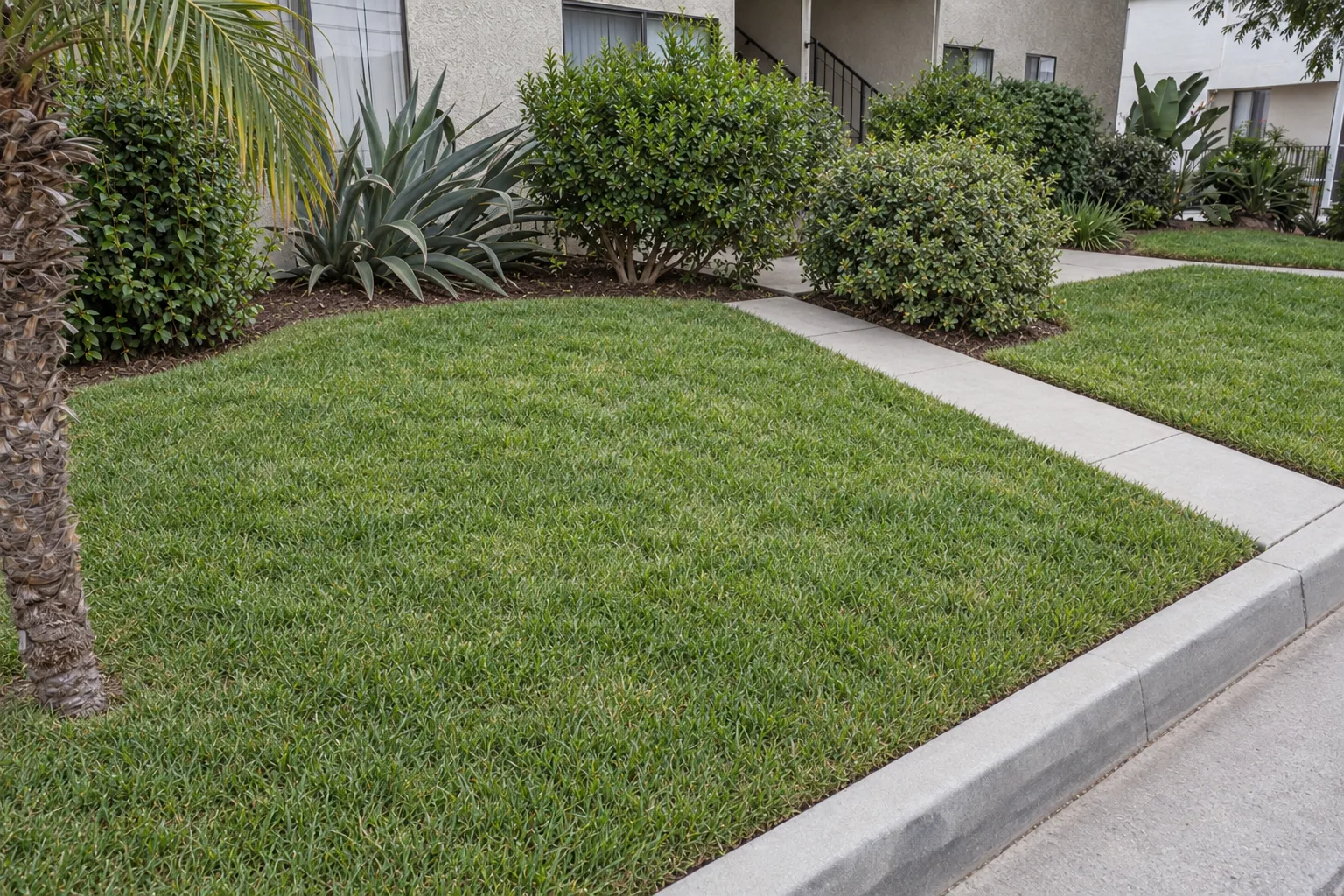
Before and after
Get a free, no-pressure quote
We walk the property, talk through options, and put a real number on paper.
From our blog
Straight answers on what things cost, which rebates you qualify for, and why your lawn is doing that.
What Does Landscaping Cost in Los Angeles?
Real price ranges for lawn care, design, hardscape, irrigation and turf removal in Los Angeles, plus what actually moves the number on a quote.
Read the guide
Licensed vs Unlicensed Landscapers
How to verify a CSLB licence, what insurance actually covers, and the questions to ask before you let anyone start work on your Los Angeles property.
Read the guide
LADWP Turf Removal Rebate: $3 per Sq Ft
How Los Angeles homeowners claim the LADWP turf replacement rebate: eligibility, the pre-inspection, plant coverage rules and the mistakes that void a claim.
Read the guide
Landscaping by LA Microclimate
Coastal, valley, hillside and Inland Empire properties need different plants, soil prep and irrigation. What changes across Greater LA, and why it matters.
Read the guide