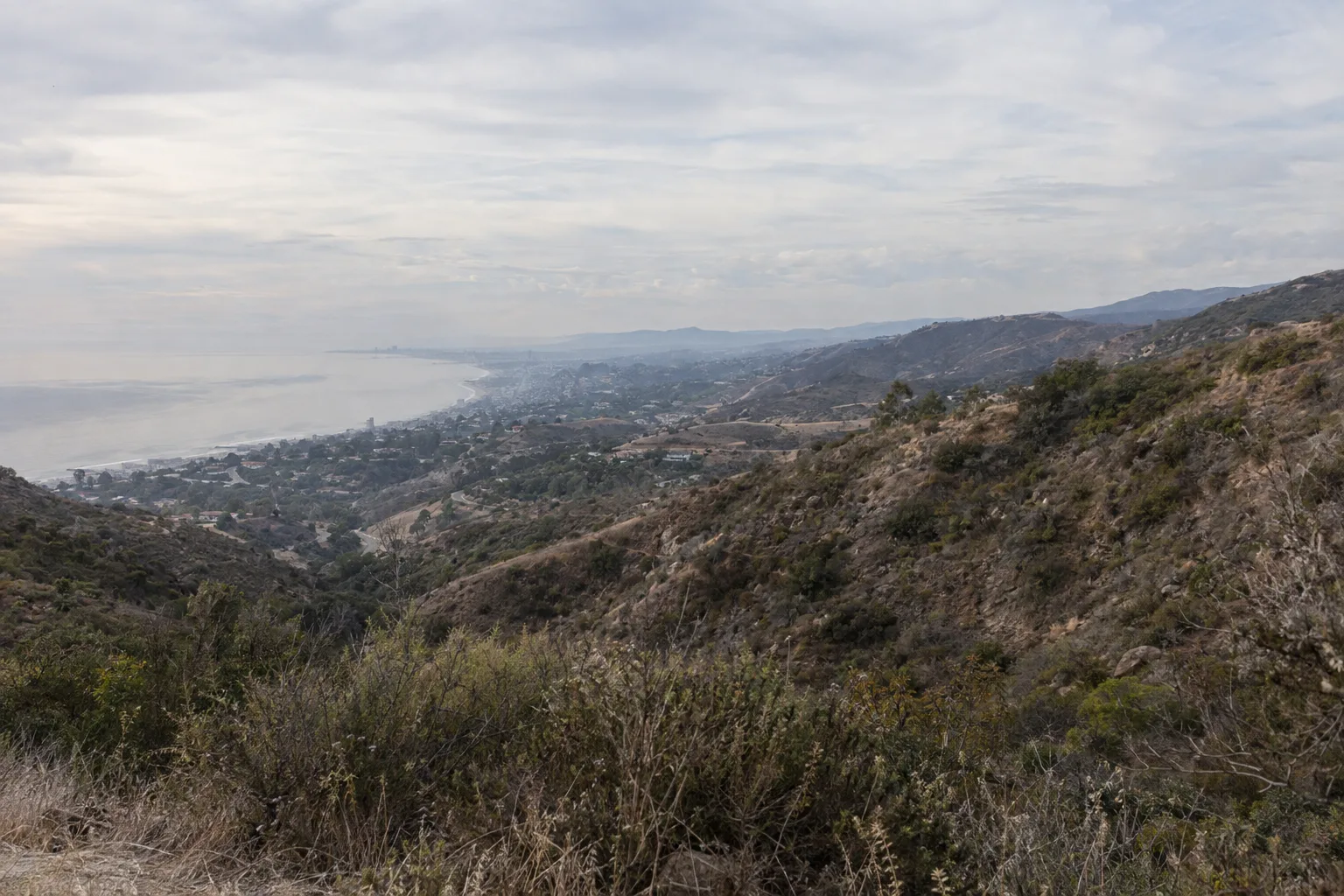
Landscaping in Los Angeles by Microclimate
Greater LA is four distinct growing environments packed into one metro area. A plant that thrives in Santa Monica will burn out in Chatsworth. We match every recommendation to the zone of your property, every time.
- Four growing zones inside one service area
- What changes between coast, valley, foothill and basin
- Which zone your address sits in, and what it means
Get a free quote
Tell us where the property is and we will walk it with you.
Los Angeles Has Four Growing Zones, Not One
A plant that thrives in Santa Monica will burn out in Chatsworth. A lawn that stays green in Redondo Beach will go dormant, or die, in Riverside. Los Angeles sits inside a Mediterranean climate, meaning wet winters and dry summers. But within that umbrella, microclimates vary dramatically by geography, elevation, proximity to the ocean, and soil composition. What works in your neighbor's yard may not work in yours, especially if they live twenty miles inland.
Why Microclimate Matters More Than General Plant Advice
Zone-matched landscaping is what separates a thriving yard from a costly restart.
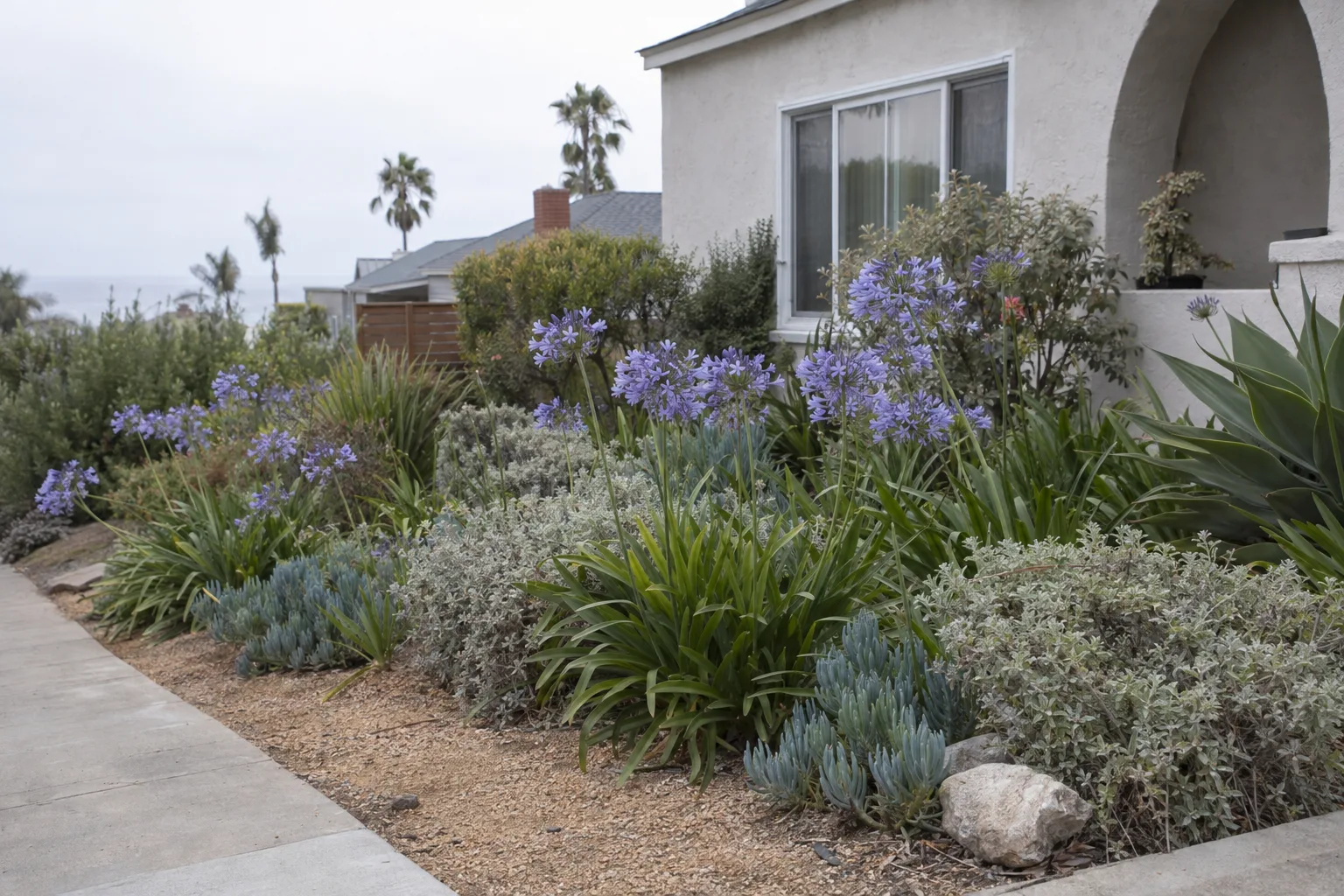
Here's what most homeowners don't realize about Greater LA: your USDA Plant Hardiness Zone Map, the standardized temperature classification system used to determine which plants survive winter lows, changes significantly across the region. Coastal neighborhoods like Santa Monica and El Segundo sit in Zone 10b-11. Inland valleys like Van Nuys and Burbank fall in Zone 9b-10a. Higher foothill elevations drop into Zone 9a, where frost is a real factor.
That range matters. Zone 10b can support tropical species that Zone 9a cannot. A plant tag that says "suitable for Southern California" could mean success or failure depending on whether you live six blocks from the ocean or thirty miles east.
LA County also imposes watering day restrictions through LADWP watering restrictions and rebate programs that change based on season and drought declaration status. Your irrigation schedule cannot simply follow what a national gardening app recommends, it needs to fit both your microclimate's moisture demand and the agency's current rules.
The Landscapers LA operates from Beverly Hills and runs crews across the full corridor, from the Pacific coast in Santa Monica through Riverside and Rancho Cucamonga in the Inland Empire. That span crosses every major climate zone in the Greater LA area. Recommendations are matched to the zone of the property, every time.
Zone-matched landscaping means fewer restarts, lower water bills, and plants that actually survive their location.
The Four Los Angeles Landscape Zones: A Field Guide
Each Los Angeles climate zone requires a different plant palette, irrigation approach, and soil strategy.
Coastal Zone
Sandy coastal soils drain fast. Too fast. Plants can dry out between irrigation cycles even when temperatures feel comfortable. Irrigation frequency matters more here than volume. Investing in proper irrigation system installation and repair calibrated to sandy coastal soils can prevent the chronic dry-out cycles that undermine even well-chosen plants. For homeowners navigating these conditions, exploring drought-tolerant landscaping options for your zone can significantly reduce water use without sacrificing curb appeal.
Best plant performers in the coastal zone:
- ✓ New Zealand flax (Phormium tenax), handles salt wind and looks striking year-round
- ✓ Matilija poppy, native, drought-adapted, thrives in coastal conditions
- ✓ Agapanthus, classic coastal performer, low maintenance, excellent as a border plant
- ✓ Buffalo grass, a warm-season turf alternative that uses roughly 50% less water than fescue
Lawn turf in this zone tends to do better than anywhere else in the service area. Cool summer temperatures mean less heat stress. That said, LADWP restrictions still apply, smart irrigation controllers with weather-response settings are the right setup here.
Salt air means metal irrigation components corrode faster. Stainless-steel or UV-stabilized plastic components last significantly longer in coastal installations. Specifying the right hardware at install time prevents premature failure.
San Fernando Valley Zone
The San Fernando Valley heat zone, a basin geography that traps heat during summer, produces conditions that are genuinely hostile to plants suited for moderate climates. Cool-season grasses like tall fescue will go dormant or die without aggressive irrigation. Warm-season alternatives like Bermuda grass or Zoysia handle the heat far better and use less water.
Clay soil compaction, the dense, slow-draining clay layer found throughout much of the Valley floor, is the number one installation obstacle here. Clay compacts under foot traffic and lawn mower passes. It holds water in the root zone long after rain, then dries into a concrete-like surface. Amending with organic compost before installation, and aerating established lawns at least once annually, is not optional in this zone. It's maintenance baseline.
Reliable performers for Valley properties:
- ✓ Agave, handles extreme heat and requires almost no supplemental water once established
- ✓ Desert willow (Chilopsis linearis), heat-tough, beautiful bloomer, native to the region
- ✓ Bermuda or Zoysia turf, far better heat and drought tolerance than fescue
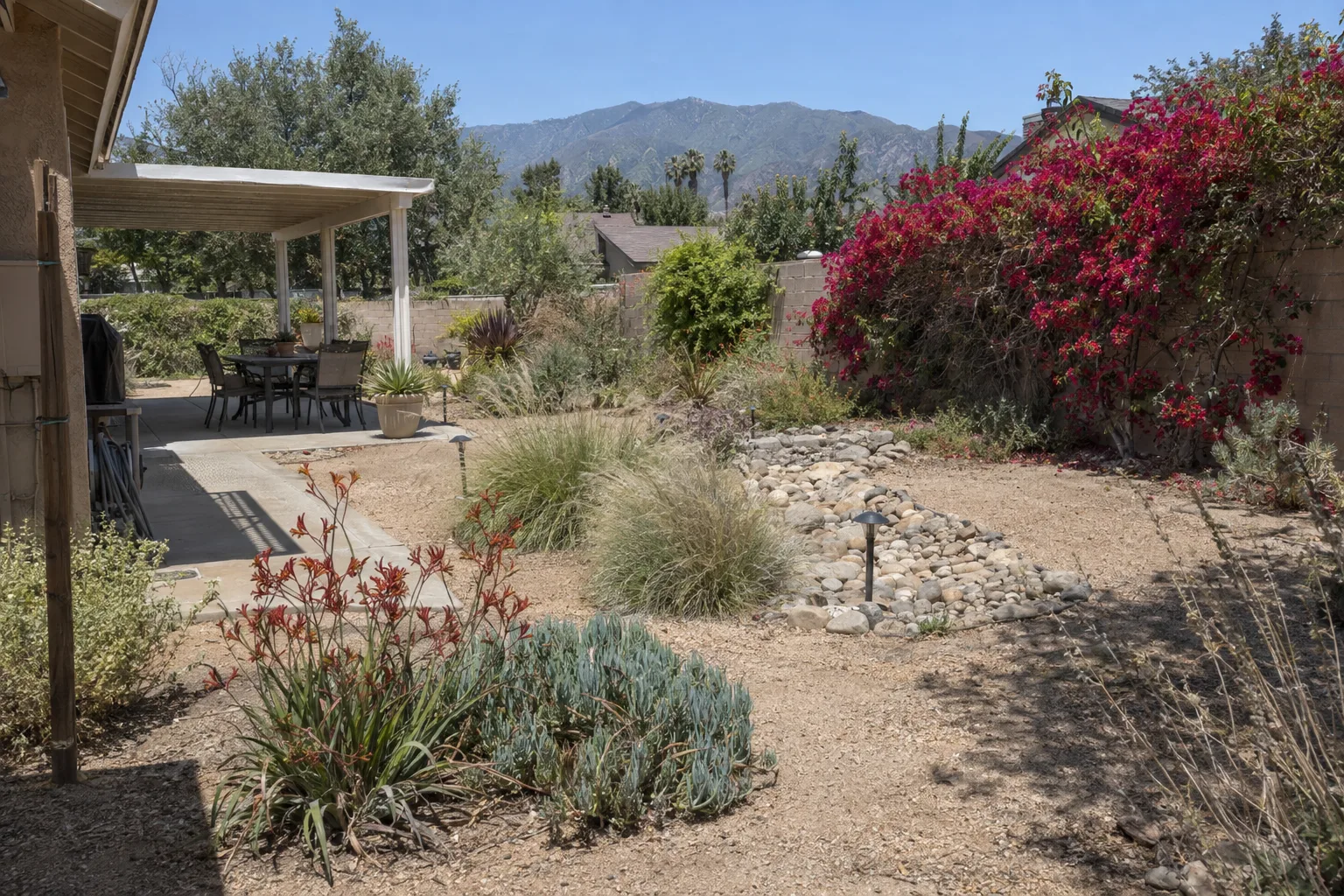
- ✓ Bougainvillea, thrives with Valley heat; blooms more intensely with moderate water stress
The Valley also falls within fire risk corridors, particularly in Chatsworth and the hillside edges. Fire-resistant plant buffers around structures are worth planning into any new installation in those areas. During peak summer heat events, which the National Weather Service Los Angeles forecast office tracks closely for the Valley basin, even well-established plantings can show rapid stress without a properly designed zone-matched irrigation system that keeps pace with extreme demand.
Hillside & Foothills Zone
Hillside landscaping in Los Angeles is a different discipline entirely. Slope drives everything, how water moves, where soil erodes, what plants can hold the grade, and how fire risk is managed.
The Wildland-Urban Interface, or WUI, the boundary zone where residential neighborhoods meet fire-prone wildland vegetation, runs through this zone. Altadena, Chatsworth's upper edges, Rancho Palos Verdes, and communities throughout the foothills carry mandatory brush clearance requirements and fire-resistant planting standards. Reviewing the CAL FIRE defensible space rules and plant requirements for hillside properties is an essential first step for any homeowner in this zone. Zone 0 (0-5 feet from the structure) must be essentially ember-resistant. Zone 1 (0-30 feet) must be lean, clean, and green, meaning well-irrigated, low-fuel plants with cleared dead material. Zone 2 (30-100 feet) requires reduced fuel load.
Soil and drainage challenges here are significant. Rainfall runs downhill fast. Clay soils, especially common in foothill areas, don't absorb water quickly enough to prevent runoff. Erosion control during and after installation is essential. Jute erosion netting, deep-rooted groundcovers, and carefully placed retaining wall solutions for sloped terrain protect both the landscape and the slope below.
Plants built for hillside performance:
- ✓ Ceanothus (California lilac), deep-rooted, fire-resistant, nitrogen-fixing, native
- ✓ Trailing rosemary, slope stabilizer, drought-tolerant, fire-resistant
- ✓ Deer grass (Muhlenbergia rigens), native ornamental grass, holds banks well
- ✓ Toyon (Heteromeles arbutifolia), the plant that gave Hollywood its name; fire-adapted, native, low maintenance
Planning fire-safe landscaping for hillside properties from the outset, rather than retrofitting after an inspection or a close call, is the approach that protects both the structure and the investment. Retaining walls over 4 feet in height require a building permit in most LA County jurisdictions. Engineering review may be required for taller walls or unstable slopes.
Inland Empire Zone
Caliche hardpan, a calcium carbonate layer cemented into the soil, is the defining soil challenge of the Inland Empire. It prevents roots from penetrating deeper, blocks drainage, and causes waterlogging directly above the layer. Planting into undisturbed caliche guarantees stunted growth and likely plant death. Breaking through it with a soil auger or pneumatic tool before installation is the step that unlocks long-term establishment.
Xeriscape, landscape design that uses zero or near-zero supplemental irrigation once plants establish, is the practical standard in this zone. Not because it's trendy, but because the soil, the heat, and the water cost make thirsty plants genuinely difficult to maintain.
Proven performers in the Inland Empire:
- ✓ Palo verde, desert native, thrives in caliche-heavy soil, dramatically beautiful in bloom
- ✓ Lantana, heat-loving, hummingbird-friendly, nearly indestructible once established
- ✓ Decomposed granite (DG) groundcover, permeable, water-smart, visually clean
- ✓ Bougainvillea, blooms harder under water stress; perfect for Inland Empire conditions
Three Real Scenarios Across the Zone Map
Microclimate mismatches cause most landscape failures, and they're completely preventable.
The Redondo Beach Lawn That Kept Thinning
A homeowner in Redondo Beach had been replacing sections of lawn for three years. The grass kept thinning along the west side of the yard. The issue wasn't watering or pests, it was salt air damage to irrigation emitters that had been slowly clogging, cutting water to that section. Switching to corrosion-resistant heads and adjusting the schedule to account for the sandy drainage solved it. The lawn has held since.
The Pasadena Slope That Eroded Every Winter
A hillside property in Pasadena lost four to six inches of topsoil every rainy season. The original landscaping used shallow-rooted annuals and decorative bark mulch, neither of which holds on a slope with LA's clay soil underneath. Replacing it with deep-rooted native groundcovers and a jute erosion mat allowed the soil to stabilize within one growing season. The slope stopped moving.
The Rancho Cucamonga Tree That Would Not Grow
A newly planted ornamental tree in Rancho Cucamonga showed no growth after eighteen months. Digging down eighteen inches revealed undisturbed caliche hardpan directly below the root ball. The roots had nowhere to go. Breaking through the layer and backfilling with amended soil allowed the tree to establish fully within one growing season after the correction.
What Ten Years Across These Zones Has Taught Us
From the team at The Landscapers LA
The zone work is what humbles you. I've watched the same plant species, installed by the same crew on the same day, thrive in Santa Monica and completely fail in Fontana. Same plant. Different zone. That result teaches you quickly that one recommendation cannot cover all of LA.
What we've learned across nearly ten years of working from the coast through the Inland Empire is this: the first question is always where the property sits, not what the customer wants to plant. Zone first. Design second.
In the Valley, we amend before we plant, always. In the Inland Empire, we break caliche before we set a single root ball. On hillsides, we plan for slope movement before we select a single species. On the coast, we spec irrigation hardware specifically for salt exposure.
Those aren't extras. They're the baseline for a landscape that actually lasts in Greater LA.
When a Zone Assessment Needs Professional Eyes
Some zone challenges are solvable with the right plant list, others need hands-on assessment.
If you're planning a new installation, a zone-informed plant list and irrigation schedule will take you far. Most straightforward residential planting projects fit that description.
Call a professional landscaper when:
- Your slope shows visible erosion or bare soil after rain
- Plants repeatedly fail in the same location despite correct watering
- Your property sits in a WUI zone and you're uncertain about defensible space compliance
- You're dealing with standing water, soggy soil, or drainage problems after irrigation or rain
- You suspect caliche hardpan, a tap or probe test that stops at 12-18 inches is a strong indicator
- You're designing a new landscape on a hillside property where retaining walls may be needed
Those situations involve soil conditions, slope engineering, or regulatory requirements that a site visit resolves far faster than guesswork.
Areas We Serve
The Landscapers LA serves properties across all four microclimate zones throughout Greater Los Angeles.
We work in Santa Monica, Redondo Beach, El Segundo, Van Nuys, Burbank, Chatsworth, Tarzana, Pasadena, Altadena, Rolling Hills Estates, Rancho Palos Verdes, Long Beach, Torrance, Riverside, Rancho Cucamonga, Fontana, San Bernardino, and dozens of communities in between. If your property is in Greater LA, we know your zone.
Use This Guide, Then Call If You Want Zone-Specific Eyes on Your Property
This guide gives you the framework. A site visit gives you the answer.
Use what's here to match your community to its zone, choose plants accordingly, and understand what your soil likely needs before you invest in installation. That knowledge saves real money.
When you're ready for professional landscape design matched to your zone, not just your zip code, reach out to The Landscapers LA. Call 323-792-0166, email in**@*************la.com, or find us at 465 N Rodeo Drive, Beverly Hills. We'll start with your zone and work from there.
Frequently Asked Questions
How do I know which microclimate zone my property is in?
Location is the biggest indicator. Coastal neighborhoods like Santa Monica and El Segundo sit in USDA Zone 10b-11, inland valleys like Van Nuys and Burbank fall in Zone 9b-10a, and higher foothill elevations drop into Zone 9a where frost is a real factor. The Landscapers LA matches recommendations to the zone of the property, every time, from the Pacific coast through the Inland Empire.
Why do my plants keep dying even though I water them correctly?
Repeated failures in the same location usually point to a microclimate or soil mismatch rather than a watering error. In coastal zones it can be salt air clogging emitters, in the Valley it's often clay soil compaction, and in the Inland Empire caliche hardpan blocks roots. If plants fail repeatedly despite correct watering, it's time for a professional site assessment.
What is caliche hardpan and how do I know if I have it?
Caliche hardpan is a calcium carbonate layer cemented into the soil, the defining soil challenge of the Inland Empire. It blocks root penetration and drainage, causing waterlogging and stunted growth. A tap or probe test that stops at 12-18 inches is a strong indicator. Breaking through it with a soil auger or pneumatic tool before installation unlocks long-term establishment.
Do I need a permit for a retaining wall on my hillside property?
Retaining walls over 4 feet in height require a building permit in most LA County jurisdictions, and engineering review may be required for taller walls or unstable slopes. On hillsides we plan for slope movement before selecting any species, and use erosion control and properly placed retaining walls to protect both the landscape and the slope below.
What areas do you serve?
Ready to Get Started?
Contact our team today for a free consultation. We'll start with your zone and work from there.
323-792-0166 • in**@*************la.com • 465 N Rodeo Drive, Beverly Hills
Get a free, no-pressure quote
We walk the property, talk through options, and put a real number on paper.
From our blog
Straight answers on what things cost, which rebates you qualify for, and why your lawn is doing that.
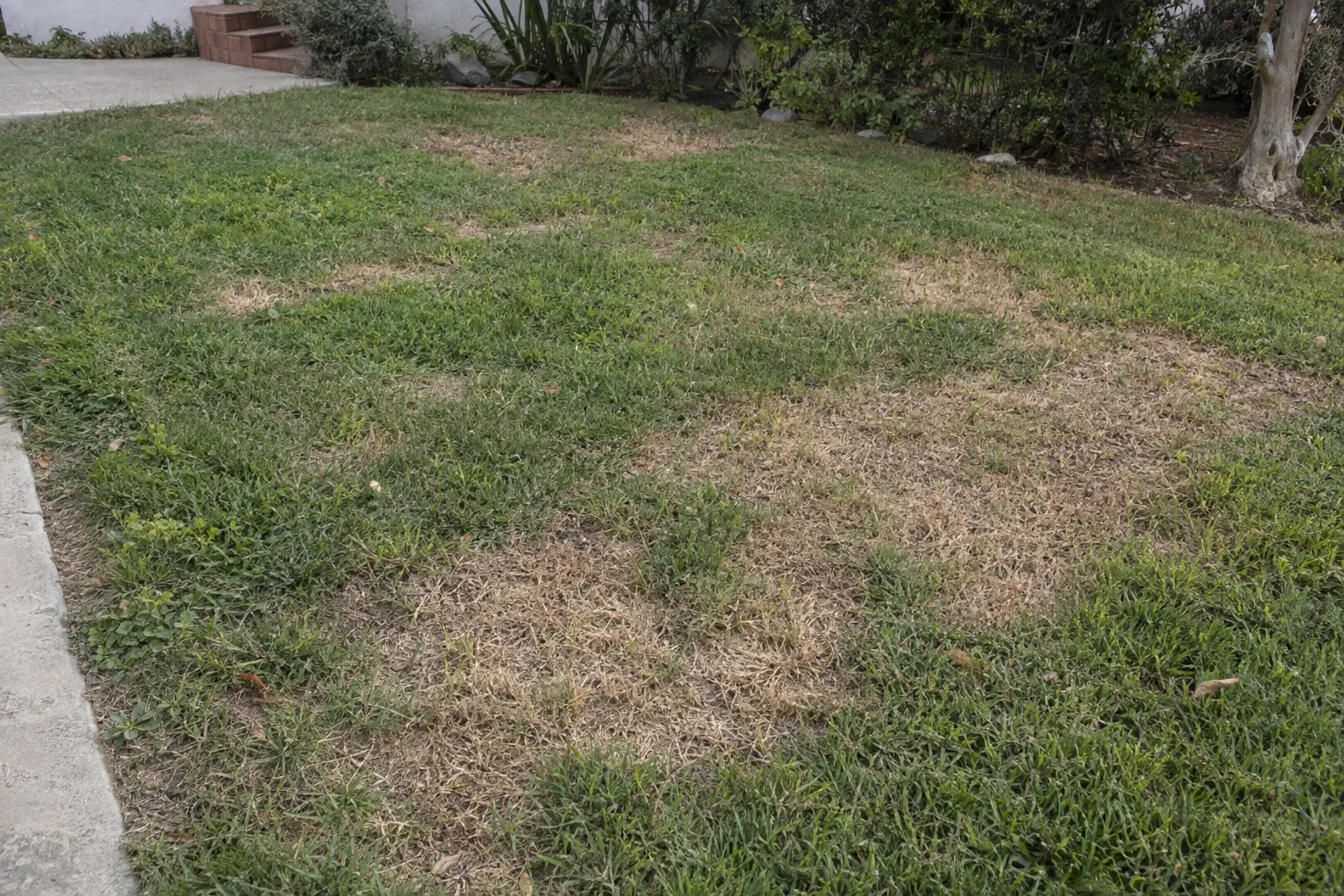
Why Is My Lawn Dying in Los Angeles?
Brown patches, thinning grass and bare spots in LA lawns: how to tell watering problems from grubs, fungus, compaction and dog urine, and what fixes each.
Read the guide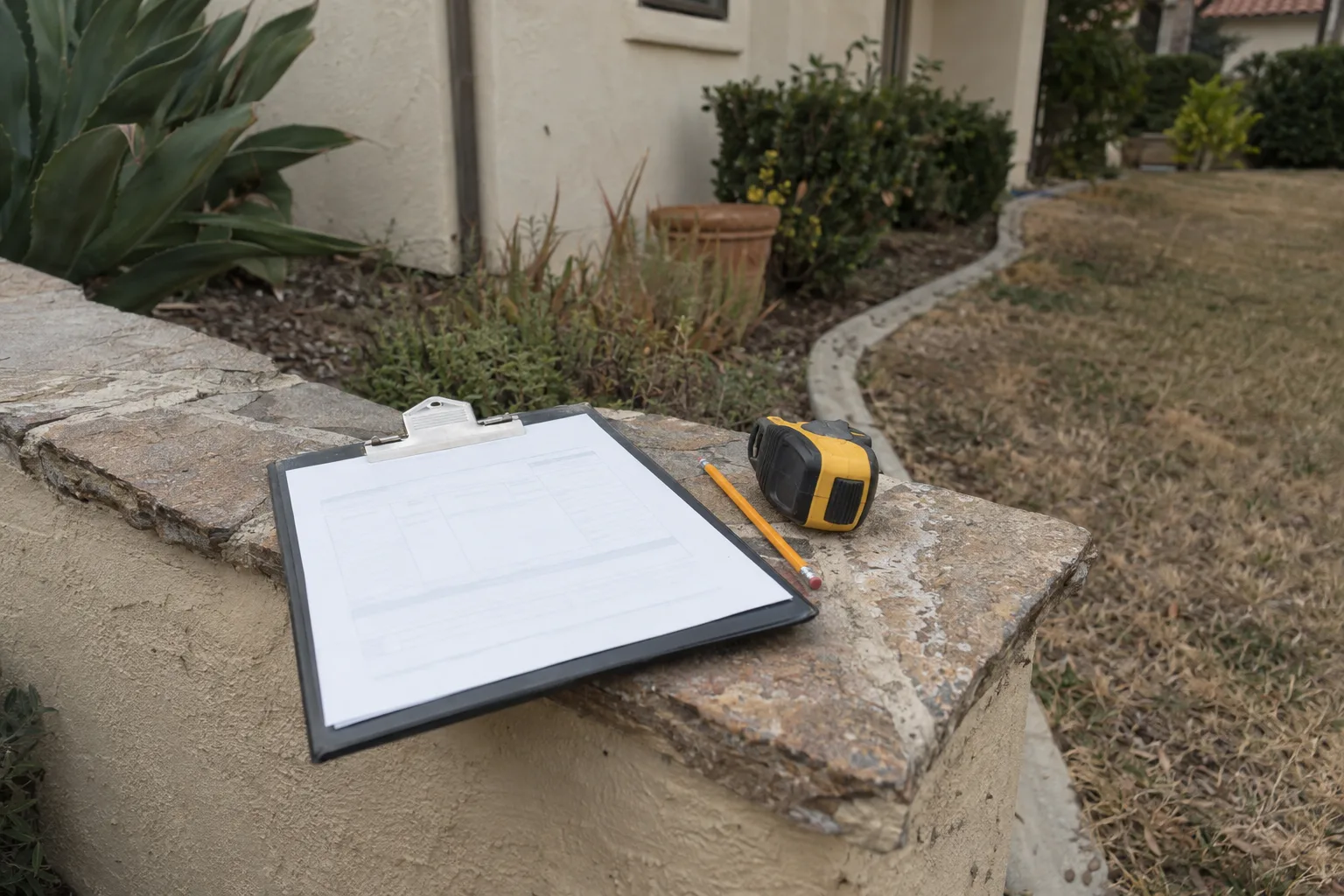
What Does Landscaping Cost in Los Angeles?
Real price ranges for lawn care, design, hardscape, irrigation and turf removal in Los Angeles, plus what actually moves the number on a quote.
Read the guide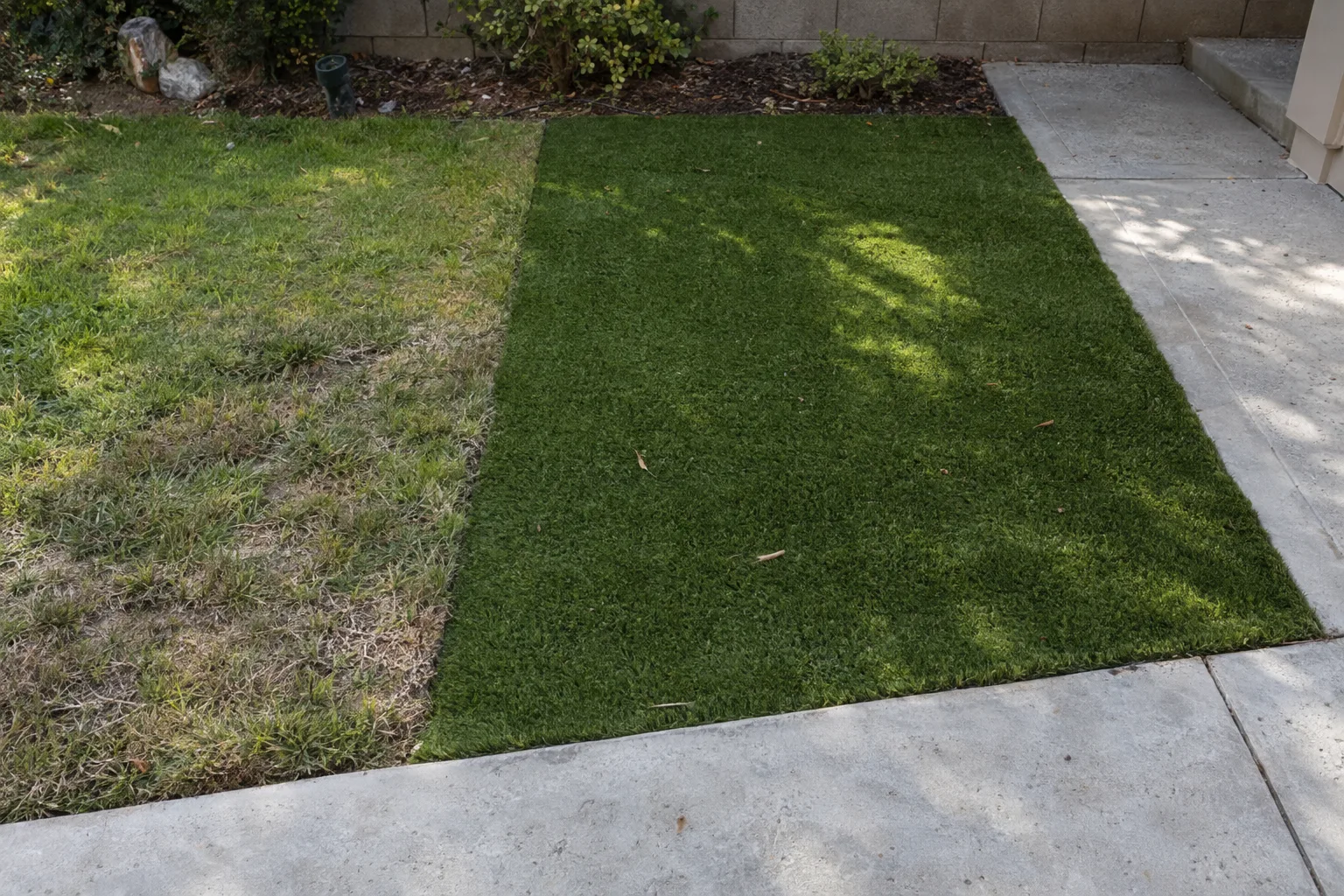
Artificial Turf vs Drought-Tolerant
Cost, heat, drainage, pets, resale and rebates compared for Los Angeles yards, so you can tell which of the two actually suits your property.
Read the guide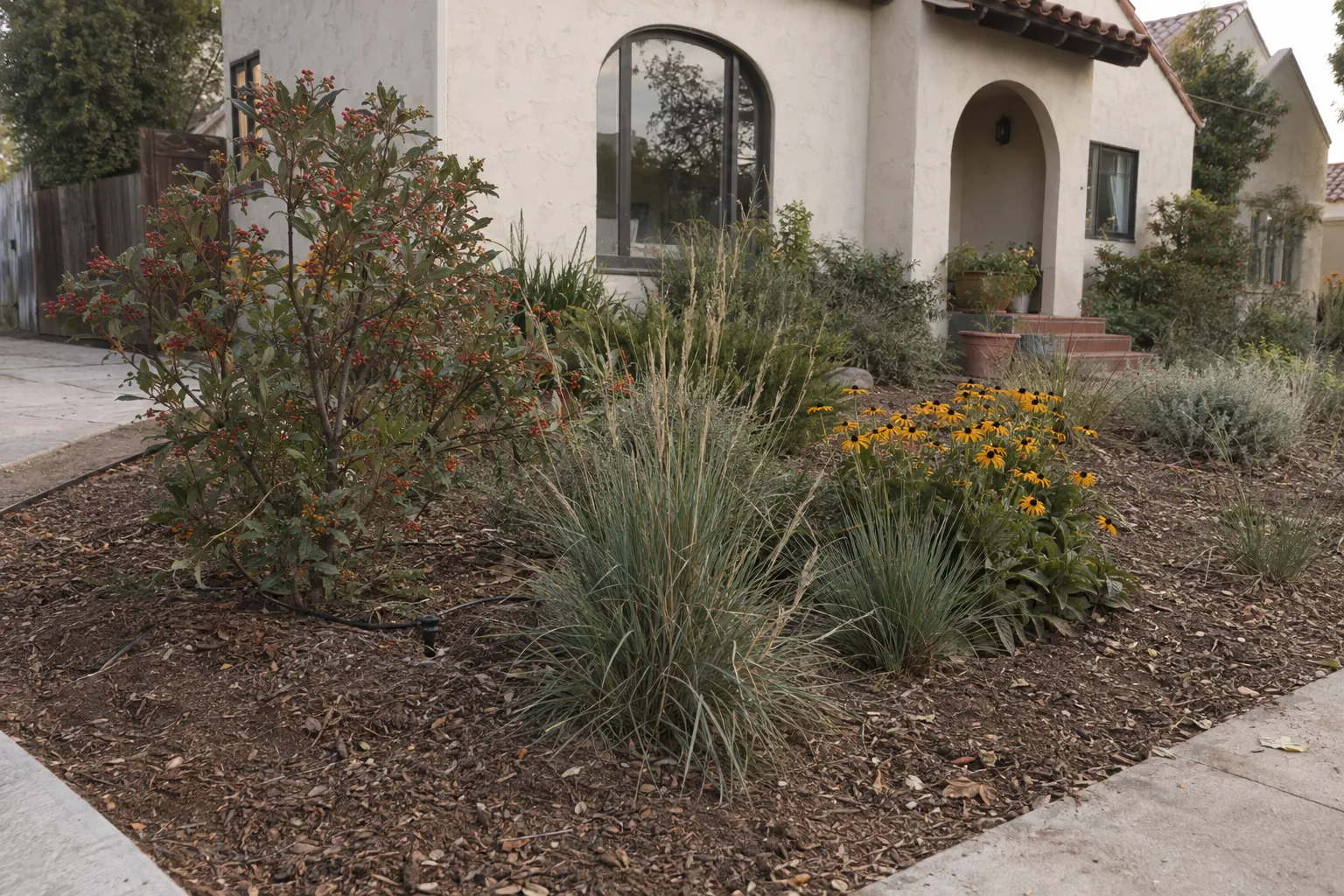
Licensed vs Unlicensed Landscapers
How to verify a CSLB licence, what insurance actually covers, and the questions to ask before you let anyone start work on your Los Angeles property.
Read the guide