Inland Empire Landscaping Contractor: Common Mistakes to Avoid
Hiring an Inland Empire landscaping contractor is straightforward until it isn't. These are the mistakes that cost homeowners real money, and how to avoid them before work starts.
- Verify license and insurance before anyone touches your property
- Get scope, materials, and timeline in writing every time
- Match plant choices to Inland Empire soil and heat, not coastal LA conditions
Get a free quote
Tell us where the property is and we will walk it with you.
What actually goes wrong with Inland Empire landscaping projects
Most landscaping problems in the Inland Empire aren't design failures - they're hiring and planning failures. The region runs hotter and drier than coastal LA, with clay-heavy soils in many areas and summer temperatures that regularly push past 105°F in Riverside and San Bernardino. A contractor who works well in Santa Monica may not understand those conditions at all. This guide covers the specific, avoidable mistakes we see on Inland Empire properties so you can protect your investment before work begins.
Why Inland Empire Landscaping Goes Wrong
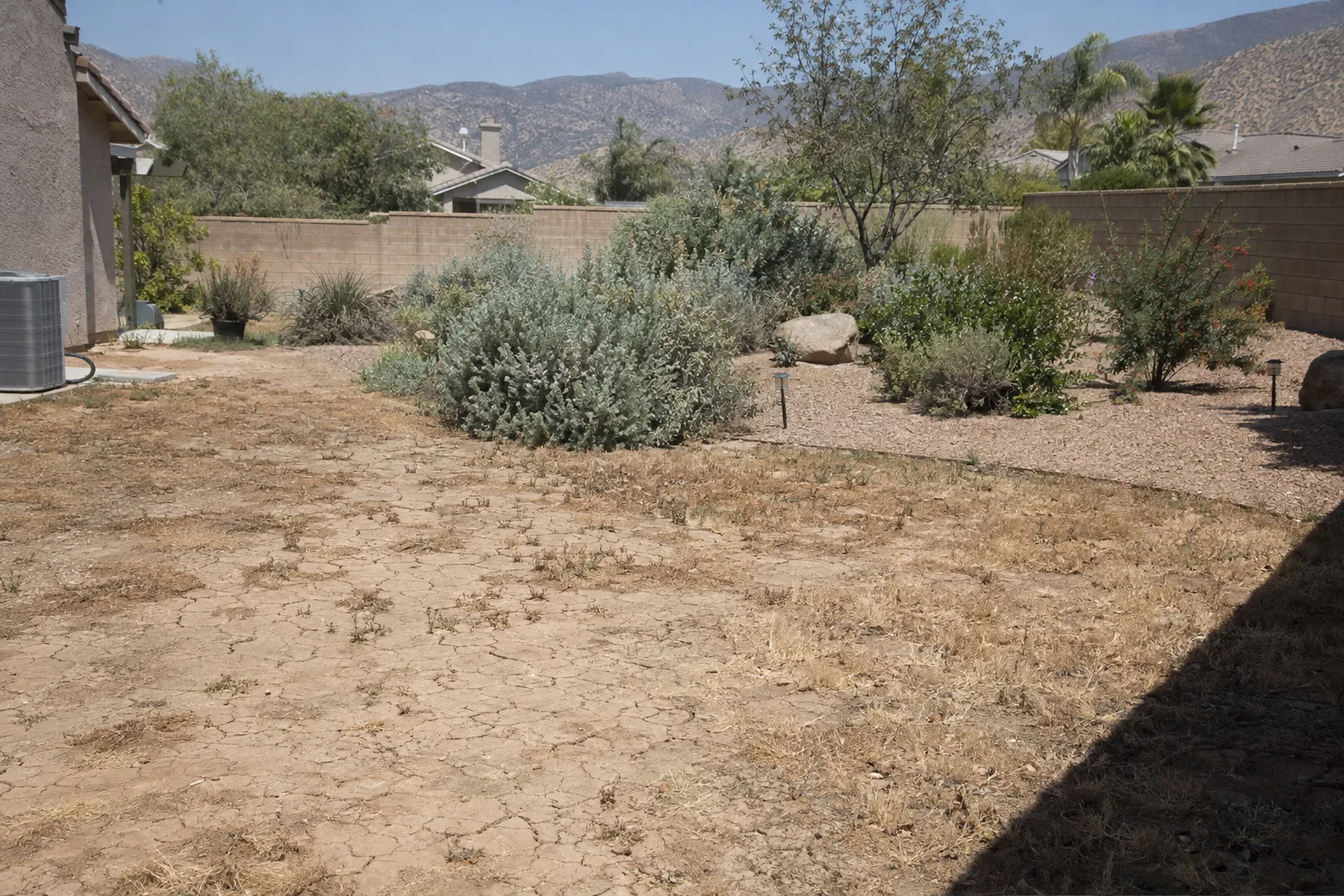
The Inland Empire has distinct conditions that trip up contractors who don't work here regularly. Rancho Cucamonga, Riverside, Fontana, Ontario - these cities sit in USDA hardiness zones 9b to 10a, but they experience far greater temperature swings than coastal communities. Daytime highs in July and August routinely exceed 100°F, and the Santa Ana winds that hit the region in fall can desiccate newly installed plants in 48 hours if irrigation isn't dialed in immediately.
Learn more about artificial turf installation Los Angeles in Burbank
Soil is another factor. Large portions of the western Inland Empire sit on expansive clay soils that compact easily, drain poorly, and crack when dry. A contractor who doesn't account for that during soil prep will leave you with drainage problems, dead plants, and hardscape that shifts within a season.
Learn more about Pasadena landscape design in Van Nuys
The other issue is contractor qualification. California requires a C-27 Landscaping contractor license from the Contractors State License Board for work above certain dollar thresholds. A lot of unlicensed operators work the Inland Empire market, particularly for residential jobs. The mistakes below are the most common ones we're called in to correct - and almost all of them were preventable at the hiring stage.
Learn more about smart irrigation controller Los Angeles in Culver City
A Real Example: What Skipping the Contract Costs
We've been working properties across Greater LA and the Inland Empire since 2015. One pattern comes up repeatedly. A homeowner in Rancho Cucamonga or Riverside hires a crew based on a verbal quote and a handshake. Work starts fast, which feels like a good sign. Then the scope expands mid-job, the original price is reframed as a "deposit," and the homeowner is stuck negotiating from a weak position with no written agreement to reference.
Learn more about sod installation Los Angeles in Santa Monica
We walked a property in the Inland Empire last year where the previous crew had installed St. Augustine sod in a full-sun, west-facing yard with no shade. St. Augustine needs regular water and struggles badly in the sustained heat that west-facing Inland Empire yards generate from about 1 p.m. through sunset. The grass was dead inside two months. The irrigation system the crew left behind was a basic timer with no soil moisture sensor, running on a fixed schedule regardless of actual conditions. The homeowner paid twice to fix something that should have been done right once.
These aren't unusual stories. They're what happens when the hiring process skips the basics. The rest of this page covers those basics, specifically.
Mistake: Hiring Without Checking the License
Every Inland Empire landscaping contractor doing work above $500 in combined labor and materials is required to hold a valid California contractor's license. That means a C-27 Landscaping license, or a broader B General Building contractor license that covers landscaping scope. You can verify any license number in about 60 seconds on the CSLB website. If a contractor can't give you a license number before the conversation goes further, stop there.
License verification tells you three things: whether the license is active, whether it covers the work being proposed, and whether the contractor carries workers' compensation insurance. That last point matters specifically for landscaping. If an unlicensed crew member is injured on your property, you may be exposed to liability that your homeowner's insurance won't cover. Licensed and insured aren't just phrases - they're the legal baseline that protects you. We've carried both since we started in 2015, across all 15 of our landscaping services.
Also ask for a certificate of general liability insurance, not just a verbal confirmation. A real contractor hands that over without hesitation.
minutes to verify a CSLB license - no excuse to skip it
dollar threshold above which California requires a contractor license for landscaping work
Mistake: Wrong Plants for Inland Empire Conditions
Plants that thrive in coastal Los Angeles often fail in the Inland Empire, and the reverse is also true.
Ignoring heat zones
USDA hardiness zones measure cold tolerance, not heat tolerance. The American Horticultural Society's Plant Heat Zone Map is the better reference for Inland Empire selections. Riverside sits in Heat Zone 9, meaning more than 120 days per year above 86°F. Plants not rated for that will decline regardless of irrigation.
Installing thirsty turf in full-sun exposures
Fescue and St. Augustine both struggle in the sustained afternoon heat of west- and south-facing Inland Empire yards. Bermuda grass handles heat better but still demands consistent water. For most Inland Empire residential lawns, drought-tolerant groundcovers or artificial turf are a more honest long-term choice.
Skipping soil amendment on clay lots
Clay soil compacts under foot traffic and machinery. Without gypsum incorporation and organic amendment worked in before planting, root development stalls and water pools rather than percolating. This is the number one reason newly installed plants die in Inland Empire yards within the first summer.
Choosing coastal natives over Inland Empire natives
California native plants aren't interchangeable. Ceanothus varieties that thrive in coastal fog struggle in the Inland Empire's dry heat. Selections like Salvia clevelandii, Encelia farinosa (brittlebush), and Larrea tridentata (creosote) are genuinely adapted to the region's conditions.
Planting at the wrong time of year
Fall planting - September through November in the Inland Empire - gives roots three to four months to establish before summer heat arrives. Planting in April or May means new root systems face 105°F weather within weeks of going in. Most don't survive without intensive hand-watering that contractors rarely include in a standard maintenance plan.
Not accounting for Santa Ana wind exposure
Santa Ana conditions, hot dry winds from the northeast, hit the Inland Empire harder than most of coastal LA. Plants with large leaf surfaces lose moisture rapidly during wind events. A contractor who doesn't plan for wind exposure in plant selection and placement will leave you with stressed, damaged plants every fall.
Overlooking fire-safe plant placement
Many Inland Empire communities fall within or adjacent to High Fire Hazard Severity Zones. Plant species selection and spacing aren't just aesthetic decisions - they affect your compliance with California defensible space requirements. A qualified contractor knows which plants are low-fuel and how to space them correctly.
Mistake: No Written Scope Before Work Starts
A verbal quote is not a contract, and a contract without scope detail is nearly as useless.
What a proper written scope includes
Every landscaping agreement should specify the exact work being performed, the materials being used (species names, not just "drought-tolerant plants"), the timeline with start and completion dates, the payment schedule tied to milestones rather than a single upfront sum, and what happens if conditions change mid-project. If a contractor hands you a one-page quote with a total dollar figure and nothing else, that's a gap you need to close before signing anything.
Material substitutions are a common problem. A quote that says "decomposed granite pathway" but doesn't specify the DG grade, depth, or stabilizer type leaves room for a contractor to use whatever's cheapest. The same goes for irrigation components - a quote that says "drip system" without naming the emitter brand and flow rate tells you almost nothing about what you're actually getting. Specificity in writing protects you when something goes wrong.
Payment schedule red flags
Contractors who ask for more than 10% or $1,000 (whichever is less) upfront on a home improvement contract are often in violation of California law. That legal cap exists for good reason. A contractor who needs a large deposit before starting may be using your money to fund another job. Tie payments to progress: a reasonable structure is one-third at start, one-third at midpoint, and the final payment on completion and your sign-off.
What to do if scope changes mid-job
Any change to the original scope should be documented in a written change order before the additional work begins. This is not optional. Verbal agreements about added work are nearly impossible to enforce if a dispute arises. A professional contractor expects this process and won't push back on it.
Mistake: Ignoring Irrigation in a Hot, Dry Climate
Irrigation is the single highest-impact system on an Inland Empire property, and it's also the most commonly underspecified.
The Inland Empire averages around 10 to 16 inches of rainfall per year depending on location, with most of it falling between November and March. That means every plant on your property is entirely dependent on your irrigation system from April through October. A basic timer running on a fixed schedule - every Tuesday and Friday, 10 minutes per zone - does not account for temperature, actual soil moisture, or evapotranspiration rates. During an Inland Empire heat wave, that schedule may need to run daily or even twice daily on newly installed plants.
Smart irrigation controllers that reference local weather data and adjust run times automatically are now available at a range of price points. The Metropolitan Water District of Southern California and many Inland Empire water agencies offer rebates on smart controllers that can offset part of the installation cost. Ask your contractor whether they're familiar with the rebate programs in your specific water district before specifying equipment.
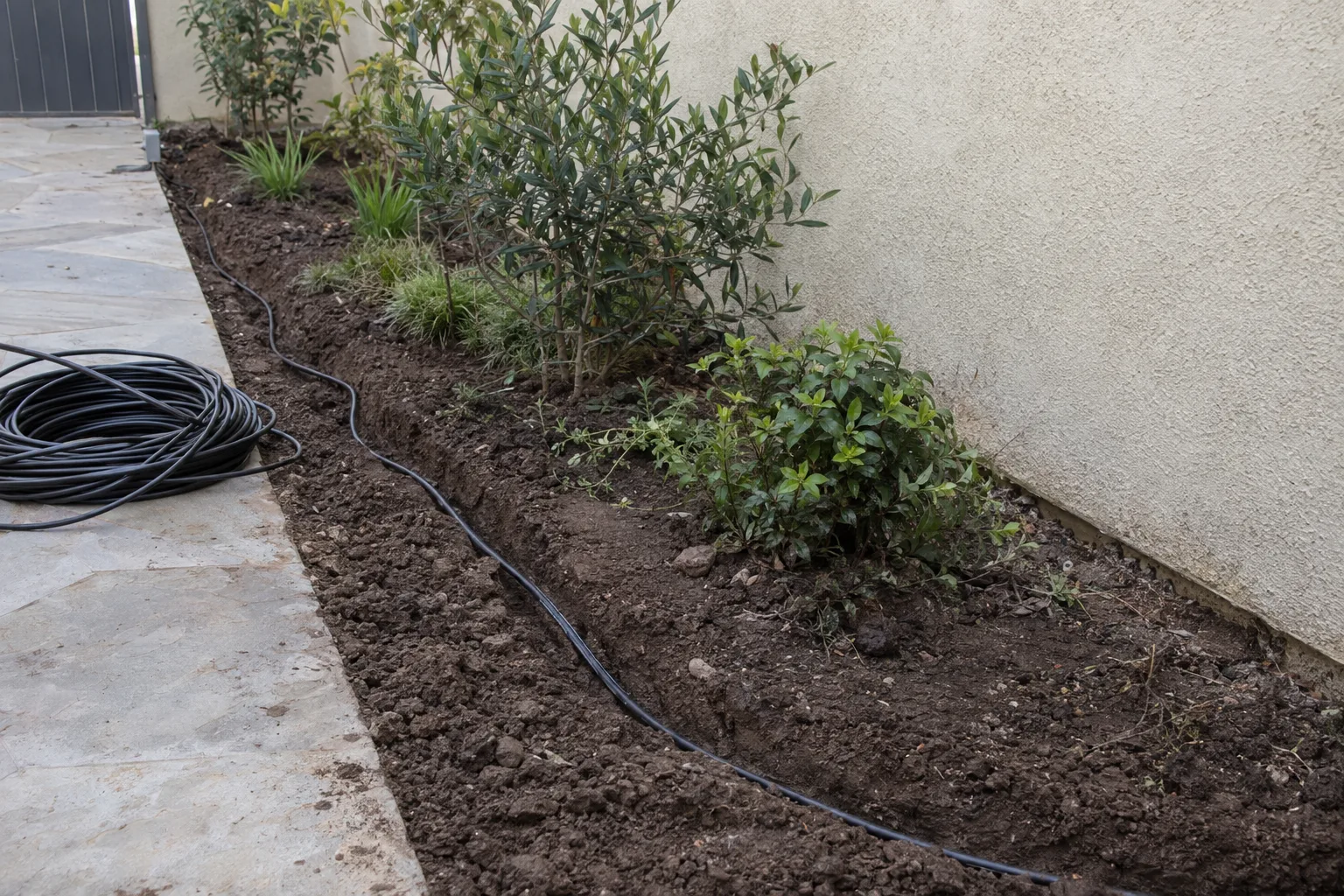
Drip irrigation is almost always more appropriate than spray heads for Inland Empire planting beds. Spray heads lose a significant percentage of output to evaporation in hot, windy conditions. Drip delivers water directly to the root zone at low pressure, which is more efficient and far better suited to plants adapted to dry conditions. A contractor who installs spray heads across a drought-tolerant planting bed is setting up that planting to fail.
Also confirm whether your contractor pulls the required permits for irrigation work. In most Inland Empire jurisdictions, irrigation modifications connecting to the municipal water supply require a permit. Unpermitted work can create problems when you sell the property or file an insurance claim. See what a full landscaping company in Los Angeles costs with real numbers so you know what a properly scoped project should run before getting quotes.
Frequently Asked Questions
How do I verify an Inland Empire landscaping contractor's license?
Go to the CSLB website at cslb.ca.gov and enter the contractor's license number or business name. The search result will show you whether the license is active, what classification it covers, and whether workers' compensation insurance is on file. This takes about 60 seconds and should be done before any contractor starts work on your property.
What grass type works best in Inland Empire yards?
Bermuda grass handles the Inland Empire's heat and drought stress better than fescue or St. Augustine in most full-sun exposures. That said, for many Inland Empire properties, drought-tolerant groundcovers or artificial turf are a more practical long-term choice given regional water restrictions and sustained summer temperatures above 100°F.
Is fall really the best time to install plants in the Inland Empire?
Yes. Planting between September and November gives root systems three to four months to establish before the following summer's heat. Spring planting puts new roots up against 100°F+ temperatures within weeks of going in, which dramatically increases the likelihood of plant loss even with regular irrigation.
What should a landscaping contract include?
At minimum: the exact work being performed, specific materials with product names or species names, start and completion dates, a milestone-based payment schedule, and a process for written change orders if scope changes. A total price with no other detail is not a sufficient contract for any landscaping project.
Do you serve Inland Empire properties?
Yes. We cover the Inland Empire including Riverside, Rancho Cucamonga, Fontana, and Ontario, along with 50+ communities across Greater Los Angeles. We've been licensed and insured since 2015. Call us or request a free property walkthrough and we'll come out and assess your site directly.
Ready to Get It Right From the Start?
The Landscapers LA has been working properties across Greater Los Angeles and the Inland Empire since 2015. Ten professional crews, three service locations, and a process that starts with a real site walkthrough before any proposal goes on paper. We'll walk your property, document what we see, and give you a written scope with specific materials and a clear timeline. No surprises mid-job.
If you've had a bad experience with a previous contractor or you just want to get this right the first time, call us or request a free walkthrough. We cover Riverside, Rancho Cucamonga, Fontana, Ontario, and 50+ communities across the region.
Before and after
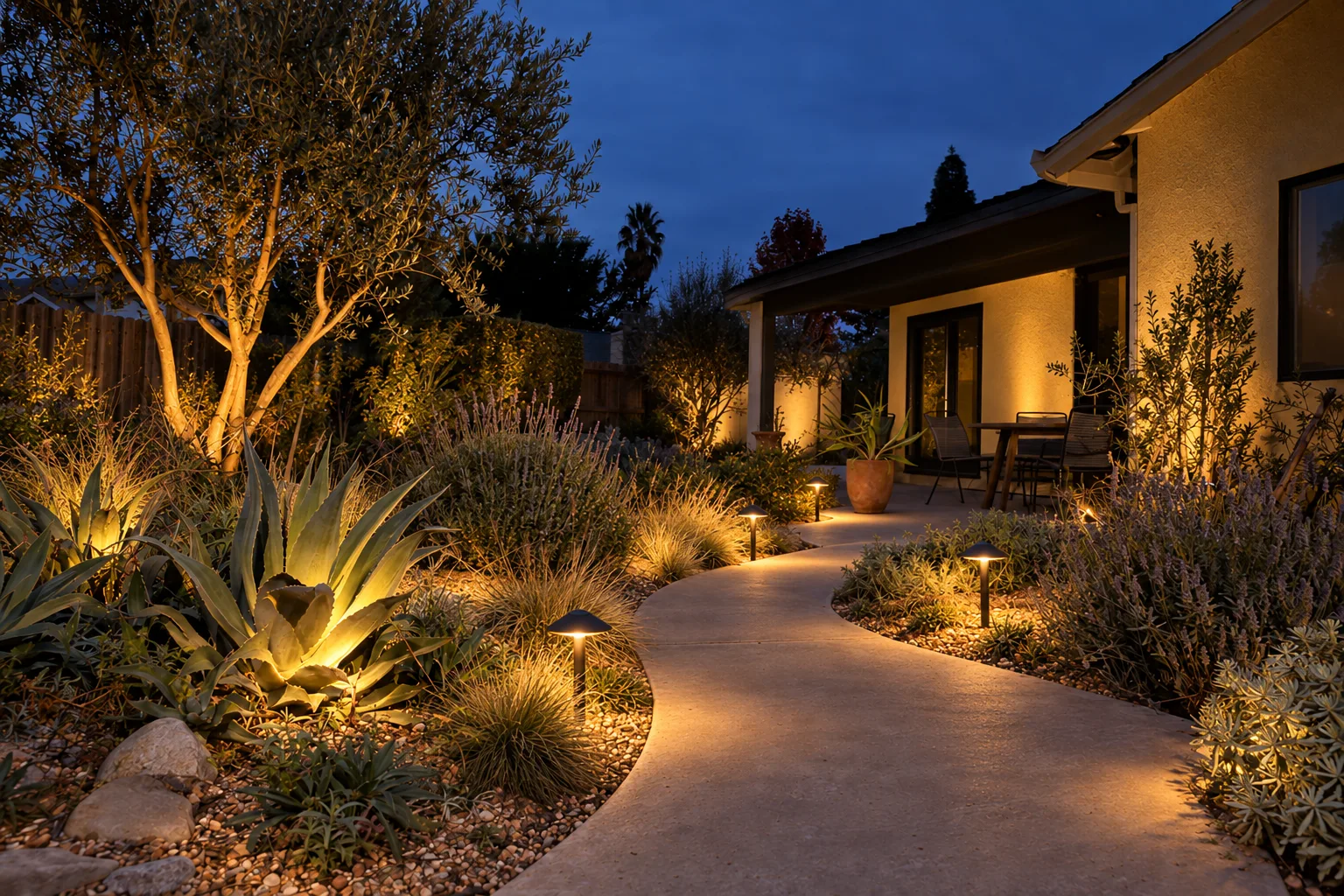
Get a free, no-pressure quote
We walk the property, talk through options, and put a real number on paper.
From our blog
Straight answers on what things cost, which rebates you qualify for, and why your lawn is doing that.
Our 15 Landscaping Services
The full scope of what we do across Greater LA and the Inland Empire, from lawn care and drip irrigation to hardscape, artificial turf, and defensible space work.
Read the guide
How Much Does Landscaping Company Los Angeles Cost? Real Numbers
Real price ranges for lawn care, hardscape, irrigation, and turf removal in Los Angeles, plus what actually moves the number on a quote.
Read the guide
What to Expect During Fire-Safe Landscaping Defensible Space LA
Zone 0, Zone 1, and Zone 2 explained for LA and Inland Empire properties: what to clear, what to plant, and how inspections work in high fire hazard severity zones.
Read the guide
Landscaping in Pasadena | The Landscapers LA
How we approach Pasadena properties: soil conditions, heat exposure, local plant selections, and what a typical project timeline looks like in this part of Greater LA.
Read the guide