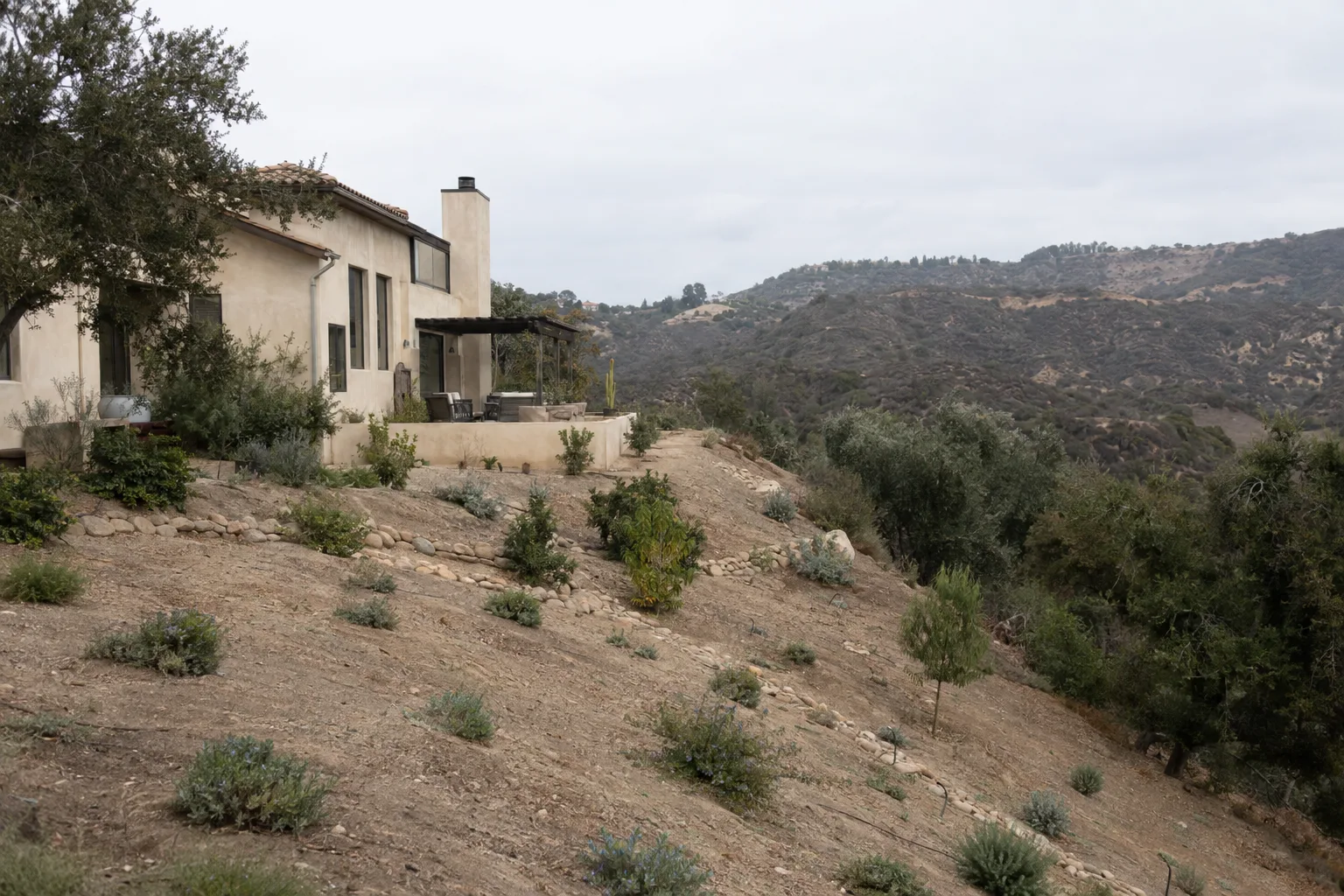
Native Plant Landscaping Los Angeles: Common Mistakes to Avoid
Native plant landscaping in Los Angeles saves water and looks great - when it's done right. These are the mistakes that send LA homeowners back to square one, and how to avoid them.
- Wrong plants for your specific LA microclimate and soil type
- Overwatering natives during establishment - the most common killer
- Missing out on LADWP and MWD water rebates you've already earned
Get a free quote
Tell us where the property is and we will walk it with you.
Native Plants Work - But Only If You Avoid These Mistakes
Native plant landscaping in Los Angeles saves water and reduces maintenance - unless the wrong plants go in the wrong spot.
Learn more about landscape design and installation LA
You convert your lawn. You install California natives. Six months later, half of them are dead, the rest look stressed, and your water bill didn't drop the way you expected.
Learn more about landscaping company Los Angeles
That's not a native plant problem. It's an installation and selection problem.
Learn more about artificial turf installation Los Angeles in Burbank
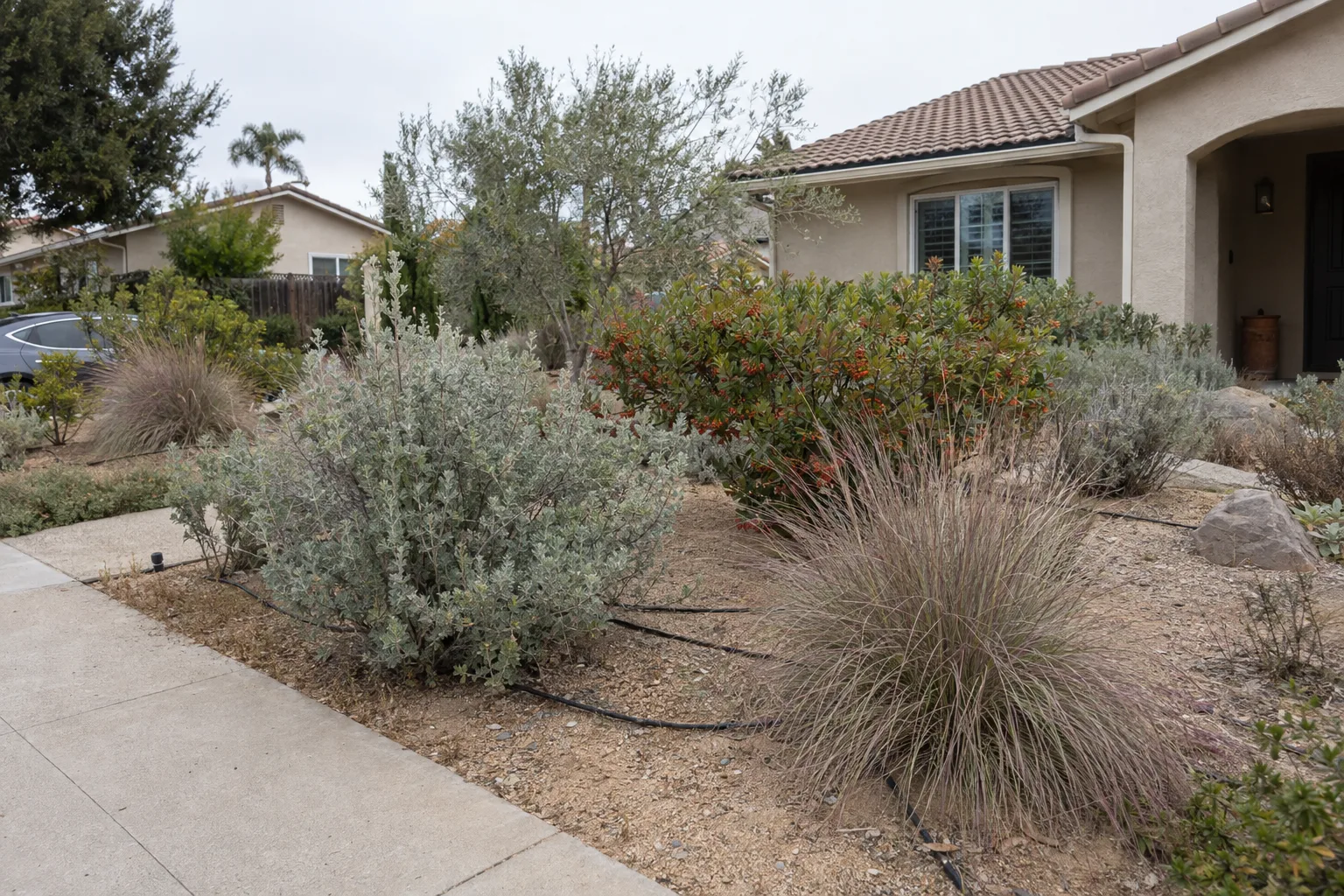
Native plant landscaping in Los Angeles delivers real results - lower water use, reduced maintenance after establishment, fire-resistance benefits on hillside properties, and eligibility for LADWP and Metropolitan Water District turf removal rebates. But those results depend entirely on matching the right species to your specific site conditions and managing irrigation correctly through the first two years.
Learn more about Pasadena landscape design in Van Nuys
We've been doing this work across Greater LA since 2015. Here's what actually goes wrong, and what a properly executed native plant project looks like from start to finish.
Learn more about smart irrigation controller Los Angeles in Culver City
LA's Microclimates Make Plant Selection Trickier Than It Looks
A native plant that thrives in Altadena can struggle three miles away in Pasadena's valley floor. Microclimate is everything.
Learn more about sod installation Los Angeles in Santa Monica
Greater Los Angeles covers coastal bluffs, inland valleys, canyon floors, exposed hillsides, and desert-edge communities - sometimes within the same ZIP code. A California native from a coastal seed source may not perform the same as one grown from inland chaparral stock, even if they're the same species.
Learn more about lawn care maintenance Los Angeles in Palos Verdes
Soil type matters just as much. Many Westside properties have heavy clay that drains poorly and stays wet in winter - conditions that rot the roots of drainage-sensitive natives like buckwheat and Cleveland sage. San Fernando Valley properties often have compacted fill soil over dense subsoil. Each situation needs a different approach before a single plant goes in the ground.
Learn more about commercial landscape maintenance LA
The California Native Plant Society's Calscape tool lets you filter species by ZIP code and soil type, which is a useful starting point. But it doesn't account for your specific aspect, the direction your slope faces, or how much reflected heat your hardscape adds in summer. Those details change the plant list significantly.
Learn more about fire-safe landscaping defensible space LA
We walk every property before recommending a species list. Slope orientation, drainage pattern, existing tree canopy, and proximity to turf areas all go into that assessment.
Learn more about artificial turf installation Los Angeles in Calabasas
A Silver Lake Project That Showed Us How Fast Overwatering Kills
The most common mistake in native plant landscaping isn't underwatering - it's overwatering after the first month, when plants look like they need more water but actually need less.
A homeowner in Silver Lake had converted their front slope from lawn to California natives the previous fall. They'd chosen good species - toyon, California fuchsia, black sage - and planted them at appropriate spacing. By January, everything looked established and healthy.
Then the warm, dry stretch hit in February. Worried the plants were stressed, they increased irrigation frequency to match what they'd been running during establishment. By April, two-thirds of the planting was dead. The roots had rotted in waterlogged soil.
Here's what happened: California natives evolved to go dormant or semi-dormant through warm dry periods. Their root systems pull back water uptake in summer. Running summer irrigation schedules year-round essentially drowns them. Once established - typically 12 to 18 months after planting - most LA natives need irrigation only every two to three weeks in summer, if at all, depending on species.
When they called us, we replanted the slope with the same species, added a drip system with a smart controller set to seasonal adjustment mode, and walked the homeowner through a month-by-month irrigation reduction schedule. The planting established cleanly through the following dry season.
The lesson: the irrigation schedule that gets natives established is not the schedule that keeps them alive long-term. Those are two different programs, and most homeowners don't know to switch between them.
The Most Common Native Plant Mistakes We See Across Greater LA
These are the errors that show up on almost every self-managed or poorly planned native plant project in Los Angeles.
Some of these are easy to fix early. Others require pulling plants and starting over. Knowing them before you start saves both money and time.
These mistakes don't mean native plants are difficult. They mean native plant projects need a plan that accounts for your specific site, not a generic species list from a gardening blog.
How We Approach Native Plant Landscaping in Los Angeles
Every native plant project we take on starts with a site assessment, not a species list. The list comes from what we find on your property.
We match plants to your actual conditions - drainage, aspect, soil type, microclimate, and any fire-safety requirements if you're in a high fire hazard severity zone. The Resource Conservation District of the Santa Monica Mountains maintains guidance on native plant species appropriate for LA's wildland-adjacent properties, which informs our hillside selections.
- ✓Site assessment before any plant selection - slope, soil drainage, aspect, and existing canopy all documented
- ✓Soil prep matched to your soil type - drainage amendment on clay, stabilization on sandy hillside soils
- ✓Fall planting schedule recommended wherever project timing allows for best establishment outcomes
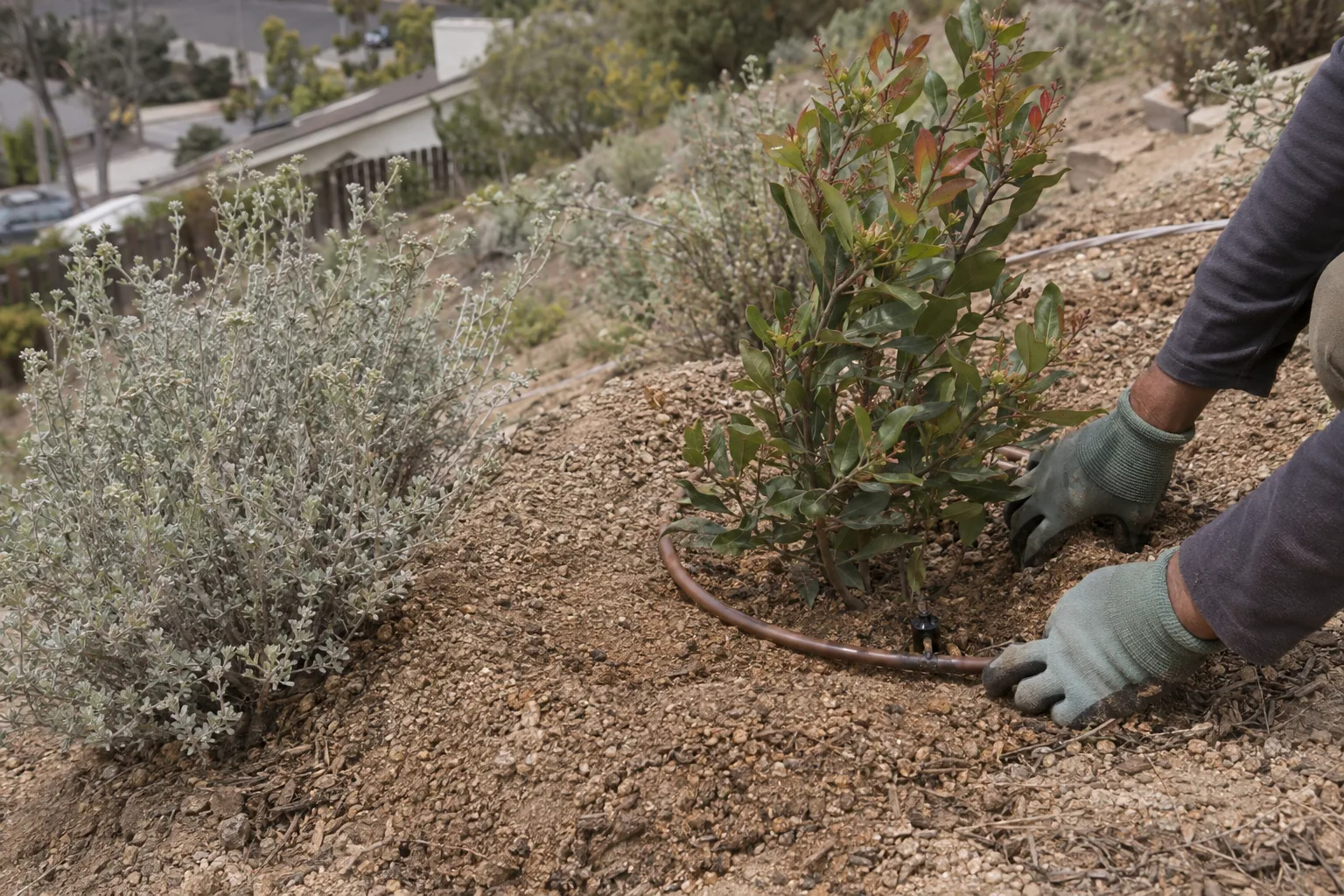
- ✓Drip irrigation installed with a smart controller and a two-phase watering program: establishment-phase settings for months 1 through 18, then a reduced summer schedule after that
- ✓Decomposed granite mulch at correct depth, pulled back from plant crowns to prevent rot
- ✓Species selected from California or regional seed sources wherever available, not generic big-box nursery stock
- ✓Plant spacing that accounts for mature spread, not nursery-pot size - natives fill in faster than most people expect
- ✓Rebate documentation support for LADWP turf removal and MWD water-smart landscape programs where applicable
Our Native Plant Installation Process
From your first call to your first rainy season, our native plant process follows a clear three-phase structure designed to minimize failure and maximize establishment.
Site Assessment & Plant Selection
We start on-site. We test drainage, check soil texture, note slope aspect and any shade cast by existing trees, and document any areas with runoff from neighboring irrigation. All of that drives the species list.
We also identify any existing turf or invasive plants that need removal before natives go in. Kikuyu grass and Bermuda grass regrow aggressively through new plantings if not properly addressed before installation begins.
We flag any prep work required before planting can begin. In most cases, turf removal, soil prep, and planting happen in a single coordinated project sequence.
Soil Prep, Turf Removal & Planting
Turf removal comes first, either by solarization for clients who have lead time, or by mechanical removal when the project timeline is tighter. We haul all green waste and debris off-site. Leaving dead turf material on-site creates a weed seed bank that competes with new natives for the first two seasons.
Soil amendment goes in next, matched to your specific drainage conditions. Then planting begins, with drip lines installed in the same phase. We stake plant positions before digging to confirm spacing at mature spread, which typically means plants look sparse in the first season. That's correct. Overcrowding natives at installation is one of the reasons projects need replanting two years later.
We also handle smart irrigation controller installation and programming as part of the native plant project - not as an add-on. The watering schedule is as important as the plant selection.
Establishment Support & Rebate Documentation
We schedule a follow-up visit at the three-month mark to check establishment progress and adjust irrigation settings if needed. At 12 to 18 months, we return to assess whether the schedule should shift to the reduced summer program. We also provide documentation and measurement records for LADWP turf removal rebates and MWD water-smart landscape program applications where the project qualifies.
Communities We Serve Across Greater Los Angeles
The Landscapers LA installs native plant landscapes throughout Greater Los Angeles, the South Bay, and the Inland Empire.
We work regularly in Silver Lake, Los Feliz, Pasadena, Altadena, Burbank, Studio City, Sherman Oaks, Culver City, Mar Vista, Torrance, and Rancho Palos Verdes. Our service area also covers Long Beach, Van Nuys, Thousand Oaks, Santa Clarita, and the Inland Empire communities of Riverside, Rancho Cucamonga, and San Bernardino - more than 50 communities across Greater LA.
If your property is in Greater LA or the Inland Empire, we serve you.
Frequently Asked Questions
Do California native plants really need no water once established?
Most need some summer irrigation in LA, but far less than conventional plants. After 12 to 18 months of establishment, many species need watering only every two to three weeks in summer, or less. Species like toyon and lemonade berry can often go entirely dry-season once mature. The key is reducing irrigation gradually after year one - not cutting it off all at once.
When is the best time to plant California natives in Los Angeles?
October through December is the ideal window. Fall planting gives natives the full winter rain season to establish roots before summer heat arrives. Spring planting works but requires significantly more supplemental irrigation because plants face their first dry season just weeks after going in. If you're planning a project, start the conversation in late summer so we can schedule for fall.
Can I get a rebate for removing my lawn and planting natives?
Yes, in most cases. LADWP's turf removal rebate and the Metropolitan Water District's water-smart landscape program both apply to qualifying native plant conversions. The amount varies by square footage and program availability. We document measurements and provide the photos required for the application as part of our installation process.
What's wrong with buying native plants from a big-box store?
The plants themselves are usually fine species, but many are grown from out-of-state seed stock and aren't optimized for Southern California's specific conditions. Plants from regional nurseries using California or local seed sources establish faster and handle LA's heat, dry summers, and clay soils better. We source from nurseries with documented regional provenance wherever possible.
Which communities do you serve for native plant landscaping?
We serve more than 50 communities across Greater Los Angeles, the South Bay, and the Inland Empire. That includes Silver Lake, Pasadena, Altadena, Burbank, Culver City, Torrance, Rancho Palos Verdes, Long Beach, Van Nuys, Thousand Oaks, Santa Clarita, Riverside, Rancho Cucamonga, and San Bernardino, among many others. Call us with your address and we'll confirm service availability.
Ready to Start Your Native Plant Project?
Getting the plant selection, soil prep, and irrigation right from the start means less replanting, lower water bills, and a yard that actually looks good by year two.
Call us to schedule your property walkthrough. Our team is based at 465 N Rodeo Drive in Beverly Hills, with crews across Greater LA. Tell us your address, your soil type if you know it, and whether you're working toward a rebate or a fire-compliance requirement. We'll take it from there.
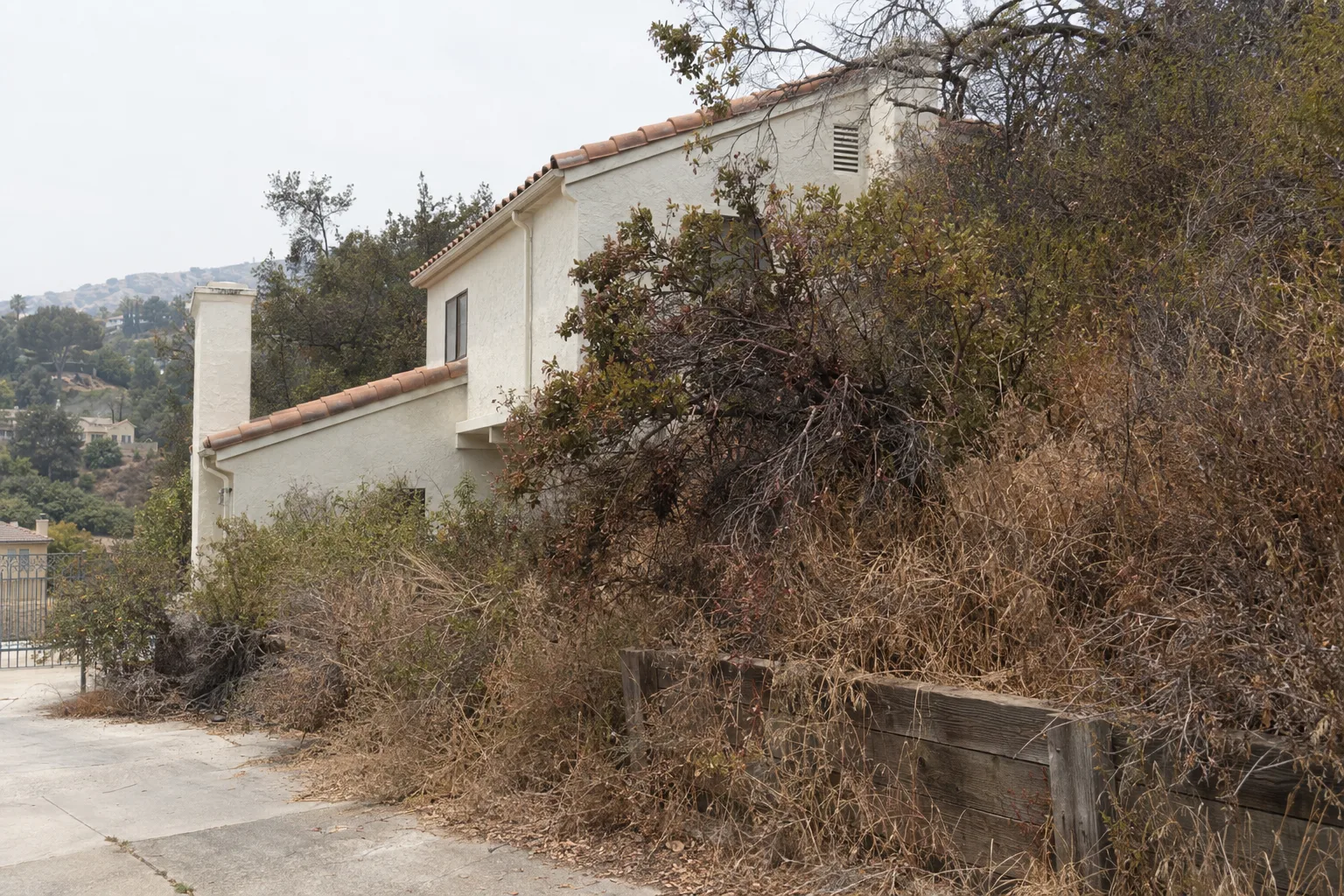
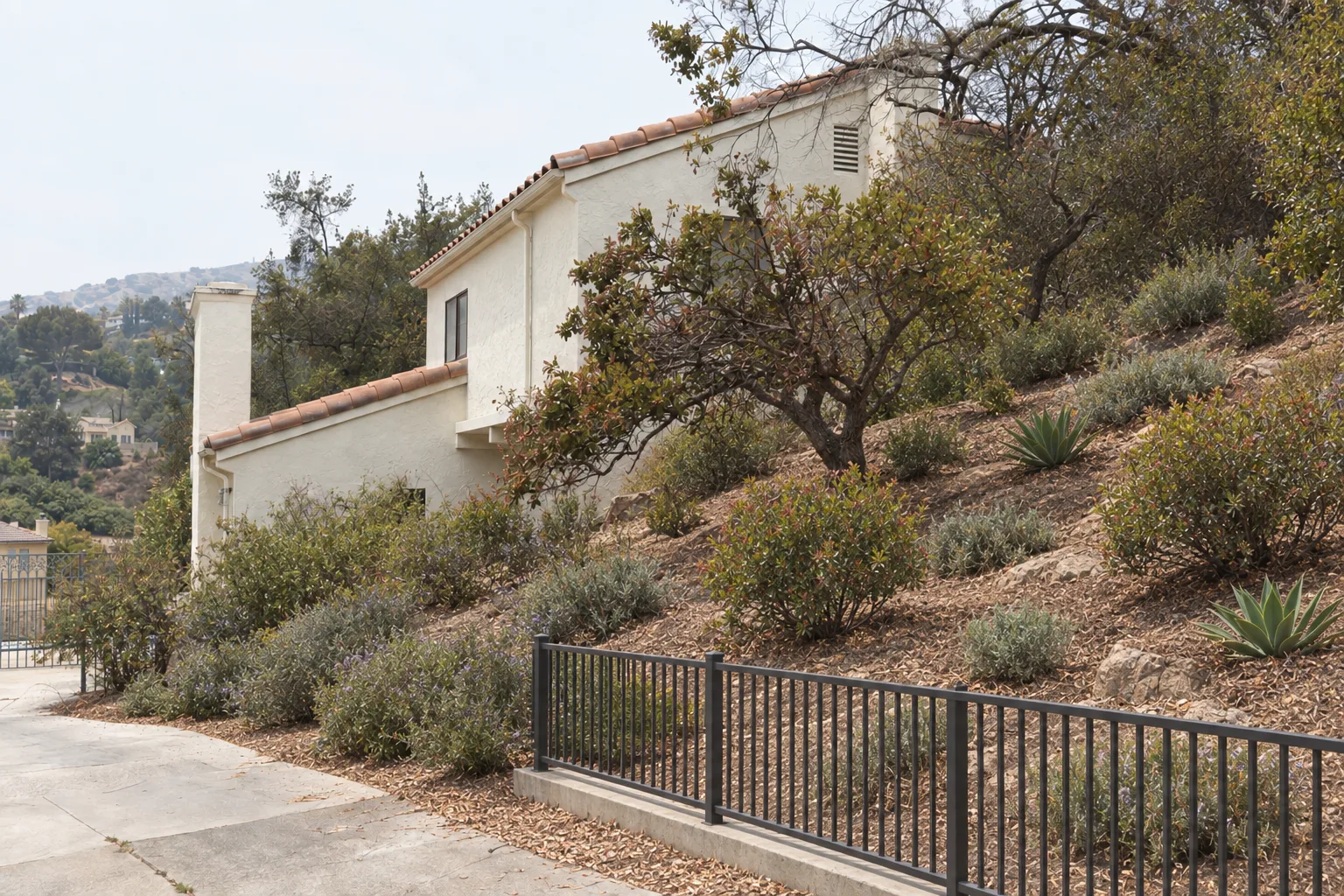
Before and after
Get a free, no-pressure quote
We walk the property, talk through options, and put a real number on paper.
From our blog
Straight answers on what things cost, which rebates you qualify for, and why your lawn is doing that.
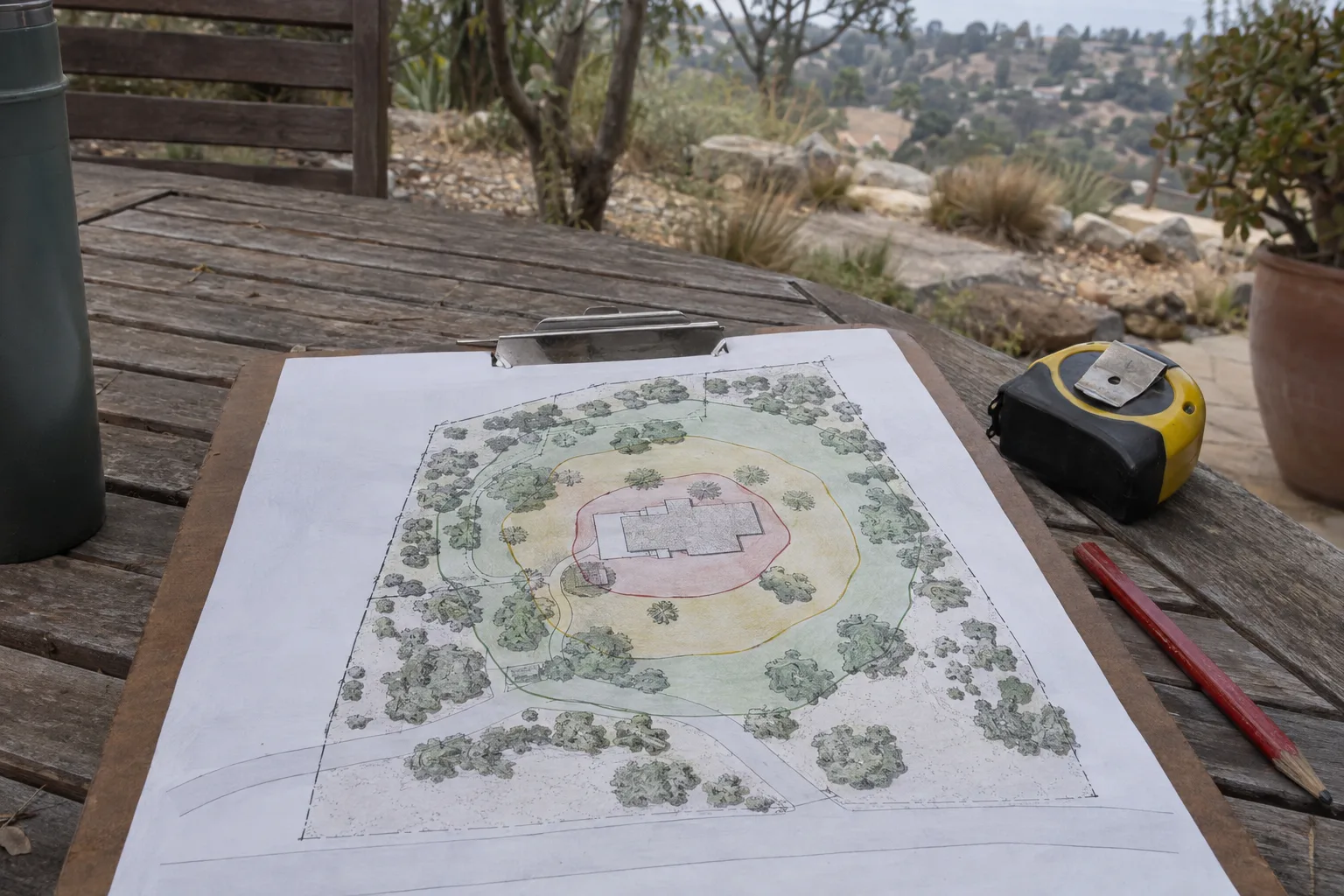
CAL FIRE Defensible Space Rules
Zone 0, Zone 1 and Zone 2 explained for Los Angeles properties: what to clear, what to plant, and how inspections work in high fire hazard severity zones.
Read the guide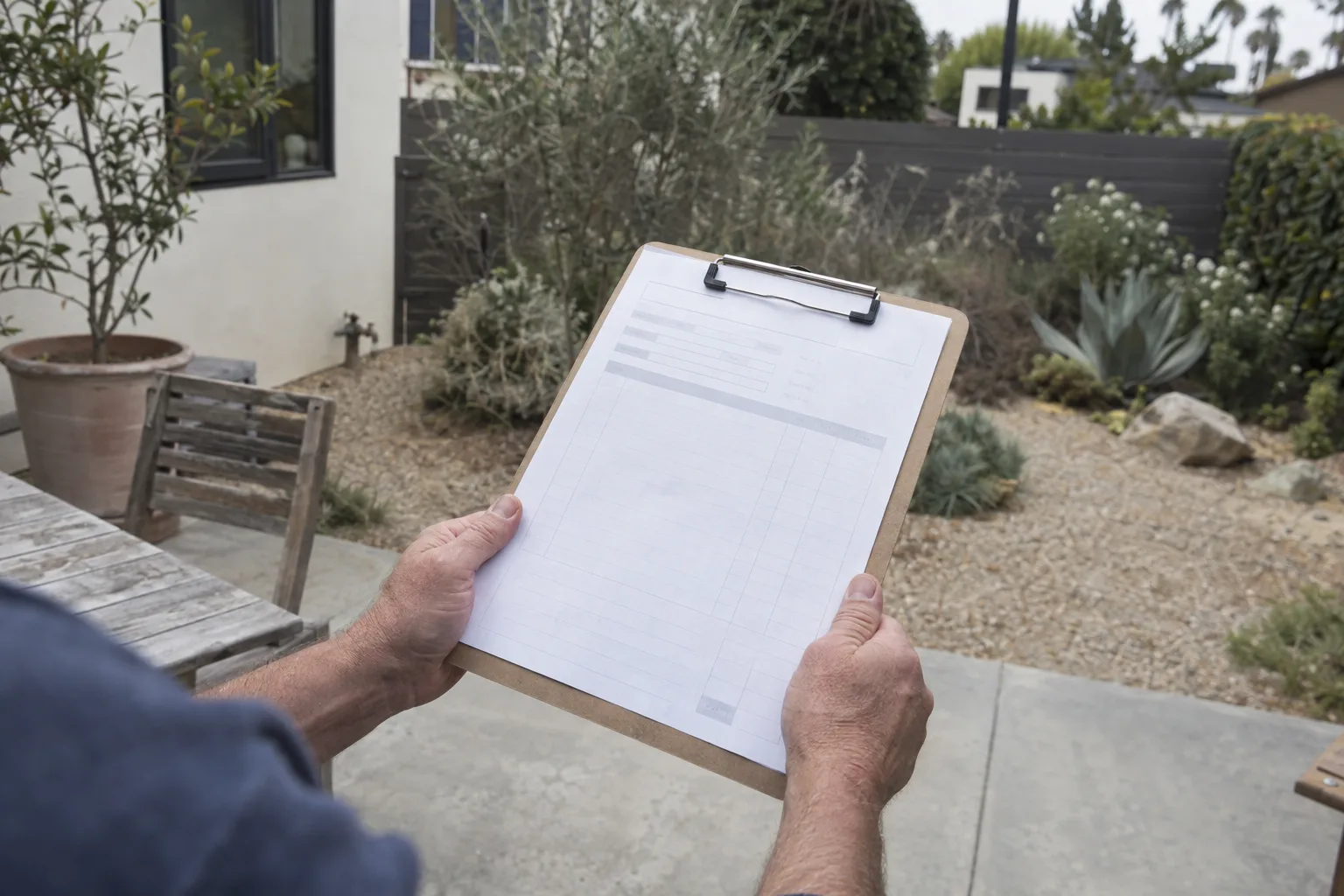
What Does Landscaping Cost in Los Angeles?
Real price ranges for lawn care, design, hardscape, irrigation and turf removal in Los Angeles, plus what actually moves the number on a quote.
Read the guide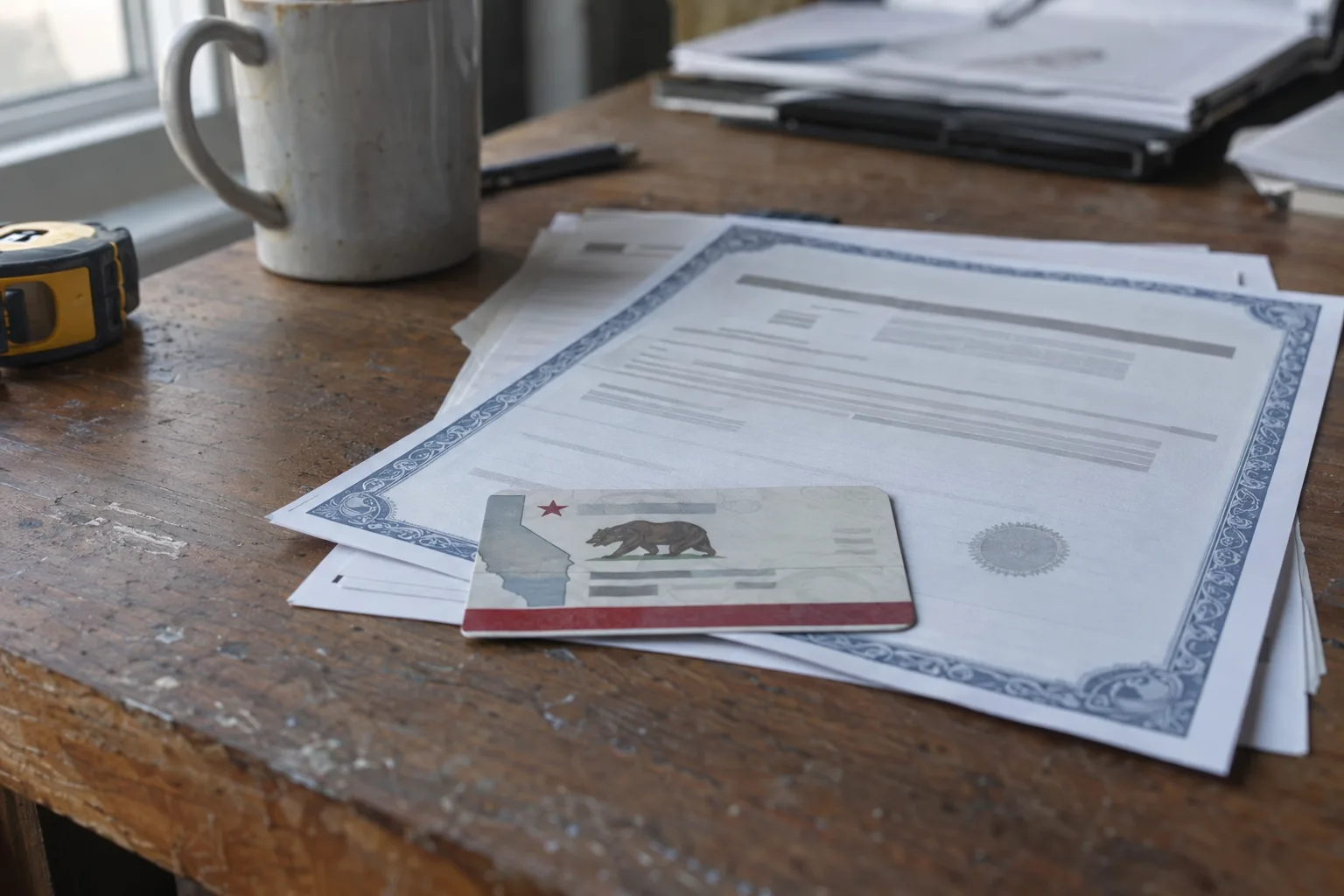
Licensed vs Unlicensed Landscapers
How to verify a CSLB licence, what insurance actually covers, and the questions to ask before you let anyone start work on your Los Angeles property.
Read the guide
Landscaping by LA Microclimate
Coastal, valley, hillside and Inland Empire properties need different plants, soil prep and irrigation. What changes across Greater LA, and why it matters.
Read the guide