Landscaping Questions, Answered
62 questions about landscaping in Greater Los Angeles — pricing, scheduling, water restrictions, permits, fire clearance and the rest — answered by the people who run the crews.
- Every answer is the one on the service page it belongs to
- Water rules, permits and rebates covered specifically for LA
- Anything not here, ask us — we will answer it directly
Get a free quote
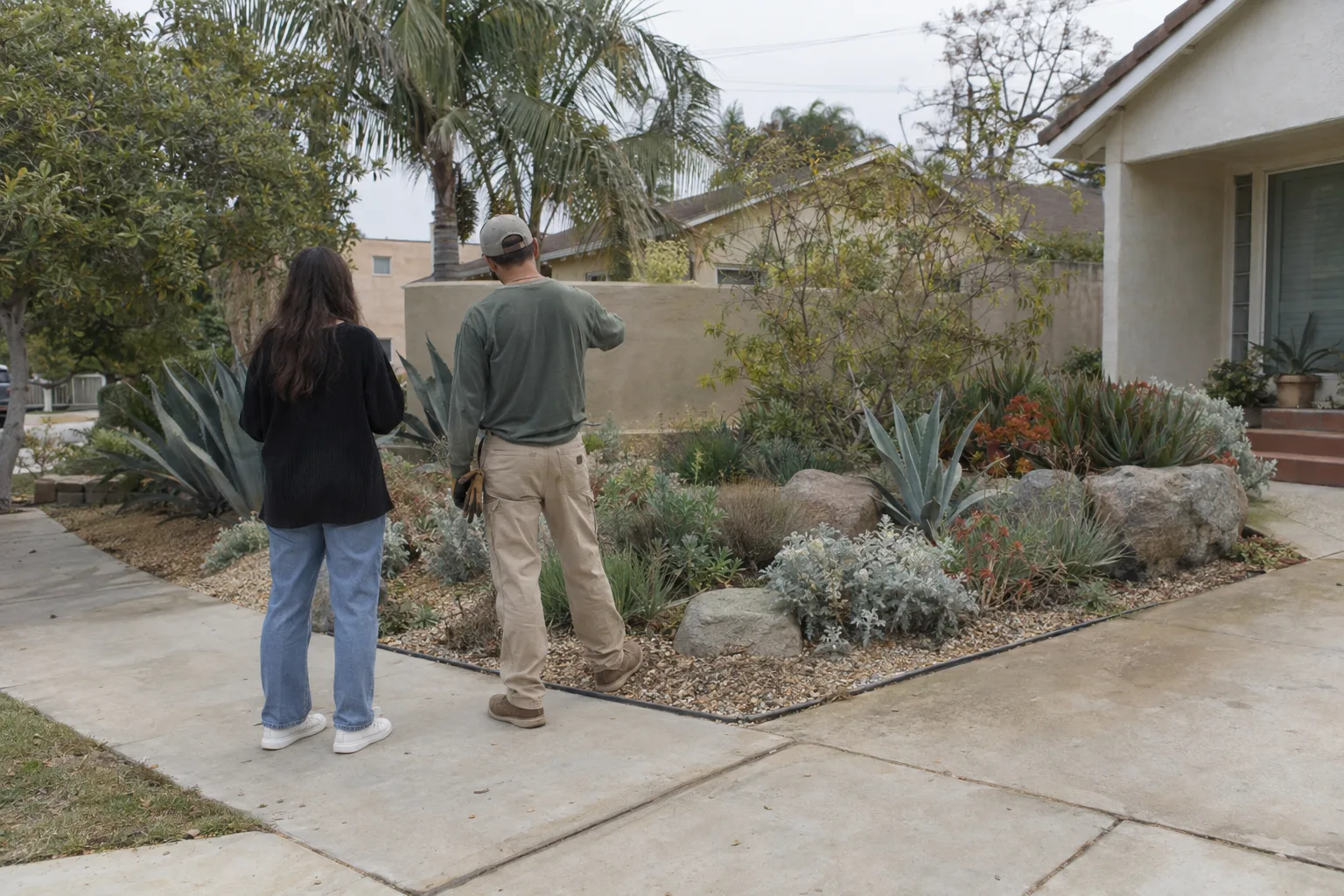
Tell us where the property is and we will walk it with you.
62 questions in 10 sections. Every answer links back to the page that covers it in full.
Quotes, pricing and getting started
What a job costs, how a quote is built, and what happens after you ask for one.
How do I get a quote, and is it really free?
Send the form on this page, call (323) 792-0166 or email in**@*************la.com. We only need the property address and a phone number to start. The quote is free and carries no obligation: we walk the property, talk through the options, and put a real number on paper. If you decide not to go ahead, that is the end of it.
How quickly will you get back to me?
Within one business day. If the property needs a site visit before anyone can price it honestly, we will say so in that first reply and book a time rather than send you a number we would have to revise later.
Do you charge for the site visit?
No. The walk-through is part of the quote and it is free. It usually takes about fifteen minutes for a straightforward maintenance property and longer for a design or hillside project, where soil, drainage and access all have to be assessed before anything sensible can be quoted.
What does landscaping cost in Los Angeles?
Pricing depends on the scope of your project, materials, and site conditions. For a full breakdown of budgets and what drives cost, see our homeowner's pricing guide for landscaping in Los Angeles. We also provide free, no-obligation estimates for every project.
What should I expect to pay for landscaping services in Greater Los Angeles?
Pricing ranges widely based on service type and property size. Recurring lawn maintenance typically runs less than a one-time cleanup; full design-and-install projects are priced per scope. We provide itemized quotes after a property assessment - no guessing from a phone call. Los Angeles labor and material costs affect every project, and we build quotes around what your specific yard actually needs.
More on this: Landscape Design & InstallationHow do I get started with a slope assessment?
Call us at 323-792-0166 or email in**@*************la.com. Tell us about your slope, your wall height estimate, your property city, and how long you have noticed movement. We will respond within one business day and schedule a site-specific assessment for your property.
More on this: Retaining WallsAbout the company
Who turns up, what we are licensed to do, and where we work from.
Are you licensed and insured?
Yes, and both are verifiable. Our California contractor licence number is CSLB-PLACEHOLDER, which you can check on the CSLB website in about two minutes, and we carry liability and workers' compensation cover. Ask and we will send the certificates. Our guide on checking a landscaper's credentials explains what to look for on any contractor, including us.
Where are you based?
Three locations across Greater LA. The head office is at 465 N Rodeo Drive in Beverly Hills, Rolling Hills Estates covers the South Bay and the Palos Verdes Peninsula, and Tarzana puts crews in the San Fernando Valley. From those three points, ten crews reach more than 50 communities daily. We have been working across the region since 2015.
Do you serve my neighborhood, or is your coverage limited to Beverly Hills and nearby cities?
We serve 50+ communities across Greater Los Angeles - from Santa Monica and Long Beach to Riverside and Oxnard. Our three locations (Beverly Hills, Rolling Hills Estates, Tarzana) let us dispatch crews across coastal, valley, hillside, and inland zones. Contact us with your property address to confirm which crew covers your area and availability for your project.
More on this: Landscape Design & InstallationDoes The Landscapers LA handle both design projects and ongoing maintenance, or do I need separate companies?
One company handles both. We design, install, and maintain landscapes - no handoffs between vendors. That means the crew maintaining your yard knows exactly how it was built. This matters when irrigation schedules, plant health, or seasonal care decisions come up. Fewer contractors means fewer communication gaps and a yard that stays consistent long-term.
More on this: Landscape Design & InstallationWhat makes The Landscapers LA different from the dozens of other landscaping companies serving LA?
Three confirmed locations, ten active crews, and nearly a decade of experience in Greater Los Angeles set us apart. Most LA landscapers operate one or two trucks. We scale across 50+ communities without losing consistency. Our Beverly Hills headquarters and regional crew network mean we can handle a hillside retaining wall and a coastal drought-tolerant install simultaneously - same company, same standards.
More on this: Landscape Design & InstallationShould I hire a licensed landscaper?
Working with a licensed professional protects your investment and ensures the job is done to code. Learn the difference in our guide on licensed vs. unlicensed landscapers in LA before you hire anyone.
Lawn care and maintenance
Mowing, feeding, watering and the reasons a lawn stops looking right.
Does the same crew come back each visit?
Yes, always. We assign consistent crew teams to every recurring maintenance account. The same crew returns each visit and learns your yard, from irrigation zones to sensitive plantings, so problems get caught early.
More on this: Lawn Care & MaintenanceHow often should my LA lawn be serviced?
It depends on season and turf type. Bermuda in peak summer needs weekly cuts, while tall fescue in a mild coastal climate may sustain bi-weekly service without quality loss. We build the schedule around what your yard actually needs.
More on this: Lawn Care & MaintenanceWhat mowing height do you use?
We set mowing height per grass type: Bermuda at 1-2 inches and tall fescue at 3-4 inches. We never scalp turf, since scalping removes the blade length the plant needs to protect soil moisture and shade its roots.
More on this: Lawn Care & MaintenanceIs fertilization included in maintenance?
Your lawn fertilization program gets mapped to the calendar from day one. Applications go out at the right points in the seasonal cycle, matched to your grass type, not when we happen to have product in the truck.
More on this: Lawn Care & MaintenanceWhy is my lawn dying or turning brown?
Brown, patchy, or thin grass usually points to watering, soil, or pest issues. Our resource on diagnosing a dying lawn in Los Angeles walks through the most common causes and fixes. If you need hands-on help, our lawn care and maintenance team can restore it.
Do you offer ongoing maintenance after a cleanup?
Many clients transition directly into ongoing lawn care and maintenance after their seasonal cleanup is complete, or use a cleanup visit as a starting point for a full yard renovation. Both are natural next steps once the yard has a clean slate.
More on this: Seasonal Yard CleanupWater, irrigation and LADWP rules
Watering-day restrictions, smart controllers, rebates and repairs.
Do you follow LADWP watering restrictions?
Yes. We factor LADWP watering windows and day restrictions into any irrigation guidance we provide, and we can help you understand the LADWP turf removal rebate program when reducing lawn coverage makes sense.
More on this: Lawn Care & MaintenanceWill a smart controller help me stay compliant with LADWP restrictions?
Yes. Smart irrigation controllers are WiFi-enabled devices that adjust watering schedules automatically based on real-time weather and soil conditions. We program LADWP-compliant scheduling into the controller before handoff, so the system skips restricted days and adjusts run times seasonally without you touching anything.
More on this: Irrigation SystemsCan I get a rebate for upgrading my irrigation system?
You may qualify for a rebate through the MWD SoCal Water$mart program, the Metropolitan Water District incentive offering cash back for water-efficient irrigation components. We know which controllers qualify and can help you document the installation for the application.
More on this: Irrigation SystemsHow do I know if I need a new system or just a repair?
We start with a water audit and run each zone while we watch. If problems trace back to a cracked valve, clogged head, or programming error, targeted repair is the right call. If the system's underlying design causes repeated failures, a partial redesign often saves more money long-term than patching individual components. We give you an honest assessment either way.
More on this: Irrigation SystemsWhy does my irrigation schedule need to change through the year?
The watering schedule that kept your lawn green in April will stress it in August if it hasn't been adjusted for seasonal temperature shifts. LA's microclimates each behave differently, which is why we design zone-specific run times and install smart controllers that adapt automatically.
More on this: Irrigation SystemsHow long does a repair usually take?
Repairs are completed in a single visit when parts are standard. We carry the most common heads and valves on every truck, so a broken head or failing valve is often resolved the same day we assess it.
More on this: Irrigation SystemsArtificial turf and drought-tolerant yards
The two ways out of a thirsty lawn, and what each one is actually like to live with.
Should I choose artificial turf or drought-tolerant landscaping?
Both save water, but the right choice depends on your yard, budget, and how you use the space. Compare them in our guide on artificial turf vs. drought-tolerant landscaping. We install artificial turf and design drought-tolerant landscapes across LA.
Does artificial turf really qualify for the LADWP rebate?
Yes, when it replaces qualifying traditional grass and meets the program's water-efficiency requirements. The LADWP currently offers $3 per square foot for eligible turf removal projects. We review your eligibility at the site assessment and explain the documentation you'll need to prepare so you can start the application in parallel.
More on this: Artificial Turf InstallationIs artificial turf too hot for LA summers?
Heat retention is a real concern in valley and inland areas, but it's managed through material selection, not avoided. Organic and coated sand infills run meaningfully cooler than crumb rubber alternatives. We map your sun exposure during the assessment and match infill type and fiber construction to your specific site.
More on this: Artificial Turf InstallationWhy do some artificial lawns develop odors?
Odors almost always trace back to skipped base preparation, not the turf itself. Without a proper compacted aggregate drainage base and landscape fabric, moisture and waste sit against LA's heavy clay soil and cannot flow out. We install a graded drainage base and test flow-through rate before the turf goes down.
More on this: Artificial Turf InstallationDo you offer pet-safe turf options?
Yes. Pet-safe turf uses antimicrobial infill and open-flow backing designed for animal use. But the infill only works if water and waste move efficiently through the backing and base, so pet installations require even more attention to drainage design. We plan the drainage around the intended use.
More on this: Artificial Turf InstallationCan I install turf in an HOA community?
In most cases, yes, with the right product chosen from the start. HOA rules can specify pile height, color tone, and border treatment. We get your community's written guidelines before specifying material, so the product meets the rules the first time. We've worked through this in Rancho Palos Verdes, Torrance, and parts of Pasadena.
More on this: Artificial Turf InstallationHow long does a typical installation take?
A typical residential site assessment takes about 45 minutes, and installation is usually a multi-day project depending on excavation depth and area size. Clay-heavy lots require deeper excavation and more time. Larger commercial synthetic turf properties may need a second assessment visit for complete drainage mapping.
More on this: Artificial Turf InstallationDesign, build, hardscape and walls
Projects with a start and a finish: patios, walls, drainage and permits.
Can I get everything from one company?
Yes. We run fifteen services across design, build and maintenance with our own crews, so a project that starts as a patio and turns into drainage, planting, irrigation and lighting stays with one team, on one schedule, on one invoice. Nothing is subcontracted out, which is why the standard does not change between the design visit and the maintenance visit two years later.
Do I need a permit for my patio, pergola, or fire feature?
It depends on the project. Some pergola designs and retaining walls over certain heights require permits and engineering review in LA County. We know which projects trigger those thresholds, and we pull the required permits and coordinate with agencies before any work begins, so you won't get a surprise stop-work order.
More on this: Hardscape & PatiosWhat materials do you install?
Decomposed granite, concrete pavers, natural stone, and porcelain tile. We match material to your specific microclimate, not just aesthetics, because flagstone holds up differently in coastal salt air than it does under inland heat.
More on this: Hardscape & PatiosHow do you handle drainage on LA properties?
Drainage is designed in from the start, not added later. We read the grade, plan water to flow away from structures, and use elements like French drains, dry creek beds, and permeable pavers where they make sense. Before any project is complete, we run a water test to confirm drainage performs as designed.
More on this: Hardscape & PatiosDo I need a permit for my retaining wall in Los Angeles?
Retaining walls above a certain height require a grading permit, engineering review, and inspection under the LA County Grading Ordinance. Many incorporated cities adopt similar standards. We identify whether your project triggers the permit threshold during our site diagnostics phase and coordinate the required engineering and inspections before construction begins.
More on this: Retaining WallsWhat type of retaining wall does my property need?
It depends on your slope height, soil profile, drainage, and load. Segmental block walls suit slopes under about four feet, gravity walls handle moderate heights, and concrete cantilever walls are used for walls over five or six feet on steep grades. We assess your actual site conditions before recommending any wall type, never based on what installs fastest.
More on this: Retaining WallsWhy is drainage so important for a retaining wall?
LA's clay-heavy foothill soils hold water instead of draining it, which builds hydrostatic pressure behind any slope. Without drainage and weep holes built into the wall, even a well-built structure can be undermined over time. We incorporate weep holes and compacted gravel backfill into every design to let trapped water escape and reduce soil pressure.
More on this: Retaining WallsMy yard spans a steep slope with drainage issues, is that something you can actually handle, or should I look for a specialist?
Slope work, erosion control, and drainage correction are core services we handle regularly. LA hillside properties require grading awareness, proper wall engineering, and plant selection that stabilizes soil. We assess drainage before recommending any installation. Properties in areas like Pasadena, Rancho Palos Verdes, and Rolling Hills have unique terrain challenges our crews work with consistently.
More on this: Sod InstallationTrees and seasonal cleanup
Pruning done properly, storm response, and what happens to the debris.
Why don't you recommend tree topping?
Topping cuts main branches back to stubs, which triggers rapid, weakly attached regrowth called epicormic shoots. Within two to three years a topped tree is often more hazardous than before the cut. Crown reduction achieves the same size and clearance goals without creating a structural problem down the road.
More on this: Tree Trimming & RemovalDo you handle palm tree maintenance?
Yes. We remove dead fronds and the dried skirt of old frond bases, known as palm skinning, for appearance and fire risk reduction under CAL FIRE guidelines. Palm skinning is done by hand, never by pulling or tearing, which damages trunk tissue.
More on this: Tree Trimming & RemovalDo large tree removals require permits?
Large removals near structures may require review under LA Department of Building and Safety permit requirements, and protected or heritage trees may fall under LA County urban forestry regulations. We factor those requirements into our assessment for applicable properties.
More on this: Tree Trimming & RemovalWhat happens to the stump after a tree is removed?
We offer stump grinding, which uses a mechanical grinder to reduce a cut stump below grade so the area is ready to replant, repave, or resod. Debris from the removal is hauled off-site as part of the service.
More on this: Tree Trimming & RemovalWhen should I book a fall yard cleanup in Los Angeles?
Before the Santa Ana winds arrive, not after. The fall Santa Ana season in Greater LA typically runs from late September through December. Booking a pre-season trim and yard preparation visit in September means your yard enters the wind season with less loose material to scatter and less structural risk from overgrown branches.
More on this: Seasonal Yard CleanupWhat does a spring yard cleanup include?
A spring cleanup covers pruning of winter-dead growth, bed clearing, mulch refresh, and an irrigation system check. Our crew also notes which shrubs came back thin, which beds show root competition from winter weeds, and which plants didn't survive cold snaps in higher-elevation neighborhoods like Pasadena or Altadena.
More on this: Seasonal Yard CleanupCan you respond quickly after a Santa Ana wind event?
Yes. If a wind event has already come through your neighborhood, we move fast. Our crews operate across Greater LA with 10 professional teams, so large cleanup volumes after a major wind event are something we're built to handle.
More on this: Seasonal Yard CleanupDo you haul away debris, or do I need to arrange disposal?
We handle green waste hauling, the transport and disposal of organic yard material, for clients whose debris volume exceeds what curbside pickup can handle. Green waste is staged for hauling throughout the visit and removed, not left in piles at the curb.
More on this: Seasonal Yard CleanupWhat do I receive after a cleanup visit?
You get a walkthrough and a written condition note: what was completed, what we flagged as needing attention, and whether a follow-up visit makes sense before the next season. That information is yours to act on, with no pressure.
More on this: Seasonal Yard CleanupFire safety and hillside properties
Defensible space, CAL FIRE zones, and clearing that does not cost you the slope.
What are the three CAL FIRE defensible space zones?
Zone 0 is the Ember-Resistant Zone (0-5 ft) around your structure with no combustible mulch or plants touching the building. Zone 1 is the Lean, Clean & Green Zone (0-30 ft) with widely spaced, irrigated, low-resin vegetation. Zone 2 is the Reduced Fuel Zone (30-100 ft) where brush and trees are spaced to prevent fire climbing from ground to canopy. We design all three in a single integrated plan.
More on this: Fire-Safe LandscapingDoes clearing everything on my slope automatically make me compliant?
No. Clearance removes fuel, but bare soil on a slope creates erosion, weed regrowth, and repeat clearance cycles. CAL FIRE's Zone 1 guidelines encourage appropriately spaced, irrigated, low-fuel vegetation. Bare ground is not the goal. We design a compliant plant palette that also stabilizes your slope.
More on this: Fire-Safe LandscapingCan you handle slope stabilization along with fire compliance?
Yes. Slope stabilization is assessed before planting on grades over 15%. We install erosion control netting or biodegradable blankets during plant establishment, and select California-native species with root systems deep enough to hold the hillside. Defensible space and slope stability are solved together, not separately.
More on this: Fire-Safe LandscapingDo you provide documentation for my HOA or fire authority?
Yes. Once installation is complete, we photograph the finished zones and prepare a plant-species summary you can present to your fire authority or HOA. If your inspection is scheduled, we can coordinate our timeline to have your property ready.
More on this: Fire-Safe LandscapingWhich communities do you serve for fire-safe landscaping?
We serve fire-risk and hillside communities across Greater Los Angeles, the South Bay, and the Inland Empire, including Chatsworth, Altadena, Rancho Palos Verdes, Santa Clarita, Simi Valley, Pasadena, Burbank, Long Beach, Torrance, Van Nuys, Thousand Oaks, Riverside, Rancho Cucamonga, and San Bernardino, including properties within designated State Responsibility Areas.
More on this: Fire-Safe LandscapingDo you offer fire-safe and commercial landscaping?
Yes. We create fire-safe landscaping and defensible space for hillside and high-risk properties, and we provide ongoing commercial landscape maintenance for businesses across Los Angeles. We also handle pool area landscaping, sod and lawn installation, yard makeovers, and seasonal yard cleanup.
Outdoor lighting
Low-voltage systems, when to plan them, and what they control.
Is it too late to add lighting if my project is already underway?
Sometimes we can retrofit lighting into an existing yard and work around existing conditions. The cleaner path is to put the lighting plan on the table at the start, alongside the planting layout and hardscape design, so the system fits the space from day one rather than being worked around finished surfaces.
More on this: Outdoor LightingWhy low-voltage instead of standard line-voltage lighting?
All residential landscape lighting runs on 12-volt systems, safer for the homeowner, cleaner for the landscape, and energy-efficient. It's fully within our scope as licensed landscape contractors and reads between 10.8 and 12 volts at the last fixture on a healthy install.
More on this: Outdoor LightingWhat kinds of lighting zones do you install?
We group fixtures by function into independent zones: uplighting on mature trees, step lighting on risers, path and step lighting along walkways for safe navigation, and moonlighting positioned high in the canopy to simulate natural moonlight without visible hardware. Each zone runs on its own circuit back to the transformer.
More on this: Outdoor LightingCan I control the lighting from my phone?
Yes. All transformer and timer configurations we install are compatible with app control and astronomical clock scheduling, so your lighting can adjust automatically to sunset times year-round.
More on this: Outdoor LightingYour yard's climate and soil
Why the same plant thrives in Santa Monica and dies in Chatsworth.
How do I know which microclimate zone my property is in?
Location is the biggest indicator. Coastal neighborhoods like Santa Monica and El Segundo sit in USDA Zone 10b-11, inland valleys like Van Nuys and Burbank fall in Zone 9b-10a, and higher foothill elevations drop into Zone 9a where frost is a real factor. The Landscapers LA matches recommendations to the zone of the property, every time, from the Pacific coast through the Inland Empire.
More on this: LA microclimatesWhy do my plants keep dying even though I water them correctly?
Repeated failures in the same location usually point to a microclimate or soil mismatch rather than a watering error. In coastal zones it can be salt air clogging emitters, in the Valley it's often clay soil compaction, and in the Inland Empire caliche hardpan blocks roots. If plants fail repeatedly despite correct watering, it's time for a professional site assessment.
More on this: LA microclimatesWhat is caliche hardpan and how do I know if I have it?
Caliche hardpan is a calcium carbonate layer cemented into the soil, the defining soil challenge of the Inland Empire. It blocks root penetration and drainage, causing waterlogging and stunted growth. A tap or probe test that stops at 12-18 inches is a strong indicator. Breaking through it with a soil auger or pneumatic tool before installation unlocks long-term establishment.
More on this: LA microclimatesWhat landscaping services do you offer?
We handle everything from routine upkeep to complete transformations, including landscape design and installation, hardscape and patio installation, irrigation systems, tree trimming and removal, retaining wall construction, and outdoor lighting.
Still have a question?
If it is not here, it is probably specific to your property — which is the kind we would rather answer by looking at it. Send the address and the question, and you will get a straight answer within one business day.
Ask us directly(323) 792-0166Longer answers, in the guides
Where a question needs more than a paragraph.
What a job actually costs
Real price ranges for lawn care, design, hardscape, irrigation and turf removal in Los Angeles, plus what actually moves the number on a quote.
Read the guide
Claiming the LADWP rebate
Eligibility, the pre-inspection, plant coverage rules and the mistakes that void a claim — walked through in the order you actually do them.
Read the guide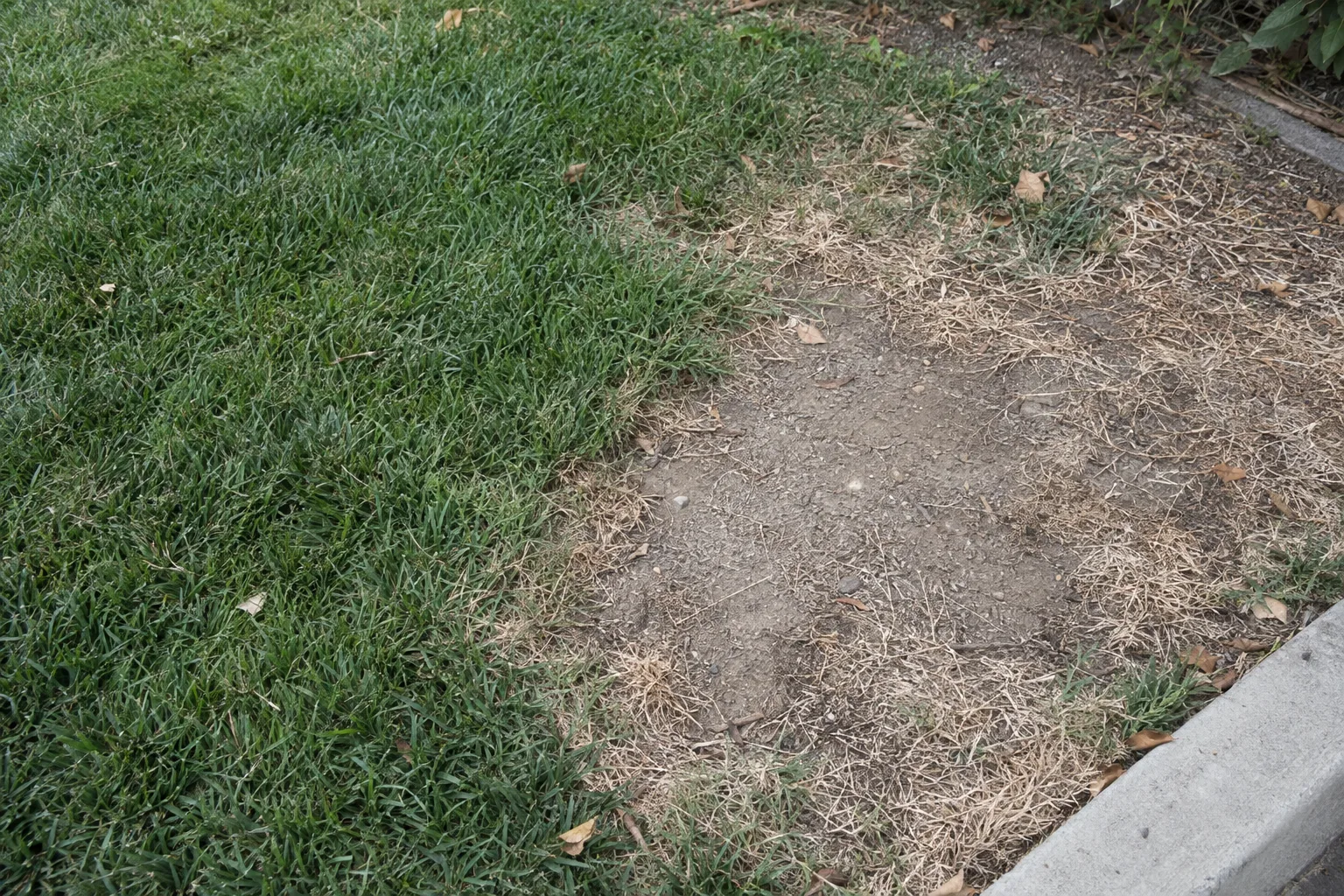
Why your lawn is doing that
Brown patches, thinning grass and bare spots: how to tell watering problems from grubs, fungus, compaction and dog urine, and what fixes each.
Read the guide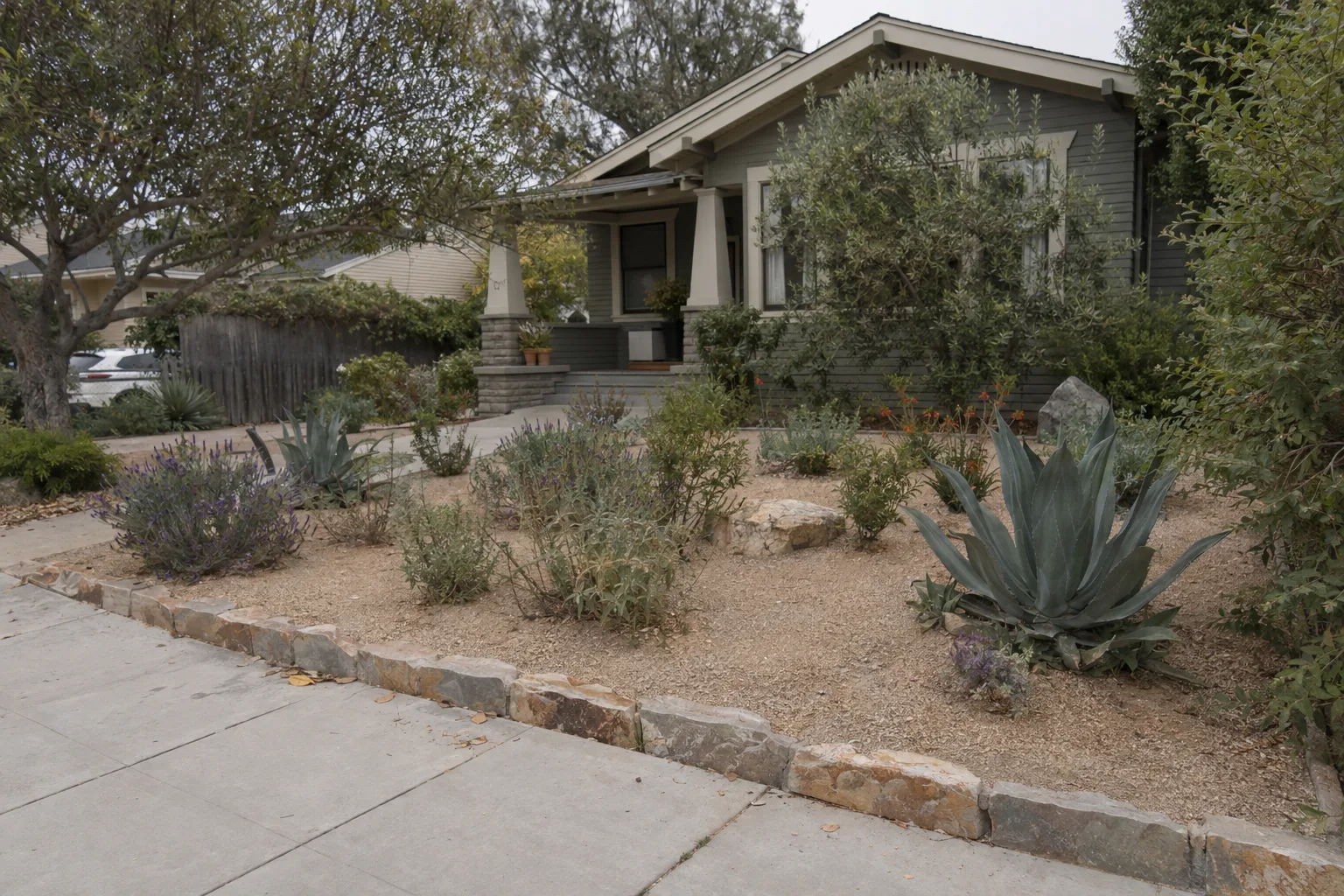
CAL FIRE defensible space
Zone 0, 1 and 2 explained in plain language, with what an inspector looks for and what gets a hillside property a repeat notice.
Read the guideGet a free, no-pressure quote
We walk the property, talk through the options, and put a real number on paper. No obligation.