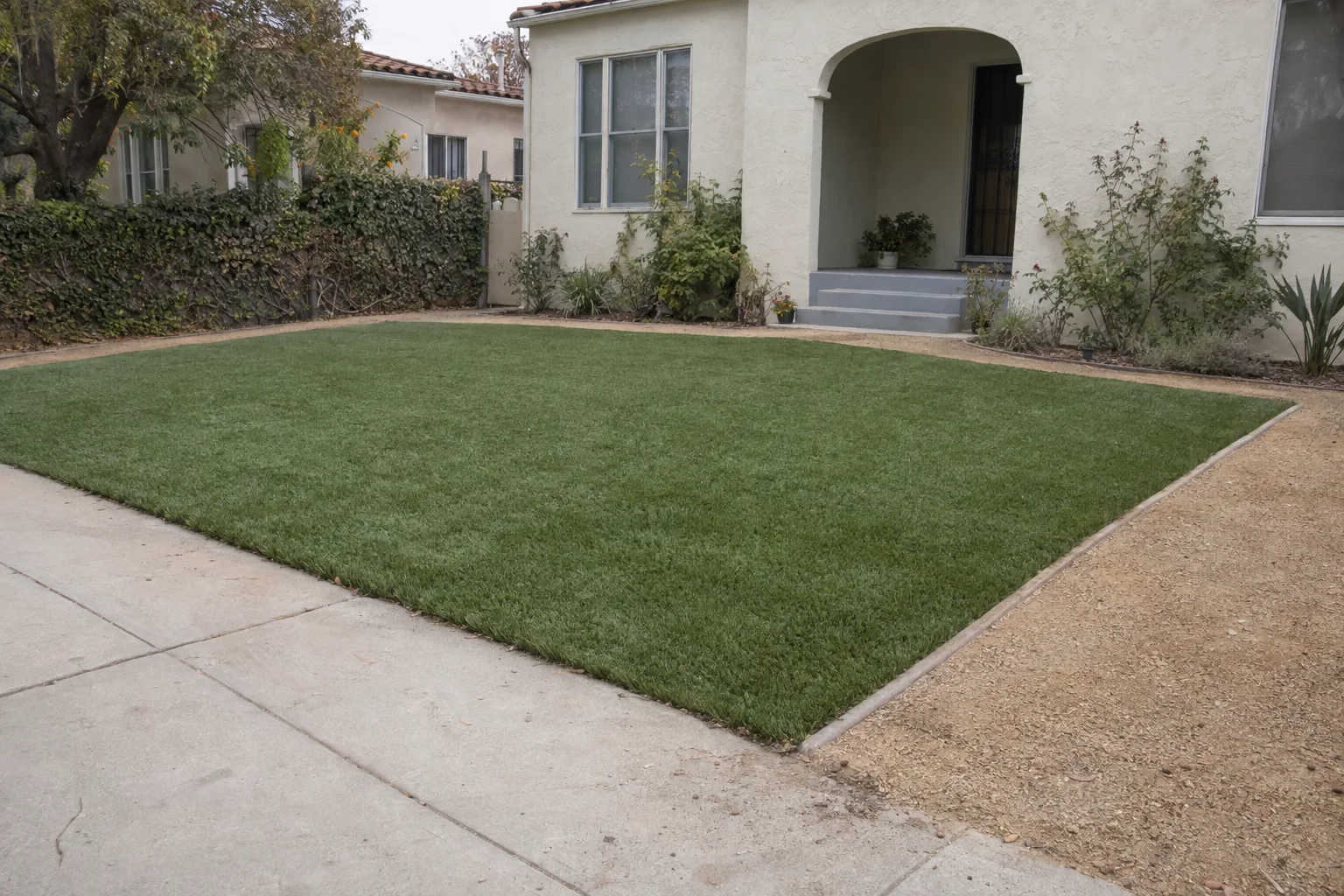
Artificial Turf Installation Los Angeles & Greater LA
Site-specific drainage, infill, and heat assessment for a yard that never needs watering. From Beverly Hills to the Inland Empire.
- Site-specific base, drainage and infill — not a one-spec install
- Heat assessed before we recommend a product for your exposure
- HOA rules checked and submittals handled where they apply
Get a free quote
Tell us where the property is and we will walk it with you.
Artificial Turf Is One of the Smartest Investments an LA Homeowner Can Make Right Now
Synthetic turf installation done correctly eliminates your water bill's single largest line item.
The Los Angeles Department of Water and Power currently offers a turf removal rebate of $3 per square foot for homeowners who replace traditional grass with qualifying water-efficient landscaping. That's a real payment toward your project cost, not a discount, not a coupon. See the LADWP turf removal rebate program details to understand exactly what qualifies and how to apply. Artificial turf installation in LA is one of the few home upgrades where a government program actively reduces your upfront investment while your monthly water costs drop permanently.
Here's what most homeowners don't realize about synthetic turf: the long-term performance of your lawn has almost nothing to do with which brand of grass you pick. It has everything to do with what goes underneath it. Drainage base preparation, the excavation and compacted aggregate layer installed beneath synthetic turf, determines whether your yard drains cleanly or holds moisture, whether odors develop, and how long the backing lasts before degrading. If you're weighing your options before committing, you can also compare artificial turf to drought-tolerant landscaping to see which approach fits your property best.
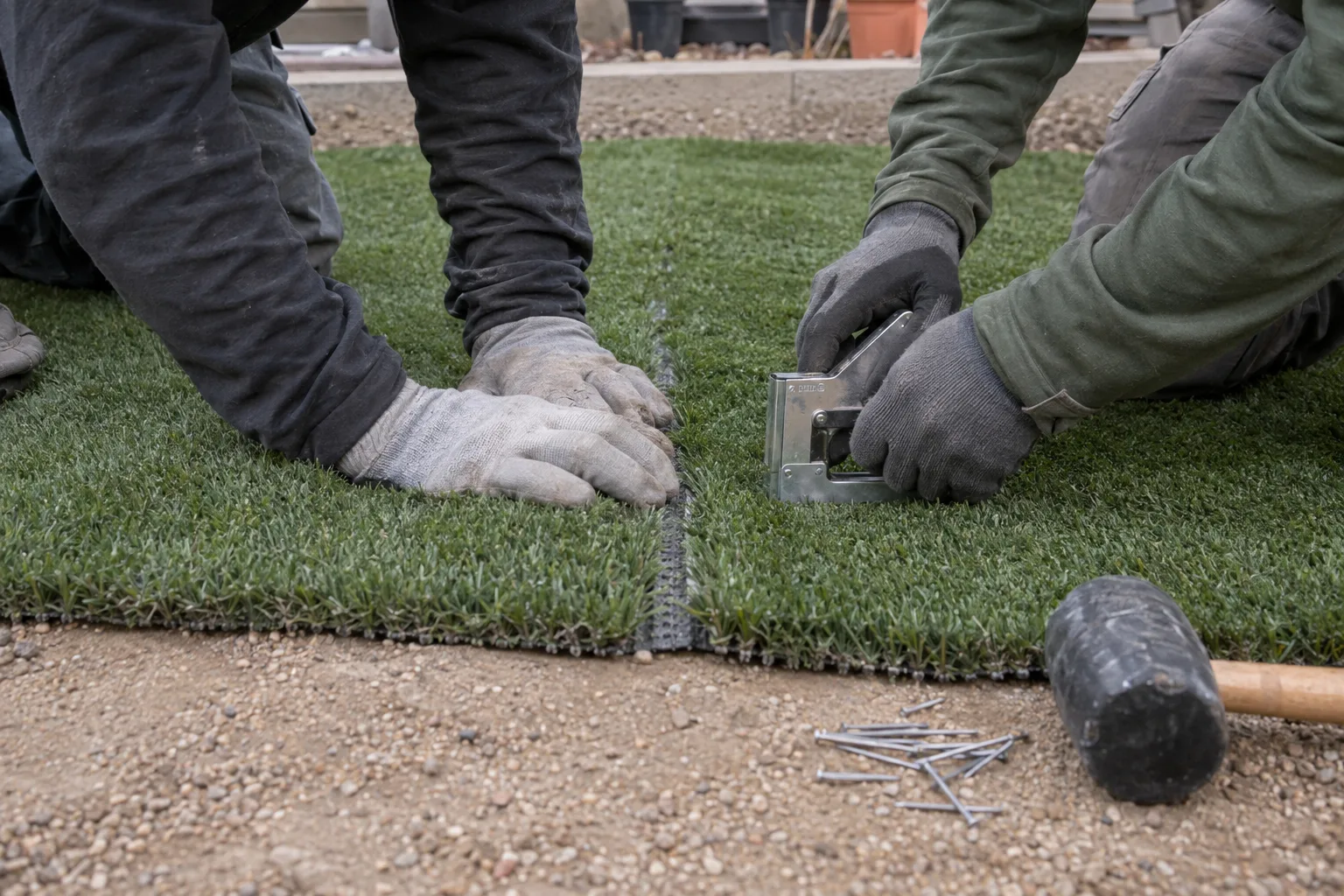
Get the base right. Everything else follows.
No two artificial turf installations in Los Angeles are identical, because no two properties sit in the same environment.
The Landscapers LA has been installing synthetic turf across Greater LA since 2015. That's nearly a decade of reading different sites, coastal yards in Santa Monica where salt air and marine layer affect drainage patterns, San Fernando Valley properties in Tarzana and Van Nuys where summer surface temperatures on unshaded synthetic turf can climb significantly, and Inland Empire installations in Riverside and Rancho Cucamonga where caliche hardpan near the surface requires deeper excavation to reach workable drainage depth. Understanding how LA microclimates affect your landscaping choices is essential when comparing a coastal Santa Monica yard to a San Fernando Valley property, the differences in heat load, moisture, and drainage behavior are significant enough to change every material decision.
Heat retention in synthetic turf, the tendency of synthetic grass to absorb and radiate heat in direct sun, is a genuine concern in valley and inland communities. It's not a reason to avoid turf. It's a reason to select the right infill type and fiber construction for your specific site. Organic and coated sand infills run meaningfully cooler than crumb rubber alternatives. That's a material specification decision, not an afterthought.
For properties where water savings and site conditions are a primary concern, exploring water-efficient landscaping options for LA yards alongside synthetic turf can help clarify the right approach for your specific exposure and soil type.
Our Tarzana location supports faster crew scheduling across the entire San Fernando Valley corridor. If you're in Chatsworth, Van Nuys, or anywhere along the 101, that proximity matters when you're coordinating a multi-day installation.
Greater LA Has More Climate Zones Than Most States, Your Turf Installation Should Reflect That
What a Van Nuys Site Assessment Revealed About Base Preparation
The following is from one of our lead crew members on a recent project.
We got a call from a homeowner in Van Nuys. She'd had artificial turf installed about two years earlier. The lawn looked fine from the street. She was calling because odors had gotten bad enough that her kids weren't using the backyard anymore.
I pulled a section of the turf back within the first few minutes. The base underneath was about an inch of compacted sand over the original soil. No aggregate layer. No drainage fabric. The original clay soil, which is common throughout the San Fernando Valley, was sitting right under the backing, holding moisture every time it rained or the neighbors' sprinklers drifted over. Two years of that and you've got an odor problem that's not coming from the turf itself. It's coming from what was skipped at installation.
The fix required pulling the entire lawn, excavating properly, installing a compacted decomposed granite drainage base with landscape fabric, and re-laying the turf.
Here's the detail that matters most in Valley installations: LA's heavy clay soils don't drain on their own. You need a base that intercepts water before it reaches that clay layer. The industry minimum is often cited as 3-4 inches of crushed aggregate. For clay-heavy lots in the Valley and South Bay, we routinely go deeper, and we test drainage rate before the turf goes down, not after.
Pet-safe artificial turf, synthetic grass products with antimicrobial infill and open-flow backing designed to handle animal use, requires even more attention to drainage design. Antimicrobial infill manages bacteria at the fiber level. But if water and waste aren't moving through the backing and out of the base efficiently, no infill product will keep the yard smelling right.
Ask to see a drainage plan before any installation begins.
HOA Artificial Turf Rules Are Real, We Know How to Work Within Them
Many LA homeowners can install synthetic turf in HOA communities with the right product selection from the start.
HOA artificial turf rules, the homeowner association guidelines that govern synthetic lawn appearance, pile height, color tone, and border treatment in common-view areas, vary by community and can be surprisingly specific. Some HOAs require a minimum pile height of 1.5 inches. Others restrict certain green tones or require visible border edging in matching materials. A handful of communities near the coast still limit synthetic turf, though this is becoming less common as water conservation mandates expand. Where HOA rules require a living border or transitional planting zone around synthetic turf areas, our water-efficient landscaping options for LA yards provide water-wise alternatives that satisfy most community guidelines while maintaining a cohesive yard design.
The approach that works consistently: get the HOA's written guidelines before we specify the material. Most manufacturers offer multiple pile heights, blade shapes, and color blends. Choosing the right product from the start costs nothing extra. Pulling out installed turf that an HOA flags costs significantly more.
We've worked through this process across communities in Rancho Palos Verdes, Torrance, and parts of Pasadena. If your community has specific requirements, bring them to your site assessment. We'll match the product to the rules, not the other way around.
Our Standards for Artificial Turf Installation
Every installation starts with a site assessment, not a sales pitch.
What we evaluate before specifying a single product:
Drainage baseline
Soil type, existing grade, and whether clay or caliche is present below the topsoil layer.
Sun exposure and shade mapping
Which areas receive full afternoon sun, which stay shaded, and how that affects infill selection.
Intended use
Children's play areas, pet runs, and decorative-only zones each require different backing flow rates and infill types.
HOA or municipal requirements
Confirmed in writing before material orders are placed.
LADWP turf removal rebate eligibility
The conditions under which an artificial turf replacement project qualifies for the LADWP's $3-per-square-foot incentive payment, reviewed at assessment so you know what documentation to prepare.
Materials we specify are matched to the site. We do not apply a single product line across every project. Residential-grade turf and commercial synthetic turf, artificial grass installed on high-traffic commercial properties, office plazas, and multi-family common areas requiring durability ratings above residential-grade products, carry different fiber weight, backing construction, and warranty terms. We'll tell you plainly which category your project falls into.
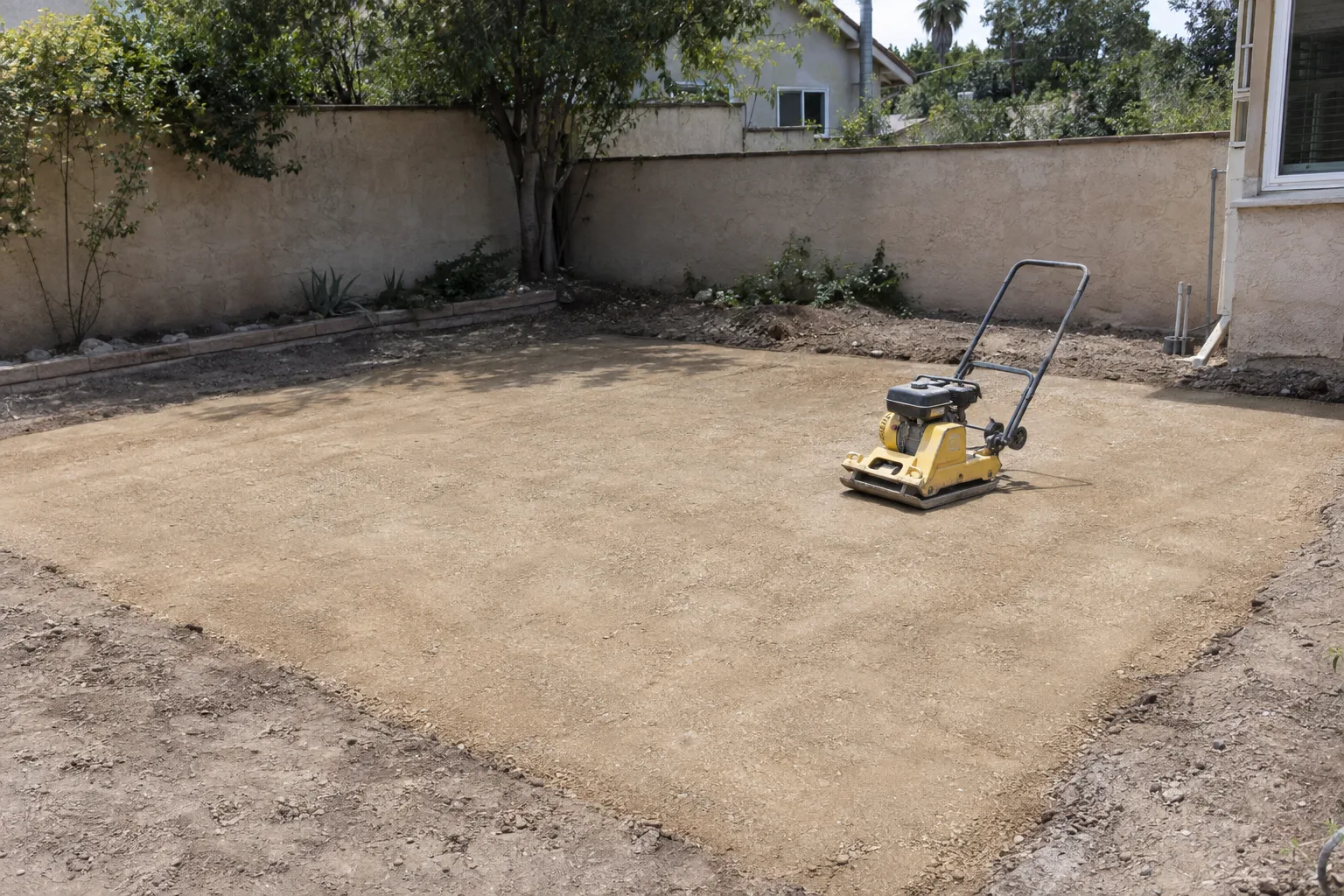
Three passes of base compaction. Not one.
How We Install Artificial Turf, From Site Assessment Through Final Inspection
Site Diagnostics
The assessment visit covers four things: drainage, grade, soil composition, and sun mapping. We measure the area, confirm any existing irrigation lines that need to be capped or rerouted, and check for underground obstacles, particularly relevant in older Beverly Hills and Pasadena properties where irrigation infrastructure can be decades old. We also walk through LADWP turf removal rebate eligibility at this stage. If your project qualifies, we'll explain what documentation LADWP requires so you can start that process in parallel.
The assessment takes about 45 minutes on a typical residential site. Larger commercial synthetic turf properties may require a second visit for complete drainage mapping.
Base Preparation and Installation
This is the phase that determines how long your turf performs.
We begin with full excavation, depth determined by soil type and drainage test results, not a fixed number. Clay-heavy lots in the Valley and South Bay go deeper. We install weed barrier fabric, then a compacted base layer of crushed aggregate, most commonly Class II road base in the 3/4-inch grade, which compacts tightly and drains efficiently. This layer is graded to match your property's natural drainage direction.
The turf is then cut, seamed, and secured at all edges. Seam placement follows sun angle when possible, seams that run parallel to the dominant light direction are far less visible than seams running perpendicular to it. Artificial turf infill, the granular material, whether crumb rubber, sand, or organic alternatives, packed between synthetic grass fibers to provide cushioning, stability, and drainage, is applied at the manufacturer's specified rate and brushed into the fiber with a power broom to stand the blades upright. Synthetic turf is also a practical and attractive surface choice for synthetic turf around pools and outdoor living areas, where slip resistance, drainage performance, and low maintenance make it a strong alternative to traditional hardscape or natural grass.
Post-Installation Testing
Before we leave the site, we run a drainage test. Water goes on, and we confirm flow-through rate. We check all seams for edge separation and verify infill distribution is even across the full surface. If any section shows slow drainage or uneven fill, it's corrected on the same visit. You receive a walkthrough of the finished installation, including care instructions, warranty terms on the turf backing, and the fiber manufacturer's UV rating for your specific product.
We don't sign off until the drainage test passes.
Ready for a yard that never needs watering?
Artificial turf installed right the first time. Serving Greater LA since 2015, get your synthetic turf quote today.
The Landscapers LA installs synthetic turf throughout Greater LA, from the coast to the Inland Empire.
We serve Los Angeles, Beverly Hills, Santa Monica, West Hollywood, Culver City, Burbank, Glendale, Pasadena, Van Nuys, Tarzana, Chatsworth, Torrance, Redondo Beach, El Segundo, Hawthorne, Inglewood, Long Beach, Carson, Compton, Whittier, Downey, Norwalk, Montebello, Arcadia, Monrovia, West Covina, Covina, Rancho Palos Verdes, Rolling Hills Estates, Santa Clarita, Thousand Oaks, Moorpark, Simi Valley, Oxnard, Ventura, Pomona, Ontario, Riverside, San Bernardino, Rancho Cucamonga, Fontana, Anaheim, Santa Ana, Irvine, Corona, Fullerton, Costa Mesa, Victorville, Palmdale, and Lancaster.
Ready to Replace Your Lawn? Start With a Site Assessment
A well-installed synthetic lawn in Greater LA pays back its water savings within a few years, and stays green indefinitely.
The site assessment is where everything starts. We look at your drainage, your sun exposure, your soil, and your HOA rules before we recommend a single product. That's the only way to get an installation that performs the way you expect it to.
Tell us about your property, we'll assess drainage, sun exposure, and the right turf for your site. Where's your property located? We'll match the right turf system to your yard's actual conditions.
Call 323-792-0166 or email in**@*************la.com
Frequently Asked Questions
Does artificial turf really qualify for the LADWP rebate?
Yes, when it replaces qualifying traditional grass and meets the program's water-efficiency requirements. The LADWP currently offers $3 per square foot for eligible turf removal projects. We review your eligibility at the site assessment and explain the documentation you'll need to prepare so you can start the application in parallel.
Why do some artificial lawns develop odors?
Odors almost always trace back to skipped base preparation, not the turf itself. Without a proper compacted aggregate drainage base and landscape fabric, moisture and waste sit against LA's heavy clay soil and cannot flow out. We install a graded drainage base and test flow-through rate before the turf goes down.
Is artificial turf too hot for LA summers?
Heat retention is a real concern in valley and inland areas, but it's managed through material selection, not avoided. Organic and coated sand infills run meaningfully cooler than crumb rubber alternatives. We map your sun exposure during the assessment and match infill type and fiber construction to your specific site.
Can I install turf in an HOA community?
In most cases, yes, with the right product chosen from the start. HOA rules can specify pile height, color tone, and border treatment. We get your community's written guidelines before specifying material, so the product meets the rules the first time. We've worked through this in Rancho Palos Verdes, Torrance, and parts of Pasadena.
Do you offer pet-safe turf options?
Yes. Pet-safe turf uses antimicrobial infill and open-flow backing designed for animal use. But the infill only works if water and waste move efficiently through the backing and base, so pet installations require even more attention to drainage design. We plan the drainage around the intended use.
How long does a typical installation take?
A typical residential site assessment takes about 45 minutes, and installation is usually a multi-day project depending on excavation depth and area size. Clay-heavy lots require deeper excavation and more time. Larger commercial synthetic turf properties may need a second assessment visit for complete drainage mapping.
Ready to Get Started?
Contact our team today for a free consultation.
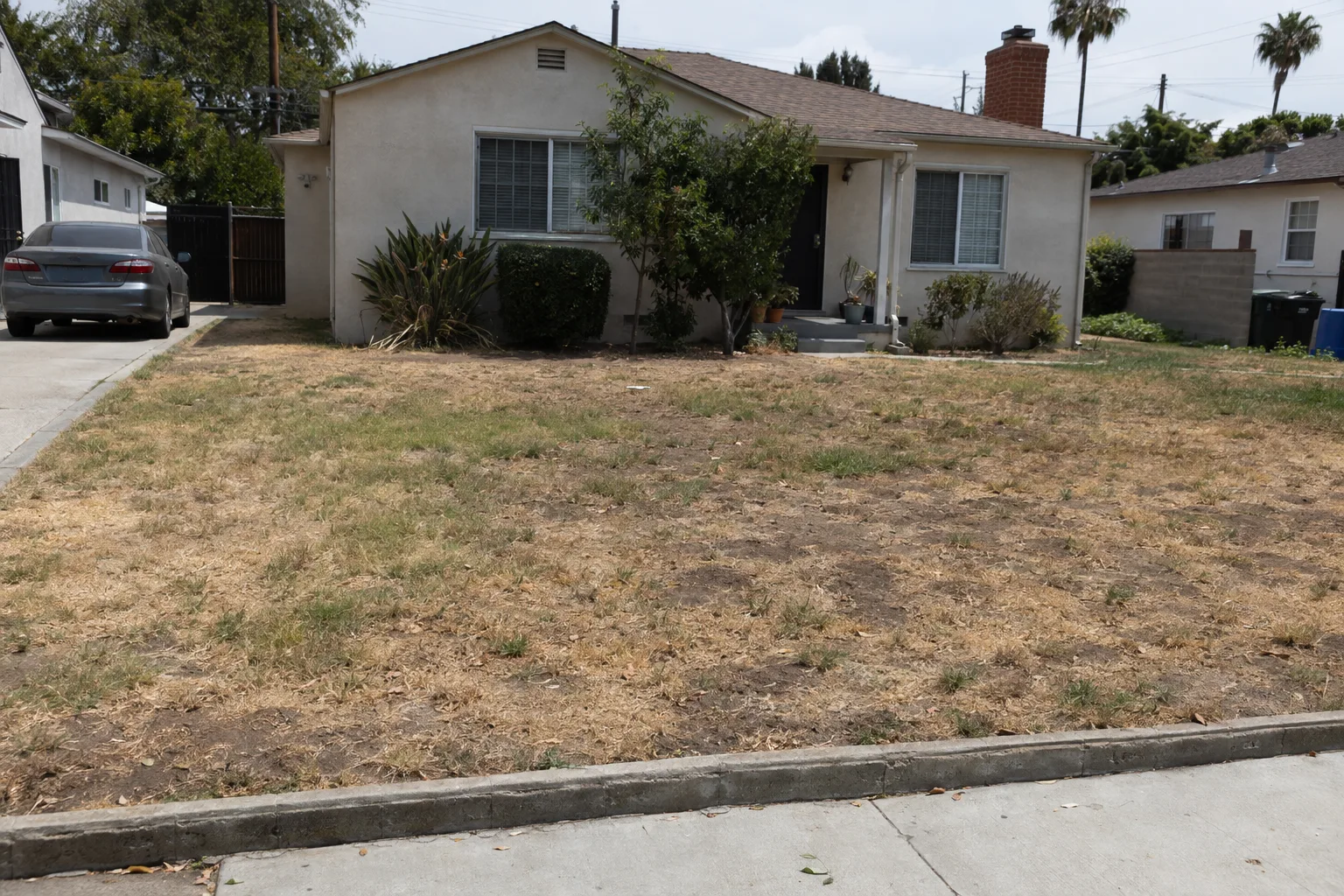
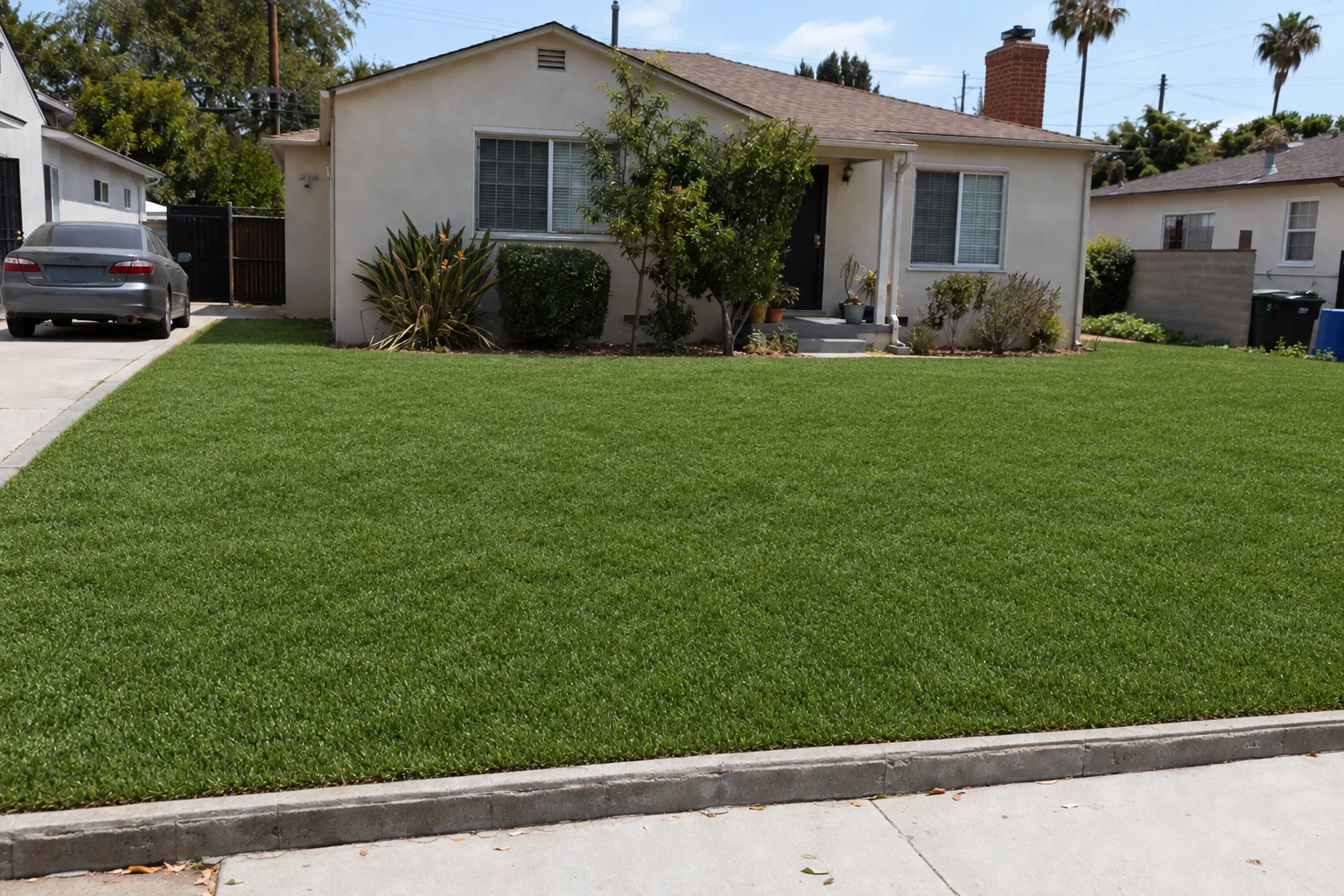
Before and after
Get a free, no-pressure quote
We walk the property, talk through options, and put a real number on paper.
From our blog
Straight answers on what things cost, which rebates you qualify for, and why your lawn is doing that.
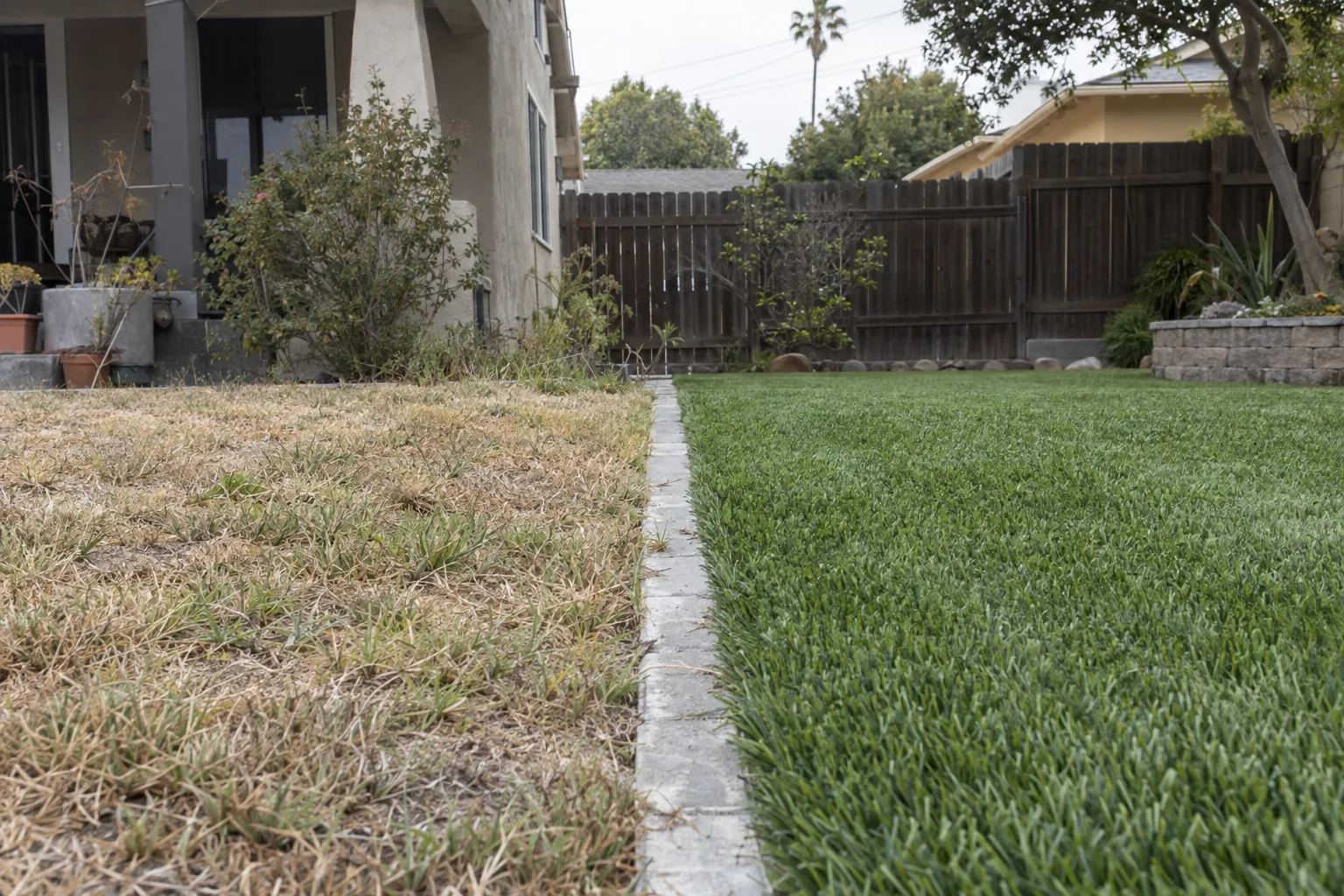
Artificial Turf vs Drought-Tolerant
Cost, heat, drainage, pets, resale and rebates compared for Los Angeles yards, so you can tell which of the two actually suits your property.
Read the guide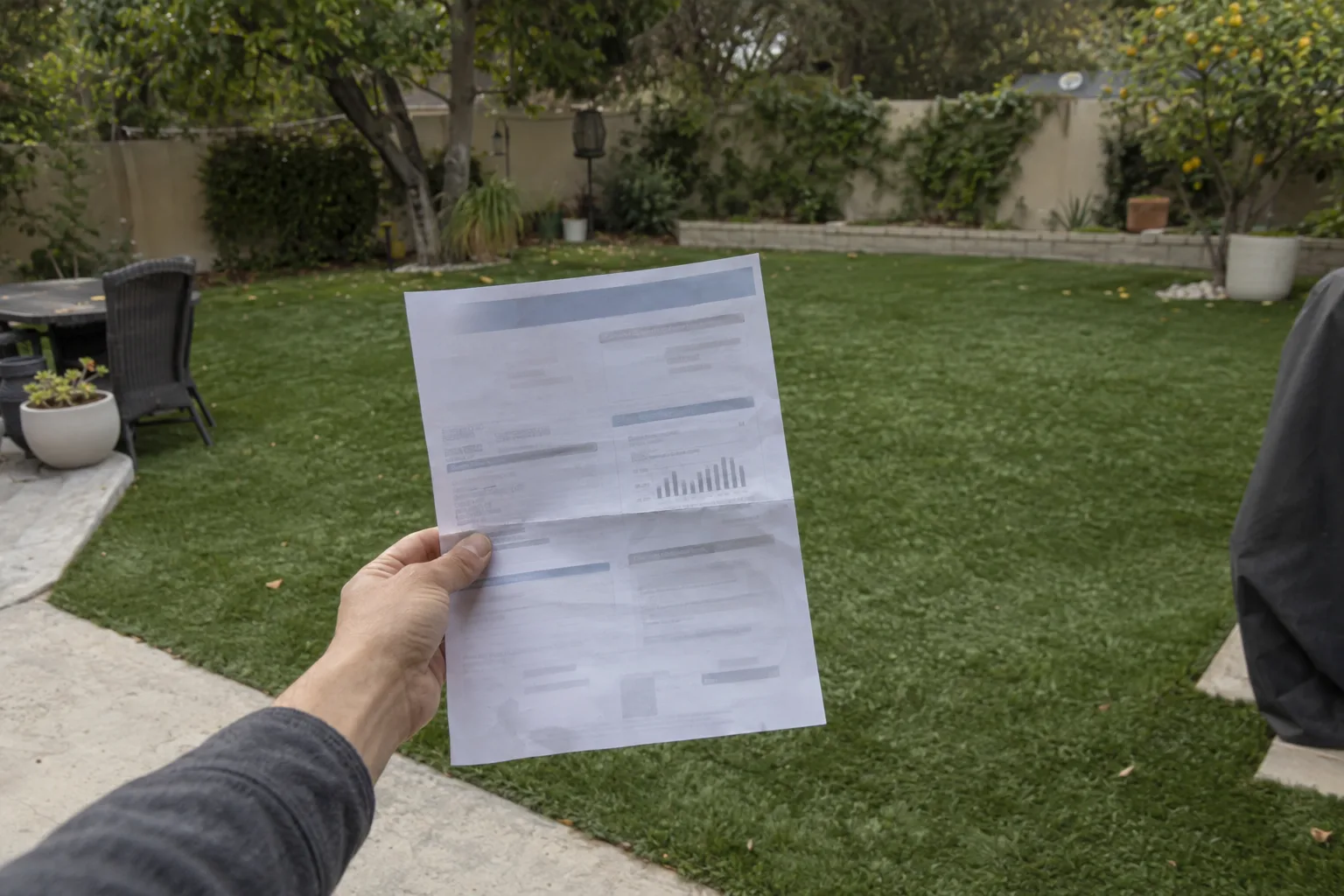
LADWP Turf Removal Rebate: $3 per Sq Ft
How Los Angeles homeowners claim the LADWP turf replacement rebate: eligibility, the pre-inspection, plant coverage rules and the mistakes that void a claim.
Read the guide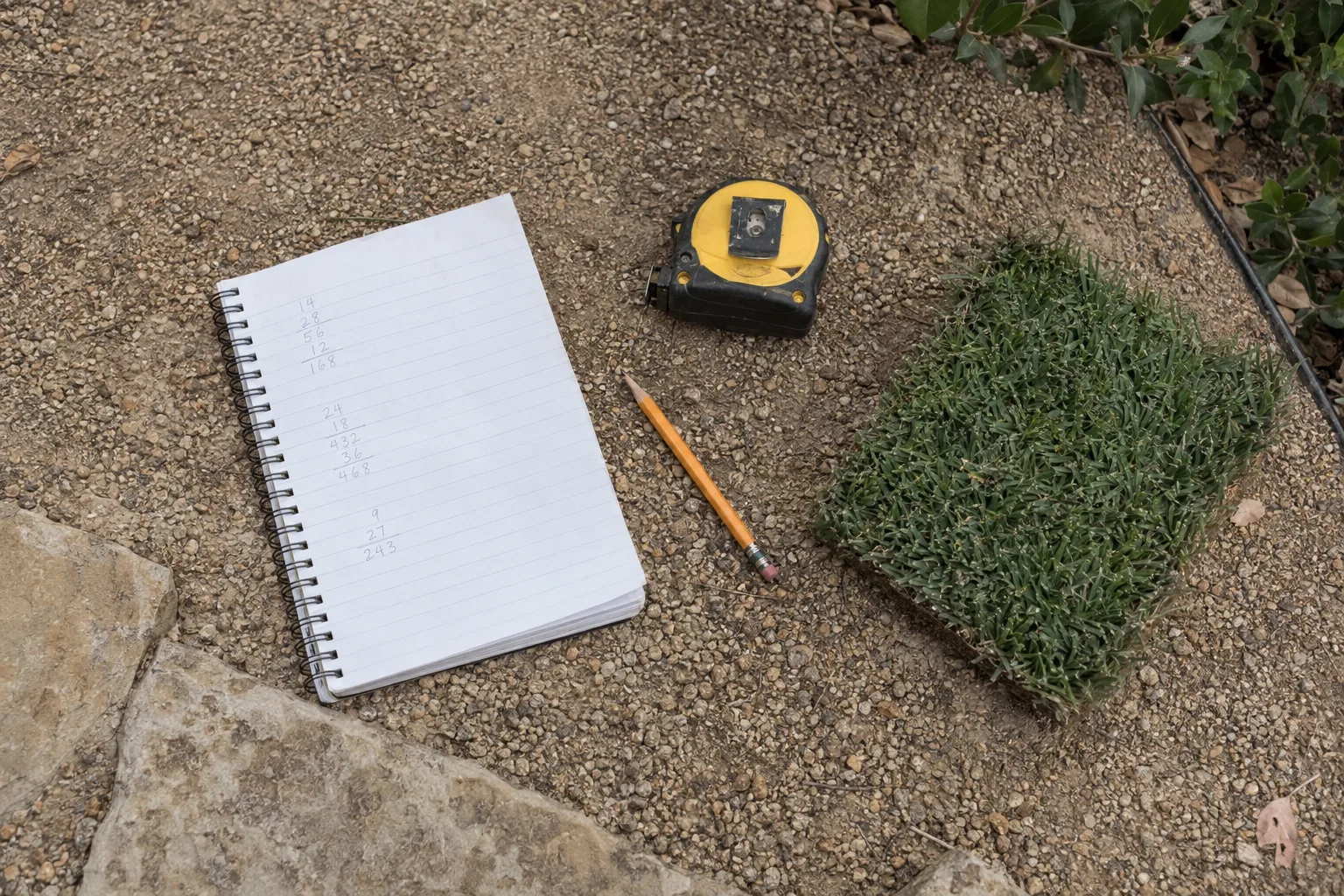
What Does Landscaping Cost in Los Angeles?
Real price ranges for lawn care, design, hardscape, irrigation and turf removal in Los Angeles, plus what actually moves the number on a quote.
Read the guide
Landscaping by LA Microclimate
Coastal, valley, hillside and Inland Empire properties need different plants, soil prep and irrigation. What changes across Greater LA, and why it matters.
Read the guide