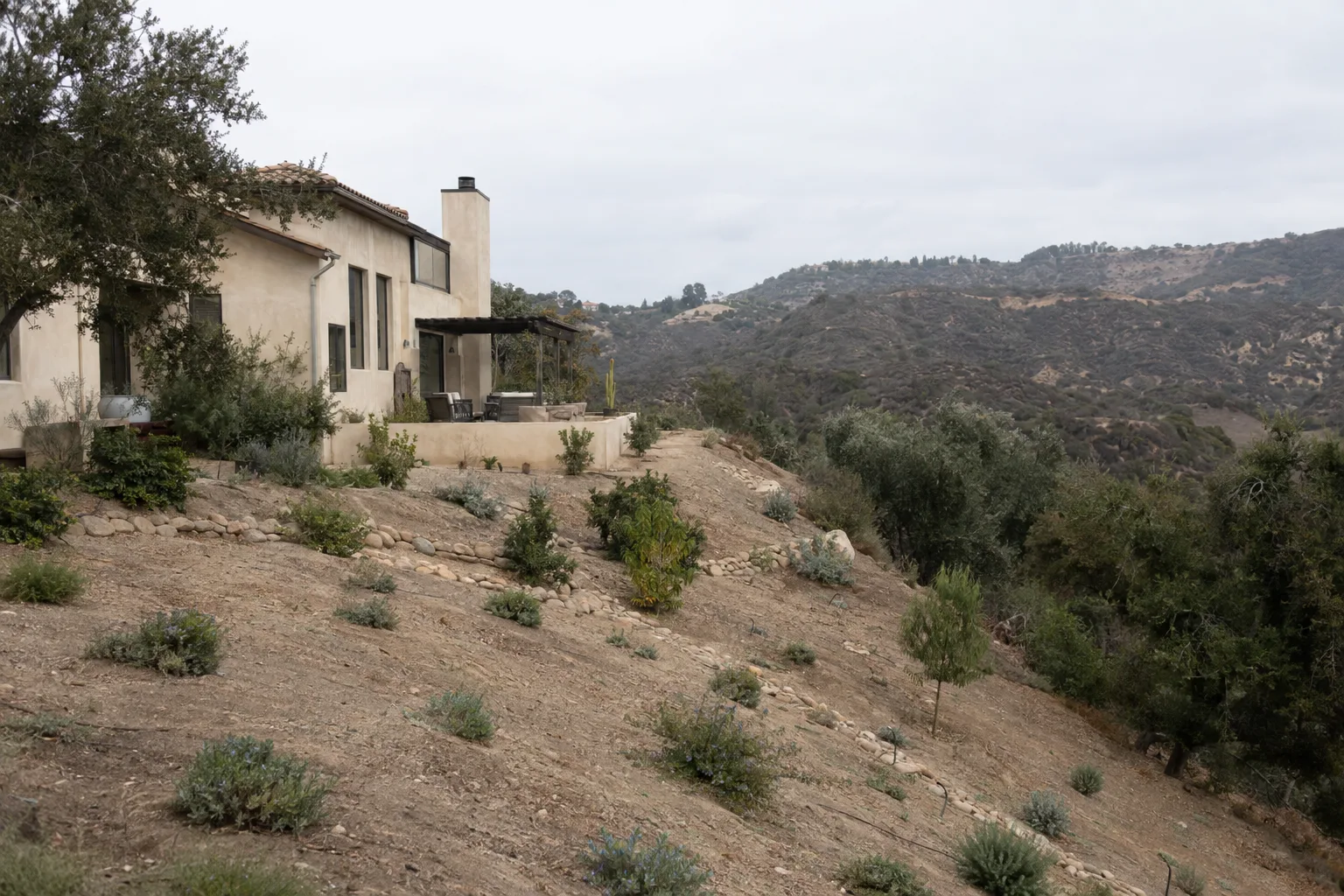
Drought-Tolerant Landscaping LA in Arcadia
Drought-tolerant landscaping LA homeowners in Arcadia need: water-smart plant design that handles the San Gabriel Valley heat and qualifies for local rebate programs.
- Native and low-water plant palettes matched to Arcadia's inland climate
- Turf removal and replacement plans that qualify for water district rebates
- Drip irrigation and smart controllers installed in the same project
Get a free quote
Tell us where the property is and we will walk it with you.
Drought-Tolerant Landscaping in Arcadia Starts With the Right Plant Palette
Drought-tolerant landscaping LA homeowners in Arcadia need goes beyond swapping grass for gravel - it's a plant and irrigation system working together.
Learn more about Pasadena landscape design in Van Nuys
You pull out the lawn. You lay down some rock. Then summer arrives and the bare ground bakes, weeds push through, and the yard looks worse than before. That's what happens when the plant design gets skipped.
Learn more about smart irrigation controller Los Angeles in Culver City
That's the gap we fill.
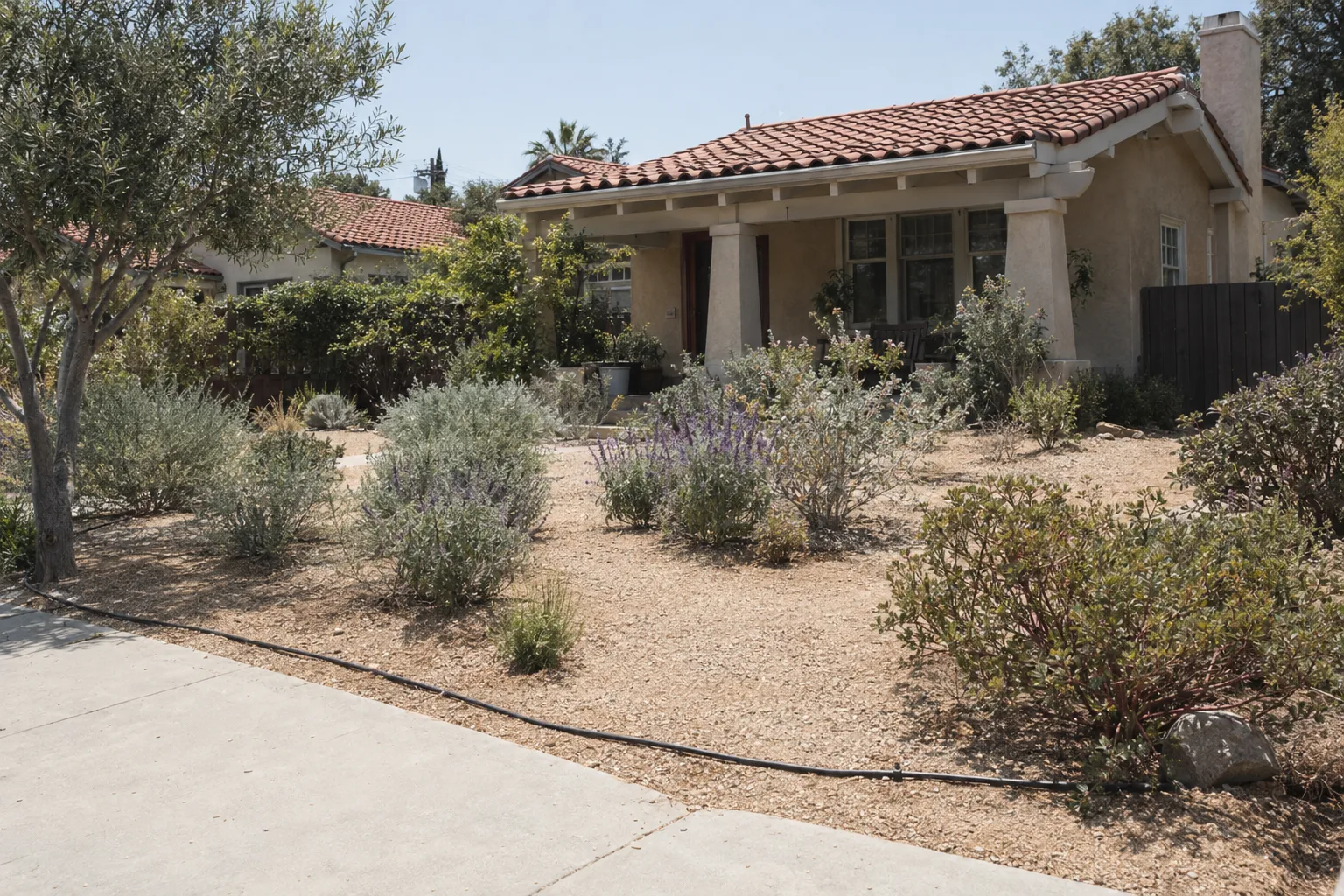
The Landscapers LA designs drought-tolerant landscapes matched to Arcadia's specific inland microclimate - the combination of high summer temperatures, low humidity, and clay-heavy soils that most plant palettes don't account for. Every species we select survives Arcadia's heat load. Every irrigation system we install is sized to what those plants actually need, not to what a standard spray head delivers.
Learn more about sod installation Los Angeles in Santa Monica
The result: a yard that looks intentional, holds up through dry summers, and drops your water bill in a measurable way.
Arcadia's Inland Climate Makes Water-Smart Planting a Practical Necessity
Arcadia sits in the San Gabriel Valley foothills, a climate zone where summer temperatures regularly exceed what coastal LA neighborhoods see by 10 degrees or more.
Learn more about artificial turf installation Los Angeles in Calabasas
That temperature gap matters for plant selection. Species that perform well in Santa Monica or Culver City can struggle in Arcadia's summer heat. The foothills near the Santa Anita area and the older residential neighborhoods along Baldwin Avenue and Duarte Road share the same basic challenge: turf grass demands more water here than anywhere closer to the coast, and standard irrigation schedules overshoot what drought-tolerant plants need once they're established.
Learn more about landscape design and installation LA
Arcadia also sits within the service territory of the Upper San Gabriel Valley Municipal Water District, which has offered turf replacement rebate programs. Those programs change year to year, but the general principle holds: removing irrigated turf and replacing it with qualifying low-water landscaping can offset a portion of your project cost. We keep current on what's active and can tell you what your property is likely to qualify for during your walkthrough.
Learn more about landscaping company Los Angeles
Our crews have worked Arcadia and the surrounding San Gabriel Valley communities since 2015. We know the soil conditions in the older estates east of Baldwin Avenue, the clay hardpan that shows up behind the newer construction near the 210 corridor, and the shade patterns that change what's viable on north-facing lots near the foothills.
Learn more about artificial turf installation Los Angeles in Burbank
That local knowledge shapes every plant recommendation we make.
An Arcadia Turf Removal Project That Shows How the Transition Works
Getting drought-tolerant landscaping right in Arcadia means accounting for the soil before you select a single plant.
Here's a job in Arcadia that's worth walking through.
The homeowner had a standard front lawn on a flat lot near Live Oak Avenue. They wanted the turf gone, the water bill down, and something that would look clean year-round without constant maintenance. Their first instinct was decomposed granite across the whole front yard with a few succulents dropped in. We redirected that.
First, we tested the soil. Arcadia's older residential lots frequently have compacted clay from decades of lawn irrigation. Clay holds water near the surface, which is fine for grass but can rot the crown roots of many drought-tolerant species if you plant directly into it without amendment or proper drainage planning. We amended the planting beds with a gritty native soil mix and raised the planting grade slightly to keep water moving away from root crowns.
Then we built a plant palette around three layers. A low canopy of desert willow at the property corner for height and structure. A mid-layer of Cleveland sage and autumn sage filling in around a drip irrigation grid sized for inland San Gabriel Valley heat loads. A ground layer of dymondia between the planting beds, which handles foot traffic, stays low, and requires almost no water once established.
Decomposed granite filled the non-planting areas, with a weed barrier underneath and a clean steel edging strip separating it from the planting beds. We installed a smart controller set to a weather-based ET schedule, not a fixed timer.
By the second summer, the plants had closed canopy in the mid-layer. The homeowner's water use in the front yard had dropped substantially compared to the turf year. And the yard required one maintenance visit every six to eight weeks instead of weekly mowing.
The real point: drought-tolerant landscaping isn't low-effort by default. It's low-effort once it's designed and installed correctly.
Choosing the Right Plants for Arcadia's Conditions
Plant selection for Arcadia's inland climate follows different rules than a coastal LA garden - heat tolerance and clay soil drainage drive the decisions.
We hear this assumption a lot: "Any California native will be drought-tolerant." That's mostly true, but not every California native handles the heat and soil conditions in the San Gabriel Valley equally well.
How we categorize plant options for Arcadia drought-tolerant projects:
We design the full plant palette, spacing, and drip layout in one integrated plan so every element works together from day one.
Our Standards for Drought-Tolerant Landscaping in Greater Los Angeles
Every plant, material, and installation method we use is selected for the specific conditions at your Arcadia or Greater LA property.
We don't apply a standard template across every job. Sun exposure, soil drainage, slope, existing irrigation infrastructure, and how the owner uses the space all shape the design.
- ✓All plant selections verified for heat tolerance in inland San Gabriel Valley conditions, not just general Southern California suitability
- ✓Soil drainage assessed before planting, clay amendments or raised planting grades applied where needed to prevent root rot
- ✓Drip irrigation installed with emitters matched to each plant's mature water requirement, not a one-size schedule
- ✓Smart controllers programmed to ET-based watering schedules, adjusted seasonally as plants establish and mature water needs drop
- ✓Weed barrier installed under decomposed granite areas with steel or aluminum edging to separate planting zones cleanly
- ✓Turf removal handled as part of the project, sod cut and hauled off-site before any new planting begins
- ✓Rebate eligibility review included in the walkthrough for properties within qualifying water district service areas
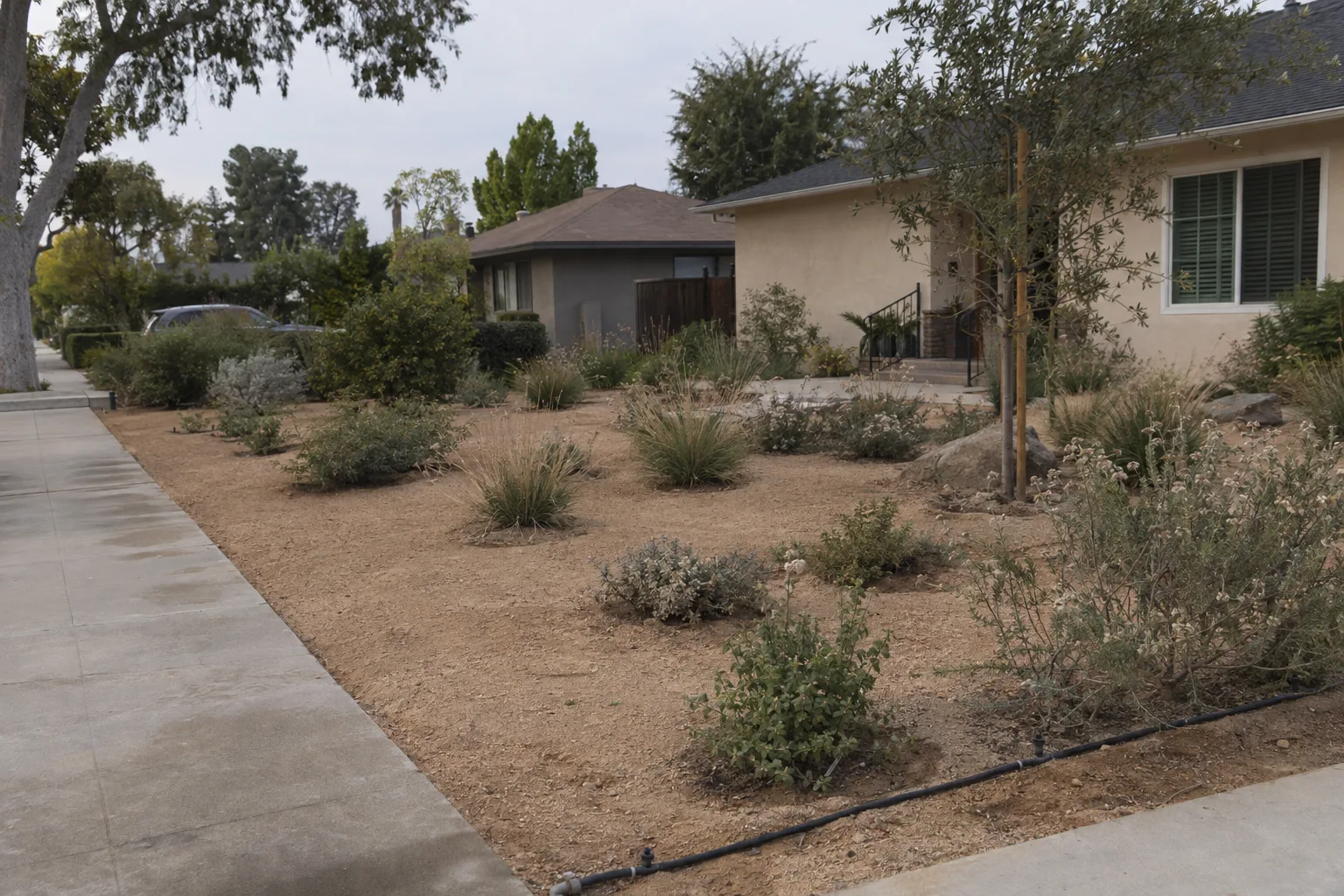
Our Drought-Tolerant Landscaping Process
From walkthrough to finished install, the process follows a clear three-phase structure built around your specific property.
Property Assessment & Design
We start on-site. We walk the full property, assess soil type, note sun and shade patterns across the day, and look at the existing irrigation setup. For Arcadia properties, we pay particular attention to drainage since clay subsoil is common and it changes which plants are viable and where.
We note any existing trees that create root competition zones, check water pressure at the meter to size the drip system correctly, and identify areas where grading adjustments will help water move away from structures. The assessment drives every decision that follows.
We flag turf or existing plants that need to come out before new planting can begin. Removal and installation typically happen in the same project sequence.
Turf Removal, Soil Prep & Installation
Turf removal comes first. Our crews cut sod mechanically and haul it off-site. Leaving cut turf on the surface to decompose introduces weed seed, so we don't do it. Once the ground is clear, we address soil as needed, amending planting beds and grading DG areas before any plant or irrigation work begins.
Drip irrigation goes in before planting on every job. Running lines around established plants damages roots and produces uneven coverage. We install the system first, test it at full pressure, then plant around it zone by zone.
Smart controller programming is the last step. We set initial schedules conservatively, because newly installed drought-tolerant plants need more water during the first 60 to 90 days of establishment than they will once roots are set. We adjust the schedule at the 90-day mark as part of the project.
Walkthrough, Documentation & Rebate Support
We also offer seasonal yard maintenance visits to keep plants shaped and drip emitters clear as the landscape matures, because an overgrown drought-tolerant garden still needs occasional attention to stay looking intentional.
Communities We Serve Across Greater Los Angeles
The Landscapers LA serves drought-tolerant landscaping clients throughout Greater Los Angeles, the San Gabriel Valley, and the Inland Empire.
We work regularly in Arcadia, Pasadena, Temple City, Monrovia, San Marino, Alhambra, and the broader San Gabriel Valley. Our territory also covers Long Beach, Torrance, Van Nuys, Burbank, Thousand Oaks, and the Inland Empire communities of Riverside, Rancho Cucamonga, and San Bernardino, including properties served by multiple water districts with active turf replacement programs.
If you're in the San Gabriel Valley or anywhere across Greater LA, we serve you.
Frequently Asked Questions
Will drought-tolerant landscaping actually lower my water bill in Arcadia?
Yes, but the reduction depends on what you're replacing and how the irrigation is set up. Replacing cool-season turf with a properly irrigated native plant bed typically cuts outdoor water use significantly after the plants establish, which takes about 60 to 90 days. The smart controller schedule we set at the 90-day mark reflects actual mature plant needs, which are much lower than establishment-period needs.
Can I qualify for a water rebate for turf removal in Arcadia?
Arcadia properties may fall within the Upper San Gabriel Valley Municipal Water District service area, which has offered turf replacement rebates. Rebate programs and amounts change, so we review current program availability during your walkthrough and tell you what your property is likely to qualify for before any work begins. Applications typically require before photos and documentation of the new plant palette.
What happens to the soil under old turf when you remove it?
Decades of lawn irrigation compact soil and can build up a clay-rich hardpan layer in Arcadia's older residential lots. We assess drainage before planting anything. In compacted areas, we amend the planting beds with a gritty native soil mix and may raise the planting grade slightly so water moves away from root crowns rather than sitting around them. Skipping this step is why many DIY drought-tolerant installs fail in year two.
How long does a full turf removal and replant project take?
A standard residential front yard in Arcadia, roughly 1,000 to 1,500 square feet, typically takes two to three days from turf removal through planting and irrigation install. Larger properties or jobs that require significant soil amendment or grading adjustments take longer. We give you a realistic timeline during the walkthrough, not an optimistic one.
Which communities do you serve for drought-tolerant landscaping?
We serve drought-tolerant landscaping clients across Greater Los Angeles and the Inland Empire, including Arcadia, Pasadena, Temple City, Monrovia, San Marino, Alhambra, Long Beach, Torrance, Van Nuys, Burbank, Thousand Oaks, Riverside, Rancho Cucamonga, and San Bernardino. We cover 50+ communities across the region.
Ready to Replace Your Lawn With Something That Actually Works?
Getting the plant palette, soil prep, and irrigation right the first time means a yard that looks good, uses less water, and doesn't need to be redone in three years.
Call us to schedule your property walkthrough. Our team is based at 465 N Rodeo Drive in Beverly Hills, with crews active across the San Gabriel Valley and Greater LA. Tell us your address and what you're hoping to replace. We'll walk it with you and give you a straight quote.
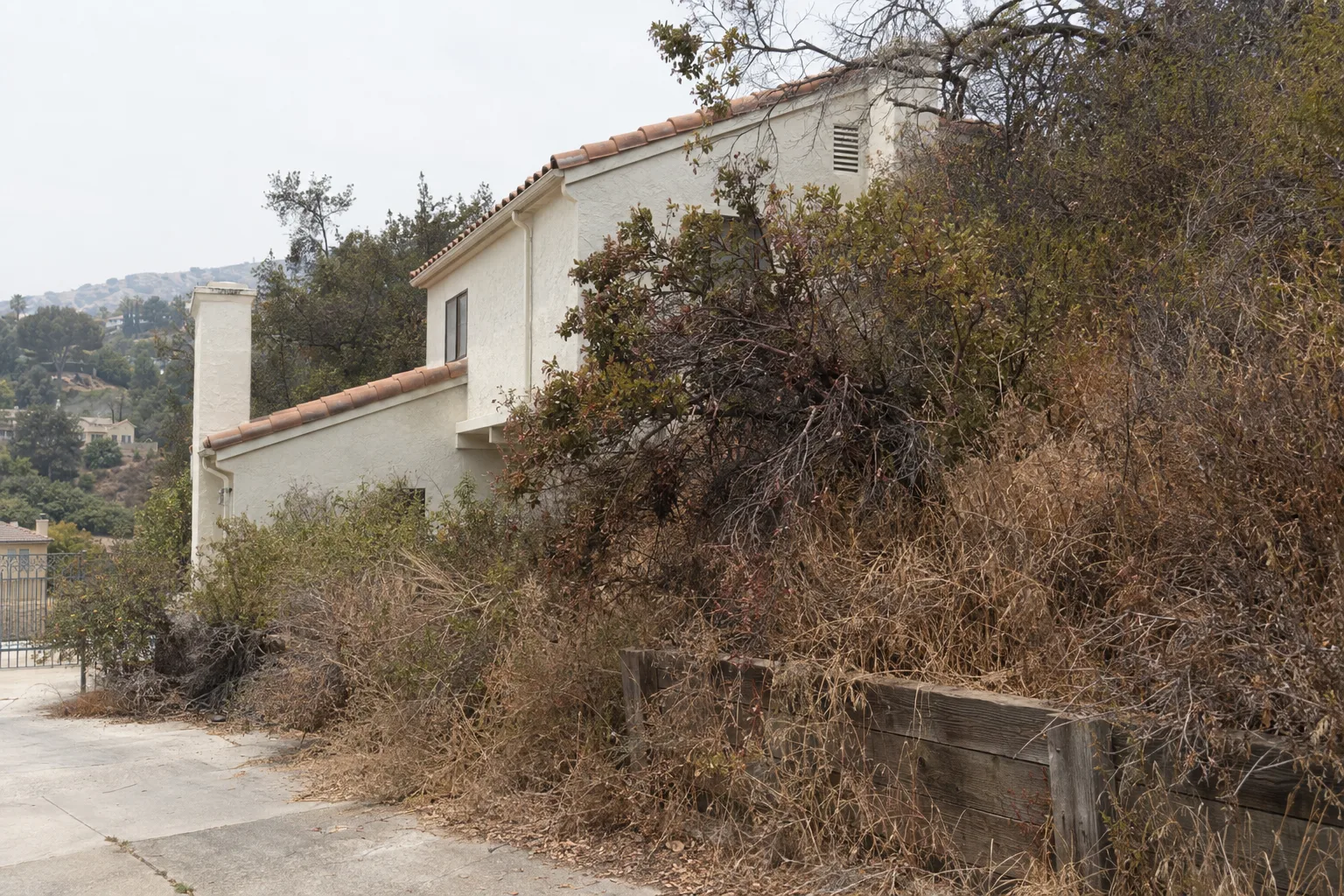
Before and after
Get a free, no-pressure quote
We walk the property, talk through options, and put a real number on paper.
From our blog
Straight answers on water rebates, plant selection, and what drought-tolerant landscaping actually costs in LA.
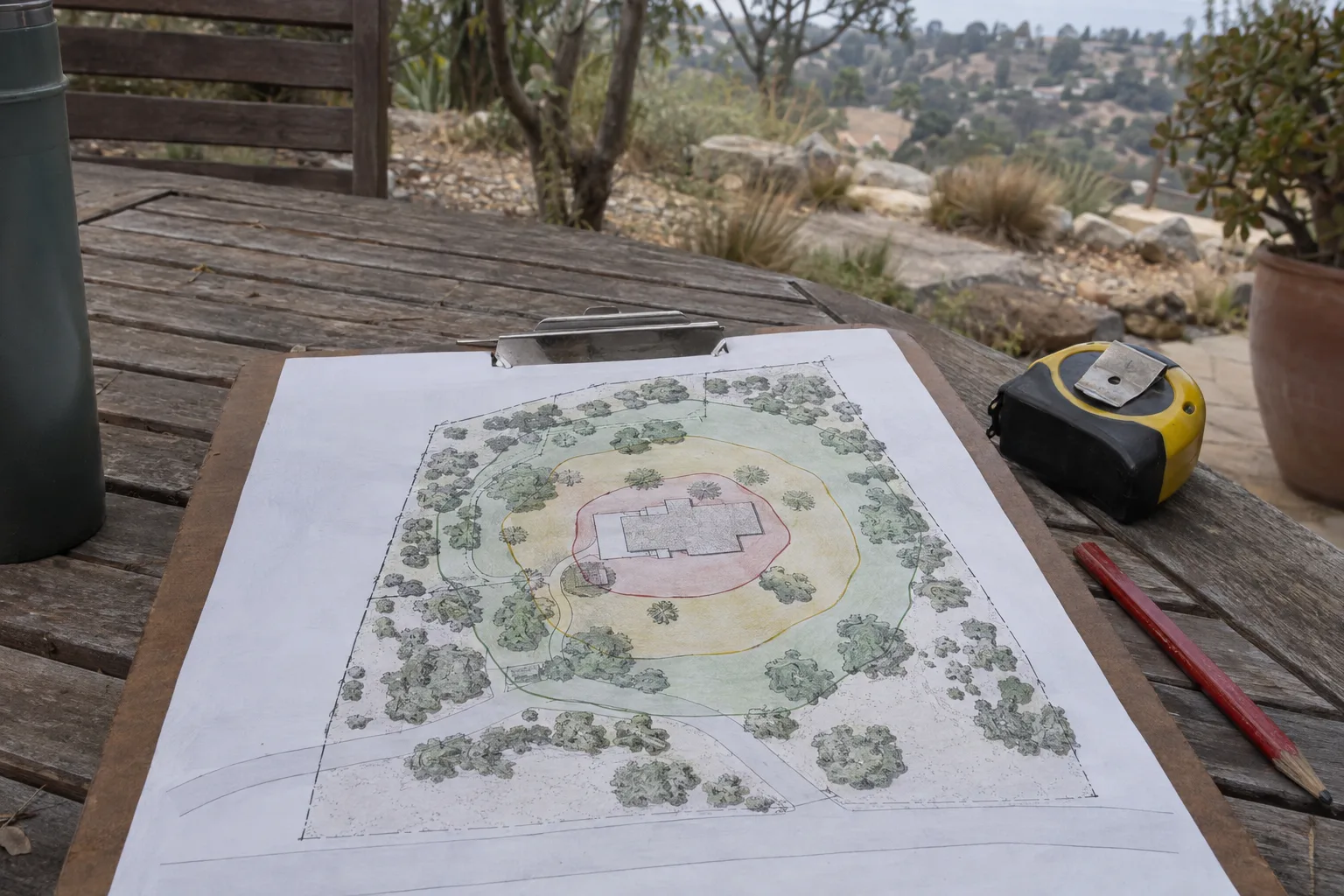
LA Water Rebate Programs Explained
Which turf replacement and irrigation upgrade rebates are active in Greater LA, what the application process looks like, and how to document your project to qualify.
Read the guide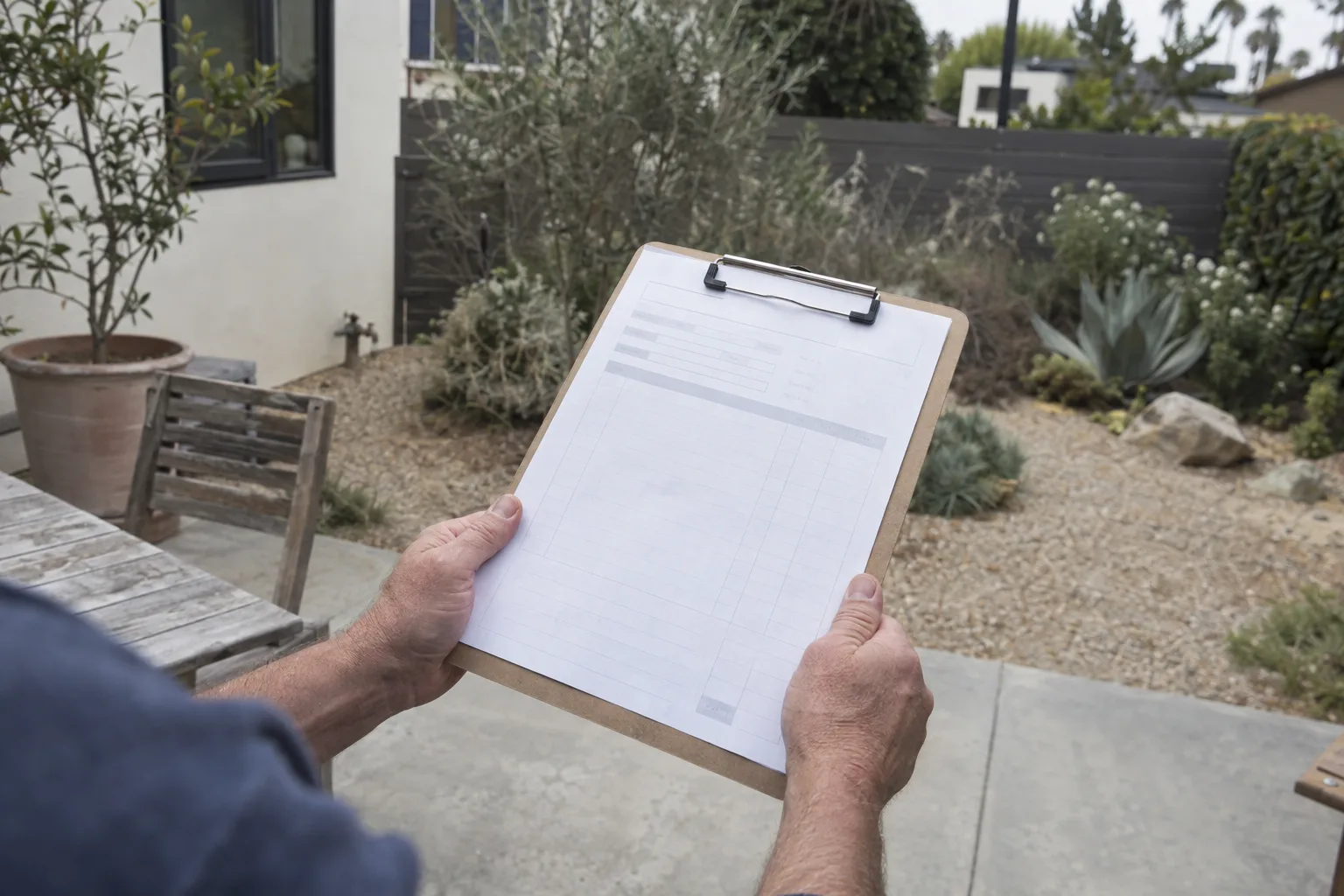
What Does Landscaping Cost in Los Angeles?
Real price ranges for turf removal, drought-tolerant installs, drip irrigation, and hardscape in Los Angeles, plus what actually moves the number on a quote.
Read the guide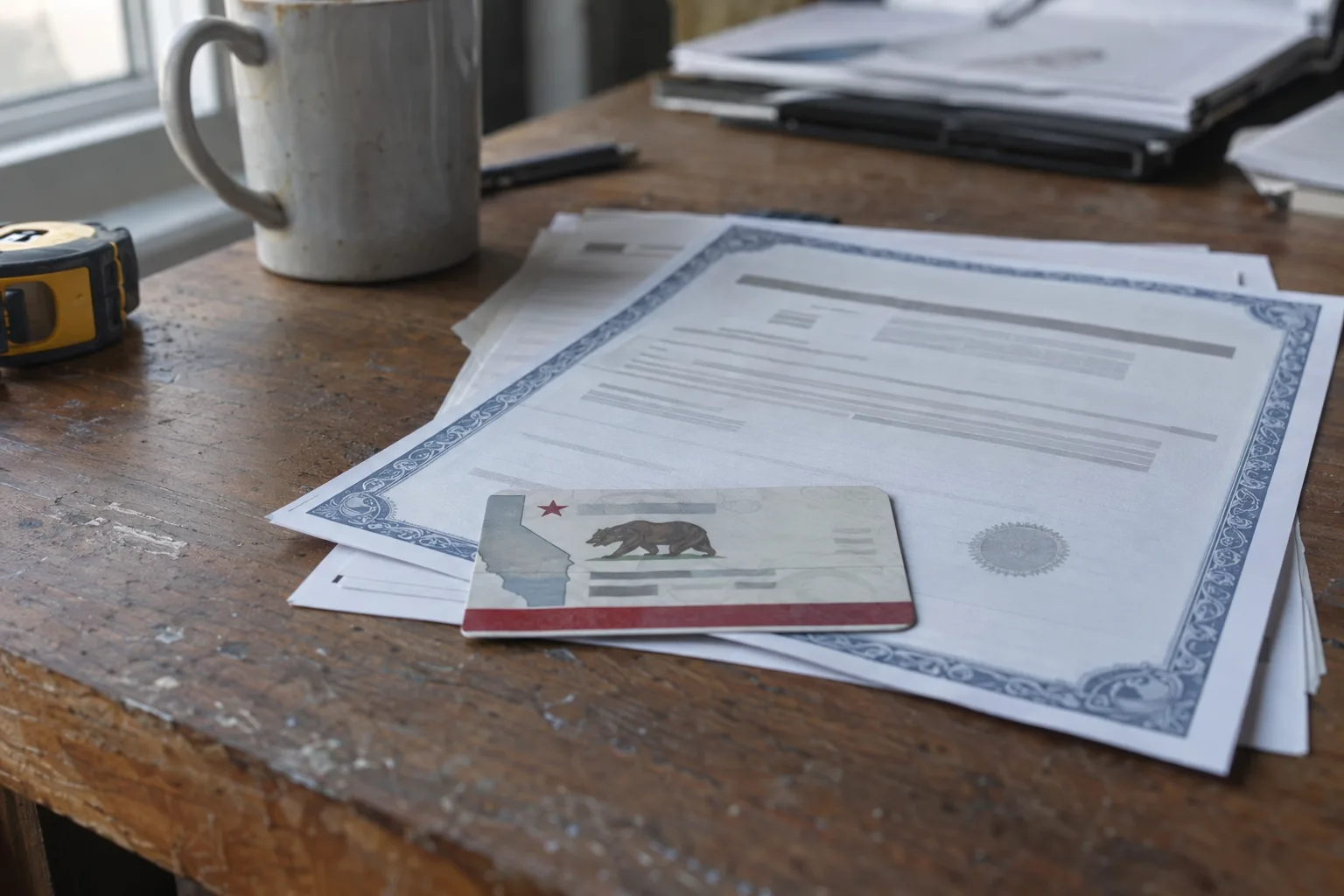
Licensed vs Unlicensed Landscapers
How to verify a CSLB licence, what insurance actually covers, and the questions to ask before you let anyone start work on your Los Angeles property.
Read the guide
Landscaping by LA Microclimate
Coastal, valley, hillside and Inland Empire properties need different plants, soil prep and irrigation. What changes across Greater LA, and why it matters for drought-tolerant design.
Read the guide