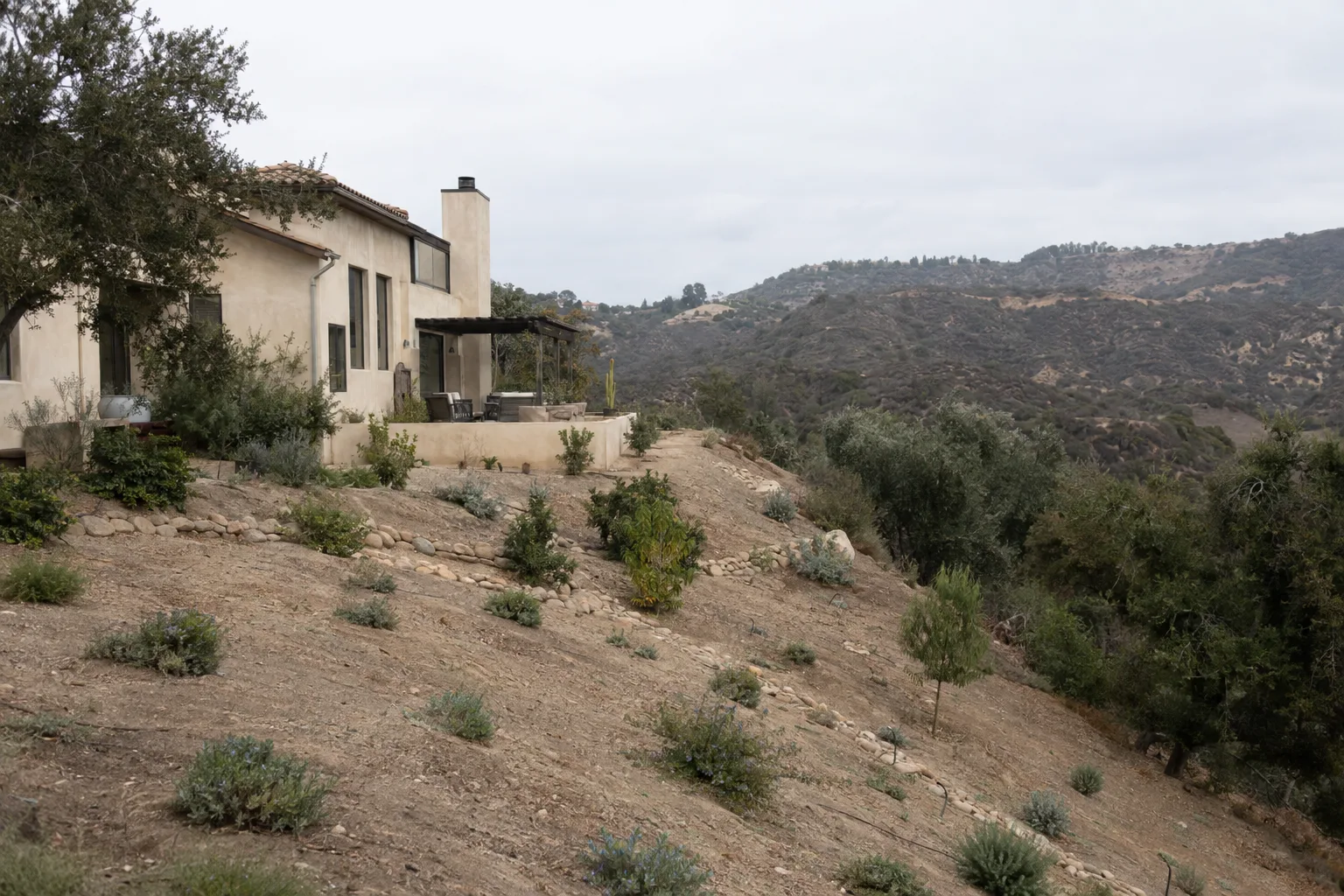
Low-Water Landscaping in Southern California
Low-water landscaping Southern California homeowners and businesses actually use. Drought-tolerant designs that cut your water bill and hold up through every dry season across Greater LA.
- Plant palettes matched to your specific LA microclimate
- Drip irrigation and smart controllers installed in the same project
- Rebate-eligible designs aligned with LADWP and local water authority programs
Get a free quote
Tell us where the property is and we will walk it with you.
What Low-Water Landscaping Actually Looks Like in Southern California
Low-water landscaping Southern California style is not a collection of rocks and cactus. Done right, it's a full landscape that uses a fraction of the water a conventional lawn demands.
Learn more about Pasadena landscape design in Van Nuys
Most LA homeowners switching away from turf are surprised by how much ground there is to cover. Removing the grass is only the first step. What goes in its place determines whether you get a yard that looks intentional or one that looks abandoned.
Learn more about smart irrigation controller Los Angeles in Culver City
That's where a proper design and installation process matters.
Learn more about sod installation Los Angeles in Santa Monica
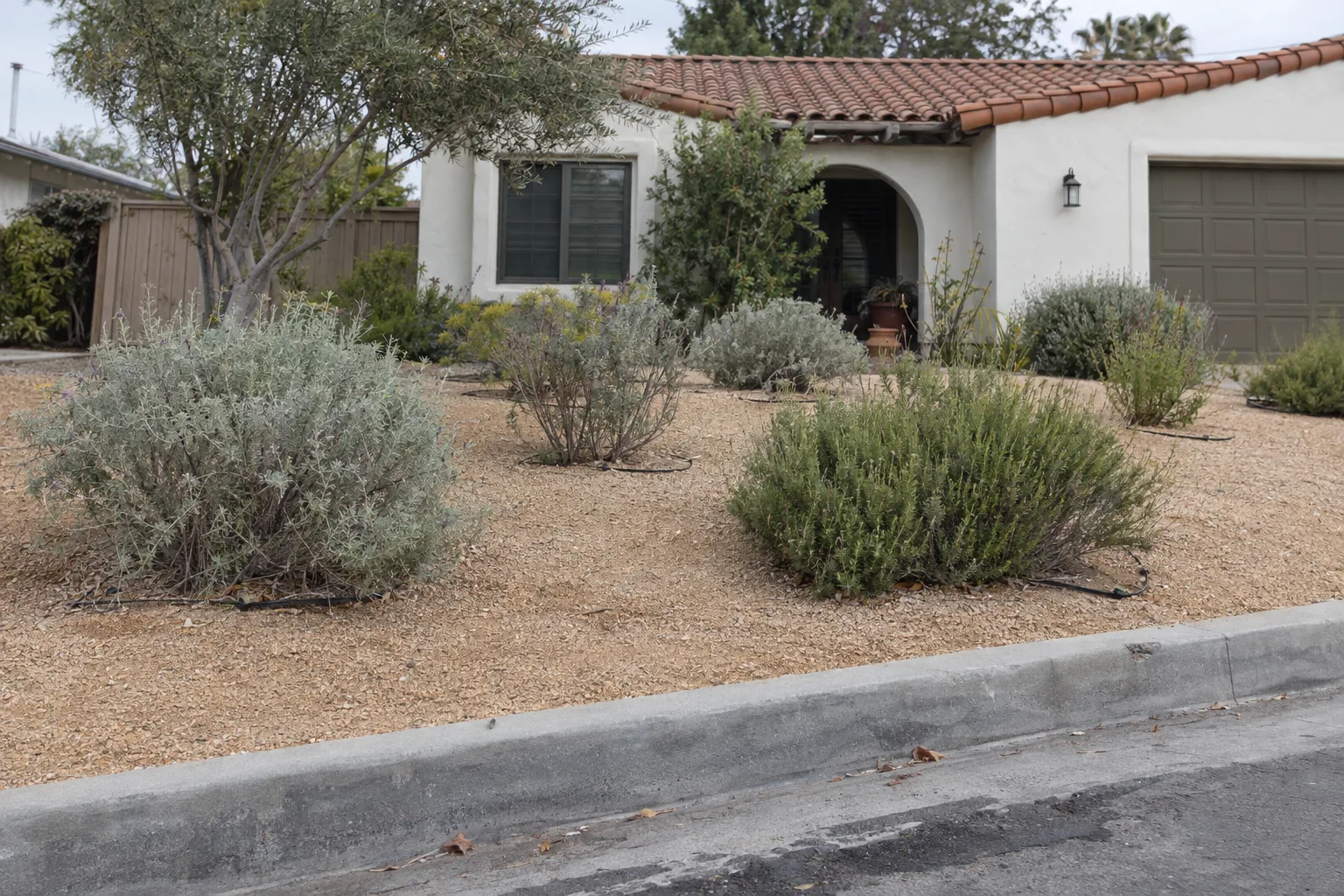
The Landscapers LA designs and installs low-water landscapes for residential and commercial properties across Greater Los Angeles. Every plant we select is matched to your specific site conditions: sun exposure, soil type, slope, and proximity to the coast or inland heat. Every irrigation system we install is sized and zoned for the actual water needs of what's in the ground.
Learn more about fire-safe landscaping defensible space LA
The result: a landscape that looks good year-round, costs less to water, and holds up through Southern California's dry summers without constant intervention.
Learn more about artificial turf installation Los Angeles in Calabasas
Why Standard Lawn Care Fails in the LA Climate
Conventional turf grass was designed for climates that get regular summer rain. Southern California does not get regular summer rain.
Learn more about landscape design and installation LA
LA receives most of its rainfall between November and March. The summer months are bone dry. A conventional lawn through July and August in the San Fernando Valley or the Inland Empire requires deep, frequent irrigation to stay alive, and even then it struggles under sustained heat. Water bills spike. The lawn browns at the edges. Pests and fungal issues follow.
Learn more about landscaping company Los Angeles
Low-water landscaping works with the Mediterranean climate pattern instead of against it. California native plants and drought-adapted species from similar climates, like Mediterranean herbs and South African groundcovers, evolved to go dormant or slow down through summer dry periods. Once established, typically after one to two full growing seasons, they need little to no supplemental irrigation beyond what rain provides.
Learn more about artificial turf installation Los Angeles in Burbank
The Los Angeles Department of Water and Power offers turf removal rebates precisely because the water savings are significant and measurable. Our designs are structured to qualify for those programs from the start.
That local detail matters more than most people expect when the first water bill after July arrives.
A Torrance Front Yard Project That Shows How the Process Works
Treating a low-water conversion as a soil and drainage problem first produces better plant establishment and lower long-term maintenance.
I want to walk you through a job in Torrance that illustrates how these projects actually go.
The homeowner had a roughly 1,200-square-foot front lawn that was costing them significant water each month through summer. They wanted to remove the turf and replace it with something that looked intentional, not just gravel with a few succulents dropped in. They'd received a quote from another company that proposed artificial turf. They weren't interested in that and called us instead.
When we arrived for the walkthrough, the first thing we looked at wasn't the plants. It was the soil. Torrance sits on clay-heavy coastal soil that drains slowly and compacts easily. That matters because drought-tolerant plants placed into compacted clay without amendment will struggle through their first two summers even if they're the right species on paper.
Before we planted anything, we laser-graded the site for drainage, amended the top 6 to 8 inches with a gypsum and compost mix to open up the clay structure, and installed a subsurface drip system zoned by plant water need.
Then we built the plant palette in three layers. A low groundcover of silver carpet and dymondia filled the areas between a mid-layer of lavender, salvia, and society garlic. Three existing olive trees anchored the rear border. All species tolerate the Torrance coastal microclimate: mild temperatures, occasional marine layer, and minimal frost risk.
We also addressed the path from the driveway to the front door. Decomposed granite with a stabilizer compound replaced the old concrete stepping stones. It compacts firm underfoot, handles the soil movement that clay causes seasonally, and matches the natural tones of the planting.
The project took four days from turf removal to final irrigation check. The homeowner submitted for an LADWP lawn-to-garden rebate the following week using our documentation package. Plant establishment was solid by the following spring.
The real lesson: low-water landscaping is a soil and drainage project first. The plants are the easy part.
Choosing the Right Plants for Your LA Microclimate
Southern California is not one climate. What thrives in Long Beach struggles in the Inland Empire, and vice versa.
We hear this question constantly: "Can I just pick plants from the nursery that say drought-tolerant on the tag?"
The short answer is: sometimes, but it depends heavily on where your property sits. Here's how we break down the main microclimate zones we design for across Greater LA:
We design for all three zones and the transitional areas between them. A single plan works for your actual site, not a generic Southern California average.
Our Standards for Low-Water Landscaping in Greater Los Angeles
Every plant, irrigation component, and ground cover material we install is selected for the specific conditions of your site and your water authority's rebate requirements.
We don't drop a catalog of drought-tolerant plants into every job. Each project gets a plant list built around your soil, your exposure, and your maintenance expectations.
- ✓All plant selections from California-native or drought-adapted species lists matched to your specific microclimate zone, not generic regional averages
- ✓Soil assessment and amendment completed before planting on clay-heavy or compacted sites to support root establishment
- ✓Subsurface or surface drip irrigation installed and zoned by plant water need, not area
- ✓Smart irrigation controllers compatible with LADWP and local water authority rebate programs, installed and programmed during the same project
- ✓Ground cover selection, decomposed granite, crushed rock, or organic mulch, matched to slope, foot traffic, and aesthetic goals
- ✓LADWP and local water authority rebate documentation prepared as part of every qualifying installation
- ✓Plant spacing and layering planned for mature size so the design holds its form without constant pruning
- ✓All debris and removed turf hauled off-site at project completion
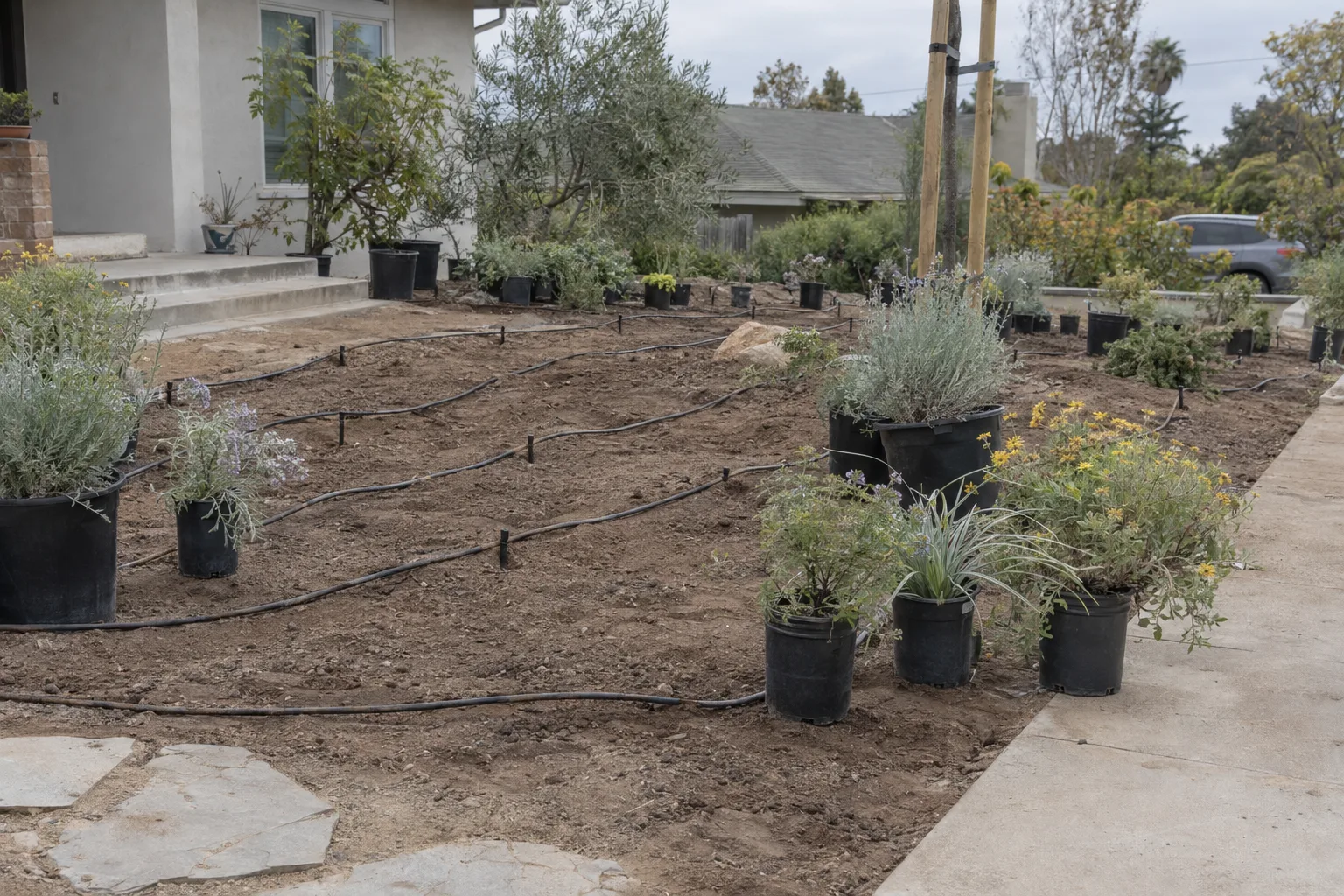
Our Low-Water Landscaping Process
From your first call to your first water bill after installation, our low-water conversion process follows a clear three-phase structure.
Property Assessment & Design
We start on-site. We walk the property, assess soil type and drainage, measure sun exposure by area, and review your current irrigation setup. That walkthrough is free and takes about 45 minutes for a typical residential lot.
We also check which water authority serves your address, LADWP, Metropolitan Water District, or a local municipal supplier, because rebate eligibility and requirements differ between them. Knowing that upfront shapes the design from day one.
We flag any existing turf or plants that need removal before new installation can begin. Turf removal and planting typically happen in the same project sequence so the site isn't left bare and unprotected between phases.
Turf Removal, Soil Prep & Installation
Turf removal comes first. We sod-cut the existing lawn, haul the material off-site, and assess the soil underneath before anything else goes in. Compacted or clay-heavy soil gets amended at this stage, not after plants are already in the ground struggling.
Irrigation goes in next, before plants, so lines and emitters are positioned precisely for each species' root zone. Then planting begins, groundcover layer first, mid-layer shrubs second, accent or structural plants last. The sequence matters because it lets us set spacing accurately as the canopy builds.
Decomposed granite, crushed rock, or specified organic mulch is applied after planting at the correct depth for the material, typically 2 to 3 inches for rock and 3 to 4 inches for organic mulch, to suppress weeds and reduce soil moisture loss between irrigation cycles.
Documentation & Ongoing Maintenance Support
Once installation is complete, we photograph every zone, document plant species and quantities, and prepare a rebate submission package for your water authority. We also offer seasonal yard cleanup visits during the first year to support plant establishment and catch any irrigation adjustments before summer stress arrives.
Communities We Serve Across Greater Los Angeles
The Landscapers LA installs low-water landscapes throughout Greater Los Angeles, the South Bay, and the Inland Empire.
We work regularly in Torrance, Long Beach, Pasadena, Burbank, Chatsworth, Van Nuys, Santa Monica, and Culver City. Our territory also covers Rancho Palos Verdes, Thousand Oaks, Santa Clarita, Simi Valley, and the Inland Empire communities of Riverside, Rancho Cucamonga, and San Bernardino, across more than 50 communities in total.
If your property is in Greater LA or the Inland Empire, we serve you.
Frequently Asked Questions
How long does it take for a low-water landscape to establish?
Most drought-tolerant plants need one to two full growing seasons before they can rely primarily on rainfall through summer. During the first year, drip irrigation is still running on a reduced schedule to support root development. By the second or third summer after installation, many California native plantings need little to no supplemental water beyond what rainfall provides.
Will I qualify for a turf removal rebate from LADWP?
LADWP offers a lawn-to-garden rebate for qualifying turf-to-drought-tolerant conversions. Eligibility depends on your service address being billed by LADWP, the square footage being converted, and the replacement material meeting their requirements. We check eligibility during the property walkthrough and prepare documentation as part of every qualifying installation. Other local water authorities across our service area have similar programs with their own criteria.
Can you handle irrigation upgrades as part of the low-water conversion?
Yes. Drip irrigation and smart controller installation is built into every low-water project we do. We size and zone the system for the actual water requirements of what's being planted, not a generic schedule. Smart controllers compatible with LADWP rebate programs are installed and programmed during the same site visit as planting.
What ground cover options work in place of grass?
The right ground cover depends on foot traffic, slope, and aesthetics. Decomposed granite works well for low-traffic areas and is rebate-eligible in most programs. Crushed rock handles heavier foot traffic and resists displacement better. Low-growing plant groundcovers like dymondia, silver carpet, or native sedges work where some green texture is wanted without turf water demand. We discuss options during the property walkthrough.
Which communities do you serve for low-water landscaping?
We serve properties across Greater Los Angeles, the South Bay, and the Inland Empire, including Torrance, Long Beach, Pasadena, Burbank, Chatsworth, Van Nuys, Santa Monica, Culver City, Rancho Palos Verdes, Thousand Oaks, Santa Clarita, Simi Valley, Riverside, Rancho Cucamonga, and San Bernardino. More than 50 communities in total across our active service area.
Ready to Start Your Low-Water Landscape?
Getting the design right from the start means better plant establishment, lower water bills, and a yard that holds its shape without constant work.
Call us to schedule your property walkthrough. Our team is based at 465 N Rodeo Drive in Beverly Hills, with crews positioned across Greater LA. Tell us your address and what you're working with now. We'll take it from there.
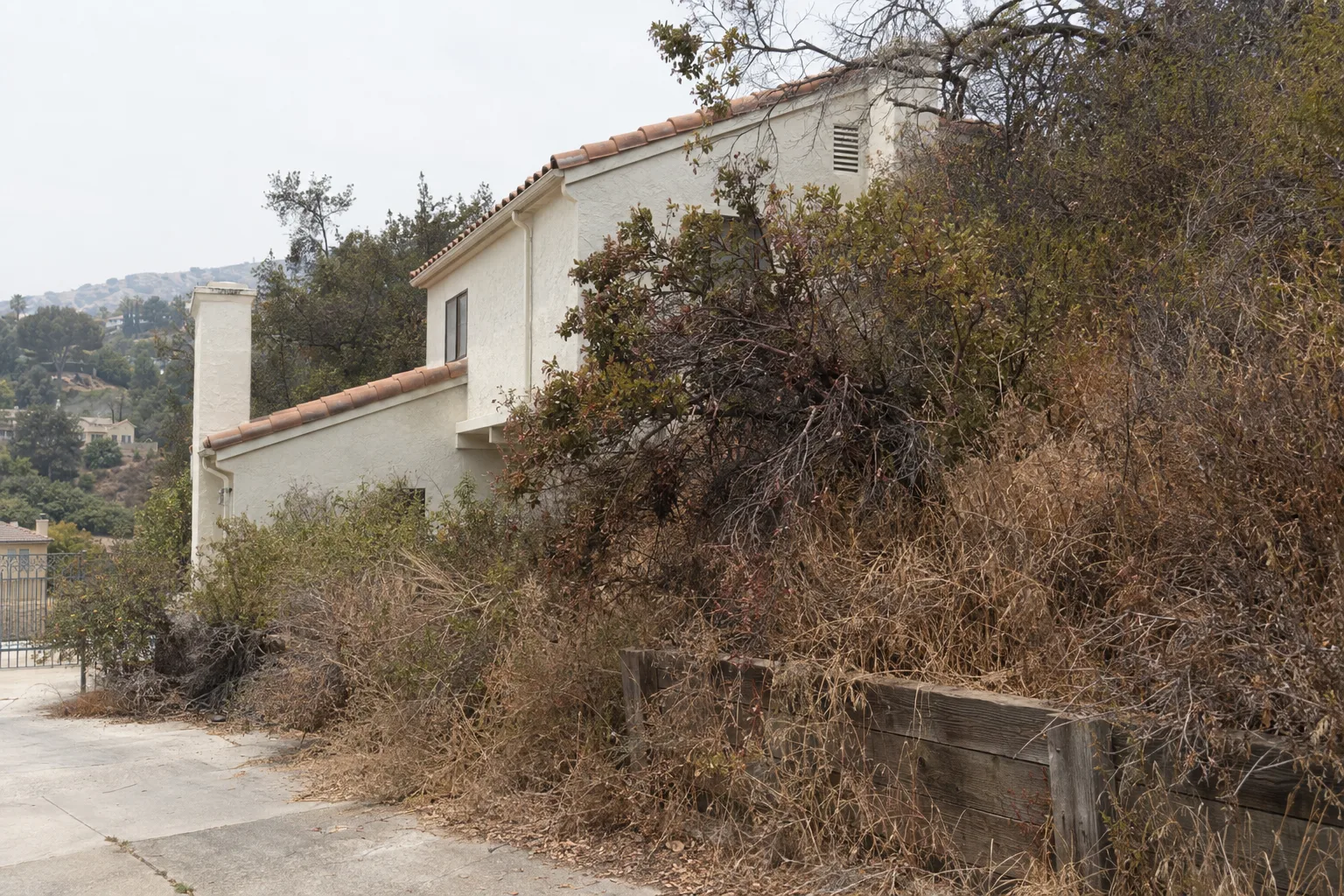
Before and after
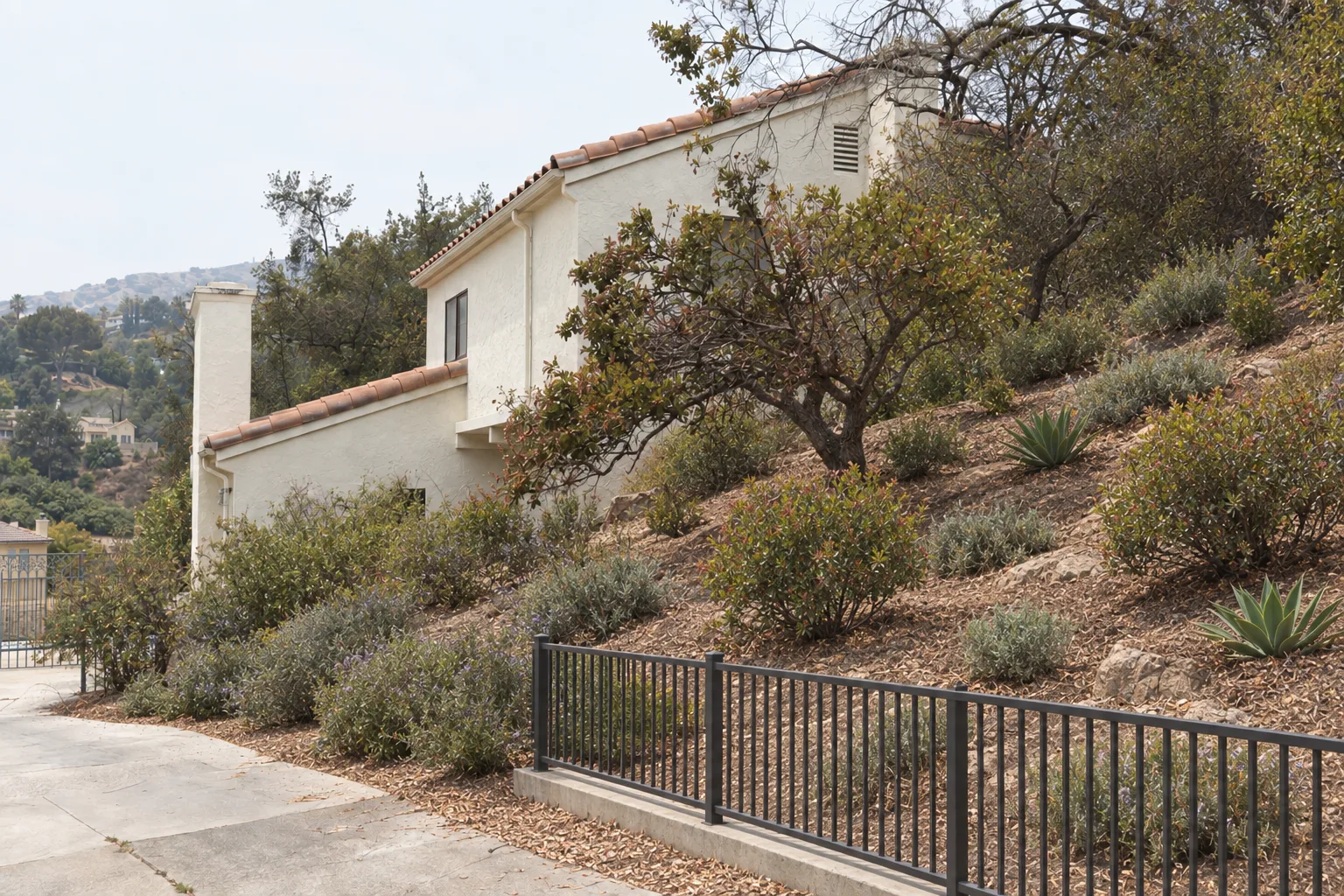
Get a free, no-pressure quote
We walk the property, talk through options, and put a real number on paper.
From our blog
Straight answers on what things cost, which rebates you qualify for, and why your lawn is doing that.
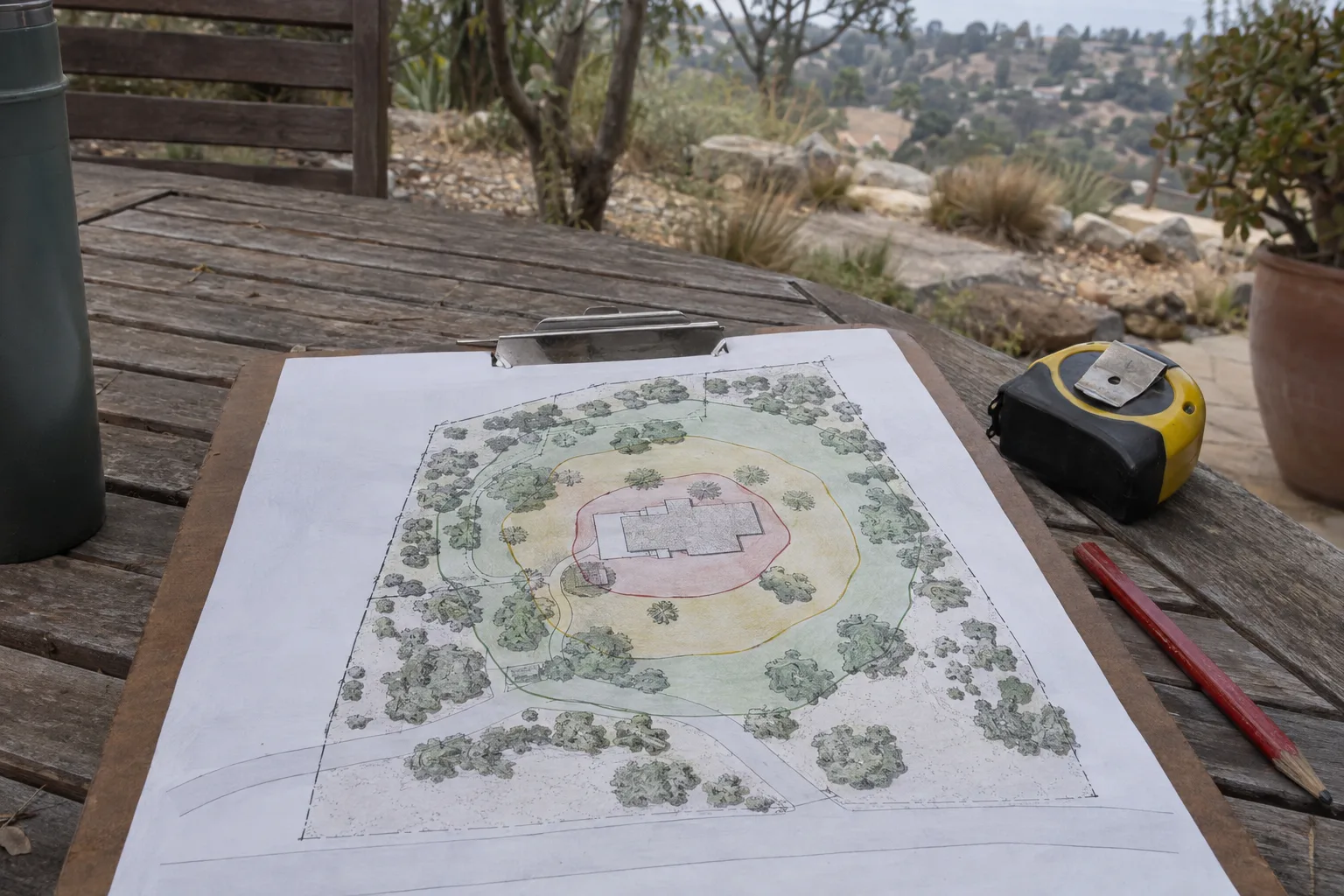
Irrigation Upgrades and Smart Controller Savings in LA
What drip irrigation and smart controllers actually save on your water bill in Los Angeles, plus how to qualify for LADWP rebates on new systems.
Read the guide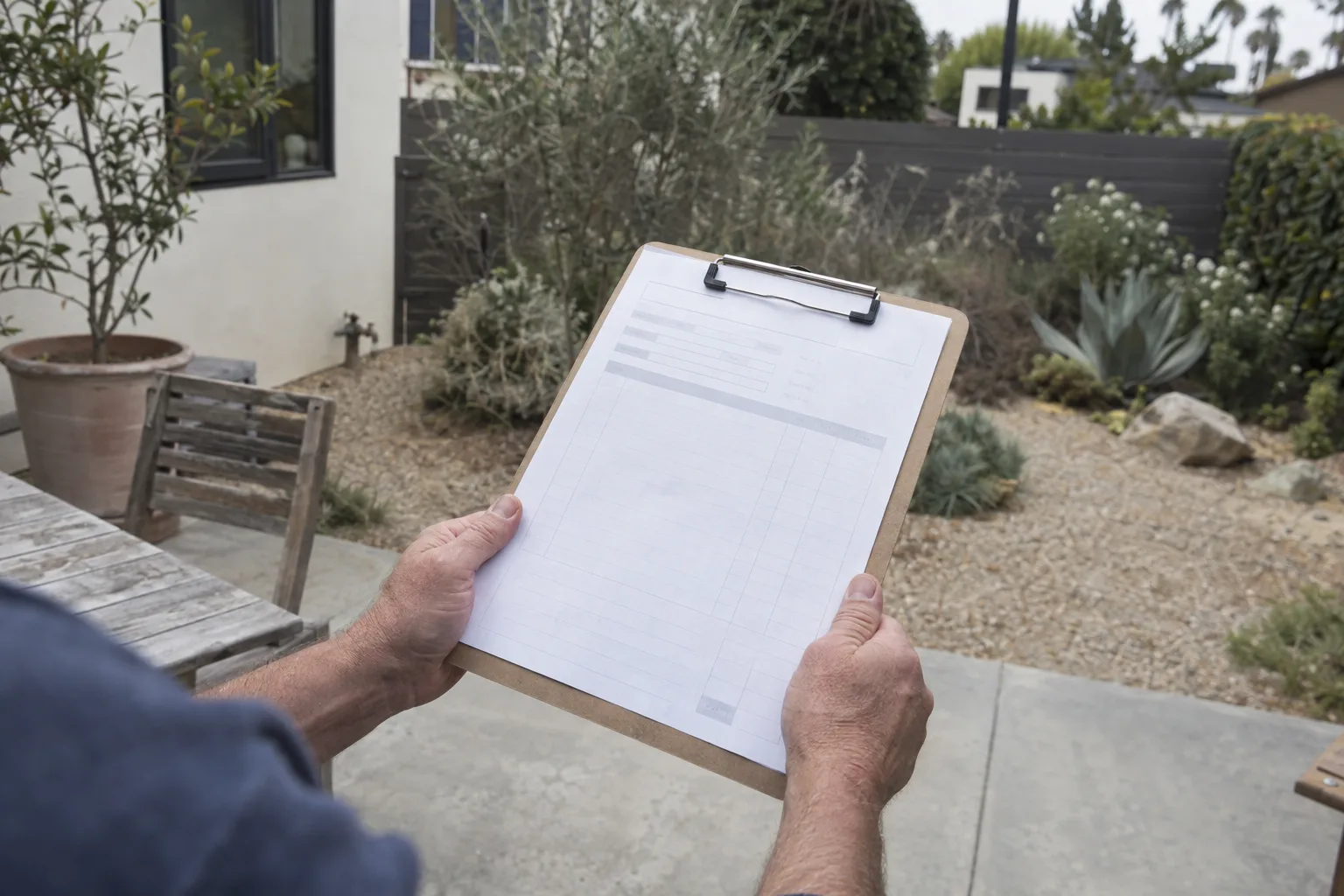
What Does Landscaping Cost in Los Angeles?
Real price ranges for lawn care, design, hardscape, irrigation and turf removal in Los Angeles, plus what actually moves the number on a quote.
Read the guide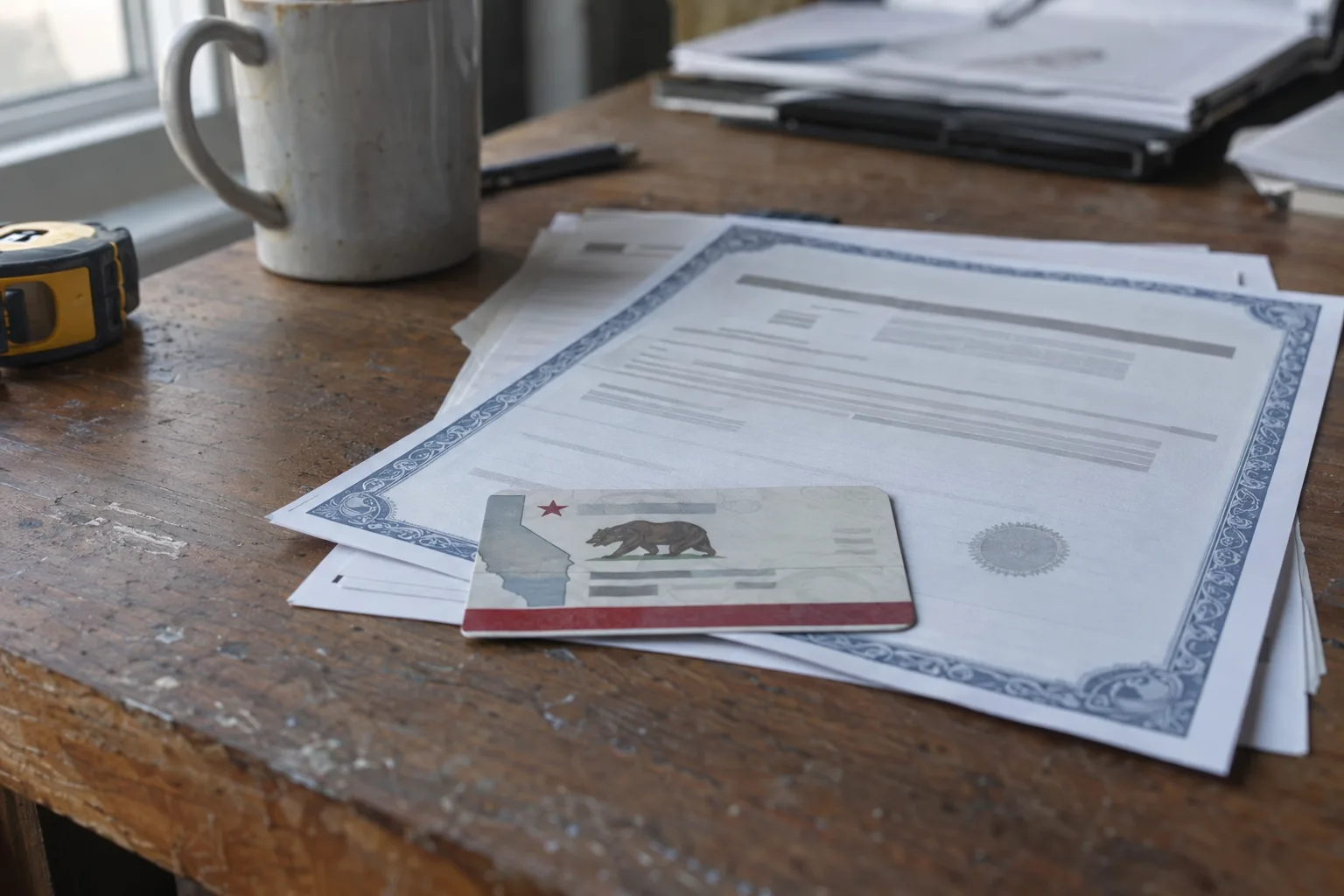
Licensed vs Unlicensed Landscapers
How to verify a CSLB licence, what insurance actually covers, and the questions to ask before you let anyone start work on your Los Angeles property.
Read the guide
Landscaping by LA Microclimate
Coastal, valley, hillside and Inland Empire properties need different plants, soil prep and irrigation. What changes across Greater LA, and why it matters.
Read the guide