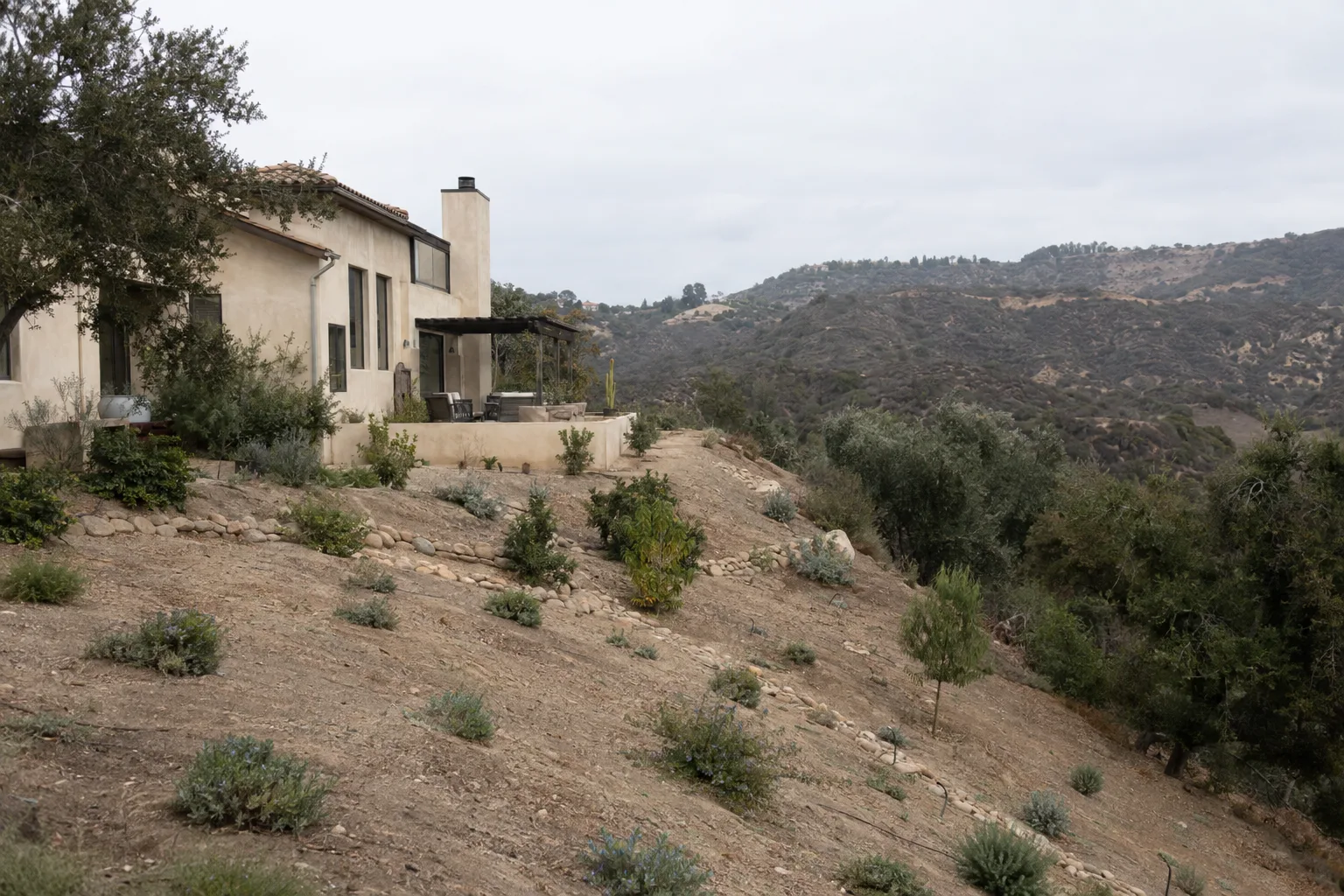
Fire-Safe Landscaping & Defensible Space in Los Angeles
Fire-Safe Landscaping & Defensible Space Services in Los Angeles. Compliant, slope-stabilizing landscapes designed for hillside properties across Greater LA.
- Zone 0, 1 and 2 clearance mapped to your actual parcel
- Fire-resistant planting that still holds the slope together
- Built to what CAL FIRE and your local inspector will look for
Get a free quote
Tell us where the property is and we will walk it with you.
Defensible Space Done Right Protects Your Home and Holds Your Hillside Together
Fire-safe landscaping Los Angeles homeowners actually need solves two problems at once: fire compliance and slope stability.
You receive the clearance notice. You remove what's flagged. Then you're left with exposed hillside soil, a yard that looks worse than before, and no guidance on what replaces it.
That's the gap we fill.
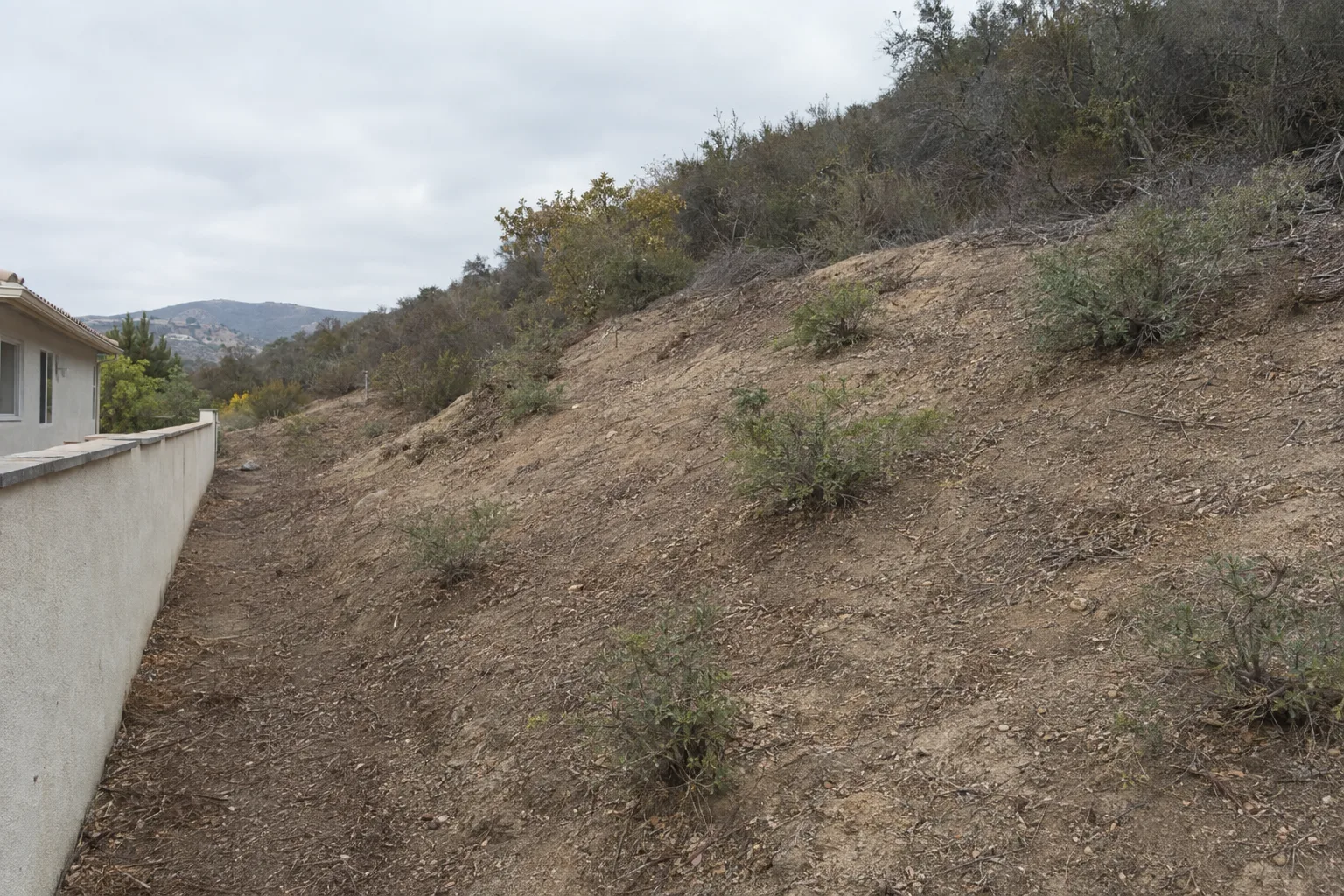
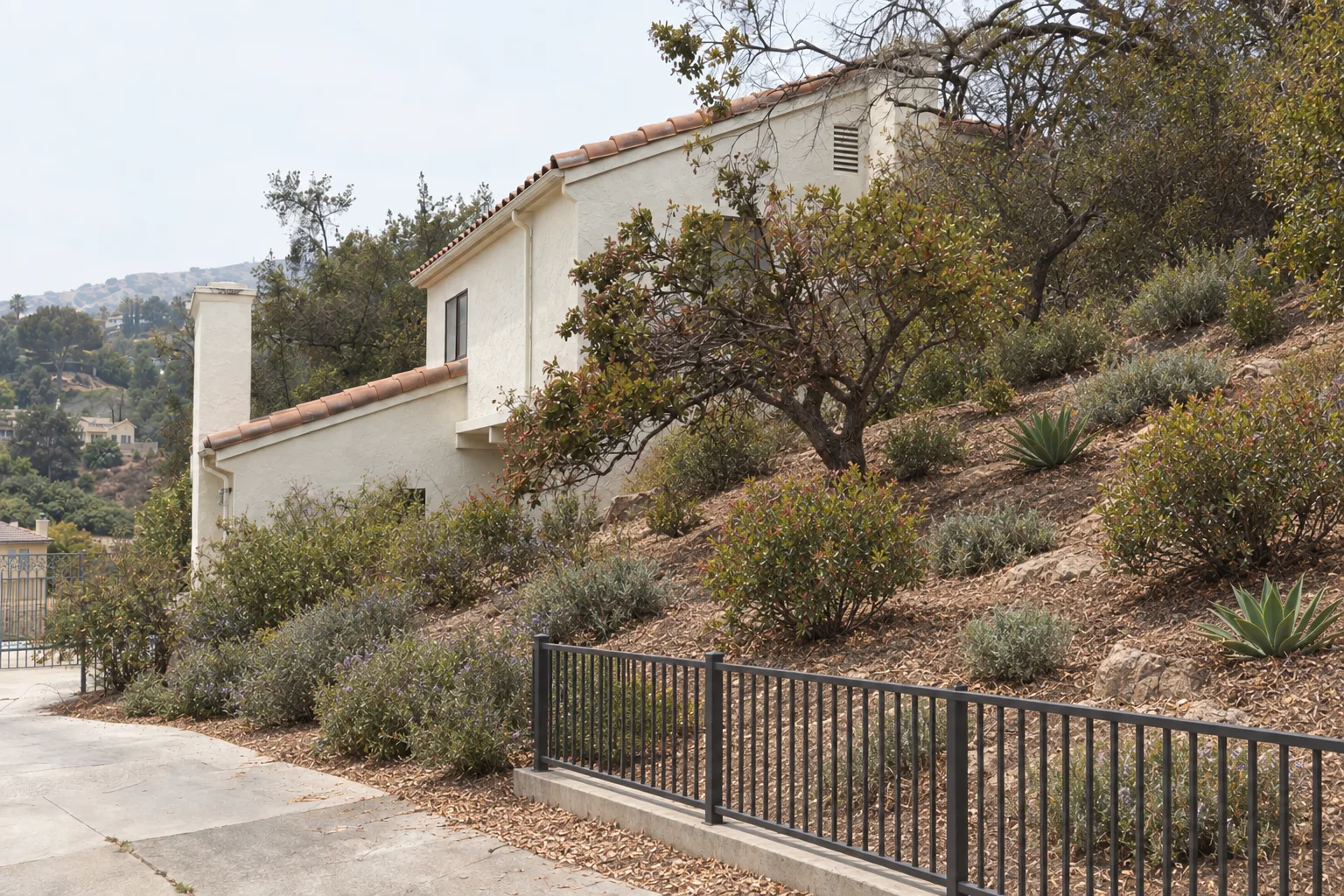
The Landscapers LA designs CAL FIRE-compliant defensible space, a buffer of fire-resistant, low-fuel vegetation between your structure and wildland vegetation, for hillside properties across Greater Los Angeles. Every plant we select meets CAL FIRE defensible space zone requirements. Every ground cover we install holds the slope when winter rains arrive.
The result: your property passes inspection, your hillside stays stable, and the cycle of clearance-and-bare-ground stops for good.
Los Angeles Hillside Properties Live at the Wildland-Urban Interface
Hillside Los Angeles sits squarely in WUI territory, and that changes everything about how you landscape.
The Wildland-Urban Interface, or WUI, is the zone where residential neighborhoods meet fire-prone wildland vegetation. In Los Angeles, that boundary runs through Chatsworth, Altadena, Rancho Palos Verdes, Santa Clarita, and Simi Valley, all communities within our active service area.
Here's what most homeowners don't realize about WUI landscaping: the rules are different depending on whether your property sits in a State Responsibility Area. An SRA, State Responsibility Area, is land where California, not your local fire department, manages wildfire prevention. Many hillside parcels in our service territory fall into SRAs, and CAL FIRE enforces their defensible space requirements directly.
Our crews have worked these specific neighborhoods since 2015. We know which parcels draw inspection activity, which slopes face the highest ember exposure, and which plant species thrive across the varied hillside and inland microclimate conditions in LA.
That local detail matters more than most people expect when fire season arrives.
A Chatsworth Hillside Project That Changed How We Think About Zone 1
Treating every slope as a soil problem first produces better defensible space outcomes, this Chatsworth project showed us why.
I'm going to walk you through a job in Chatsworth that stays with me.
The homeowner had received a CAL FIRE notice for the second year in a row. The previous season, they'd cleared everything on the slope, every shrub, every groundcover, down to bare dirt. It passed inspection in August. By February, after the first real rain event, about 40 feet of that slope had moved. Not dramatically, but enough to damage a retaining wall footer and push debris into the neighbor's yard.
When they called us, the instinct was to replant fast. We slowed that down.
First, we assessed the soil. Chatsworth hillsides often have decomposed granite over clay, it drains fast on top and holds water below, which is exactly the condition that triggers slippage. Before we planted anything, we installed erosion control netting on the steepest sections to stabilize the surface during establishment.
Then we built the plant palette around CAL FIRE Zone 1, the 0-to-30-foot cleared zone around the structure. Zone 1 rules require plants to be low-growing, widely spaced, and irrigated. We selected buckwheat, Cleveland sage, and a ground-hugging ceanothus variety. All California natives. All fire-resistant. All with root systems deep enough to hold slope.
We also addressed Zone 0, the immediate 0-to-5-foot ember-resistant zone around the structure. No mulch, no wood chips, no ornamental shrubs within that band. Decomposed granite at the base of the structure, with a concrete mow strip to separate it from Zone 1 planting.
The slope held through the following winter. CAL FIRE inspection came back clean. And the homeowner stopped getting repeat notices.
The real lesson: defensible space isn't a clearance job. It's a planting design problem.
Your Zone Map Is the Starting Point, Not the Finish Line
CAL FIRE's three zones are the compliance floor, the right plant palette turns compliance into a durable landscape.
We hear this question a lot: "If I just clear everything, won't that automatically comply?"
CAL FIRE Defensible Space Zones, what each one means and requires:
We design all three zones in a single integrated plan so your property works as a complete system, compliant at every layer.
Our Standards for Fire-Safe Landscaping in Greater Los Angeles
Every plant, material, and installation method we use meets CAL FIRE standards for the specific zone it occupies.
We select the right compliant species for each property's specific conditions, slope orientation, soil drainage, and sun exposure all drive those choices.
- ✓All plant selections from California-native or fire-resistant species lists, no high-resin, high-oil ornamentals in compliance zones; we specialize in drought-tolerant plants suited for LA hillsides that meet both fire-resistance and water-efficiency requirements
- ✓Zone 0 always finished with non-combustible ground cover, decomposed granite or coarse gravel, never bark or wood chip mulch
- ✓Drip irrigation installed in Zone 1 to meet the irrigated requirement and reduce plant moisture stress during fire season
- ✓Slope stabilization assessed before planting on grades over 15%, erosion control netting or biodegradable blankets used during plant establishment
- ✓All debris cleared from the property after installation, no green waste left on-site
- ✓Post-installation documentation provided for HOA and fire authority records
- ✓Plant spacing follows zone-specific density requirements, not general aesthetic spacing guidelines
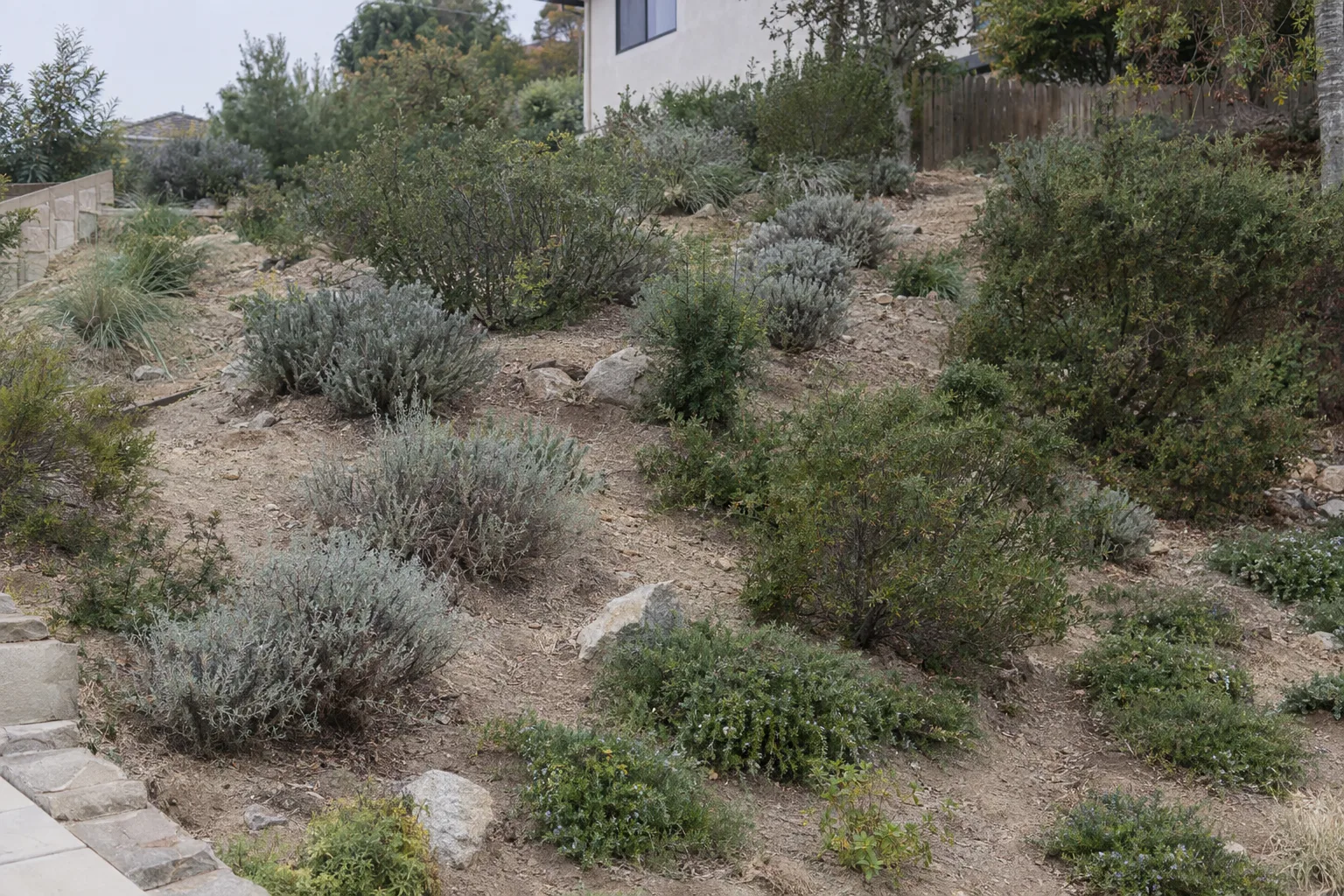
Our Fire-Safe Landscaping Process
From your first call to your final inspection, our defensible space process follows a clear three-phase structure.
Property Assessment & Zone Mapping
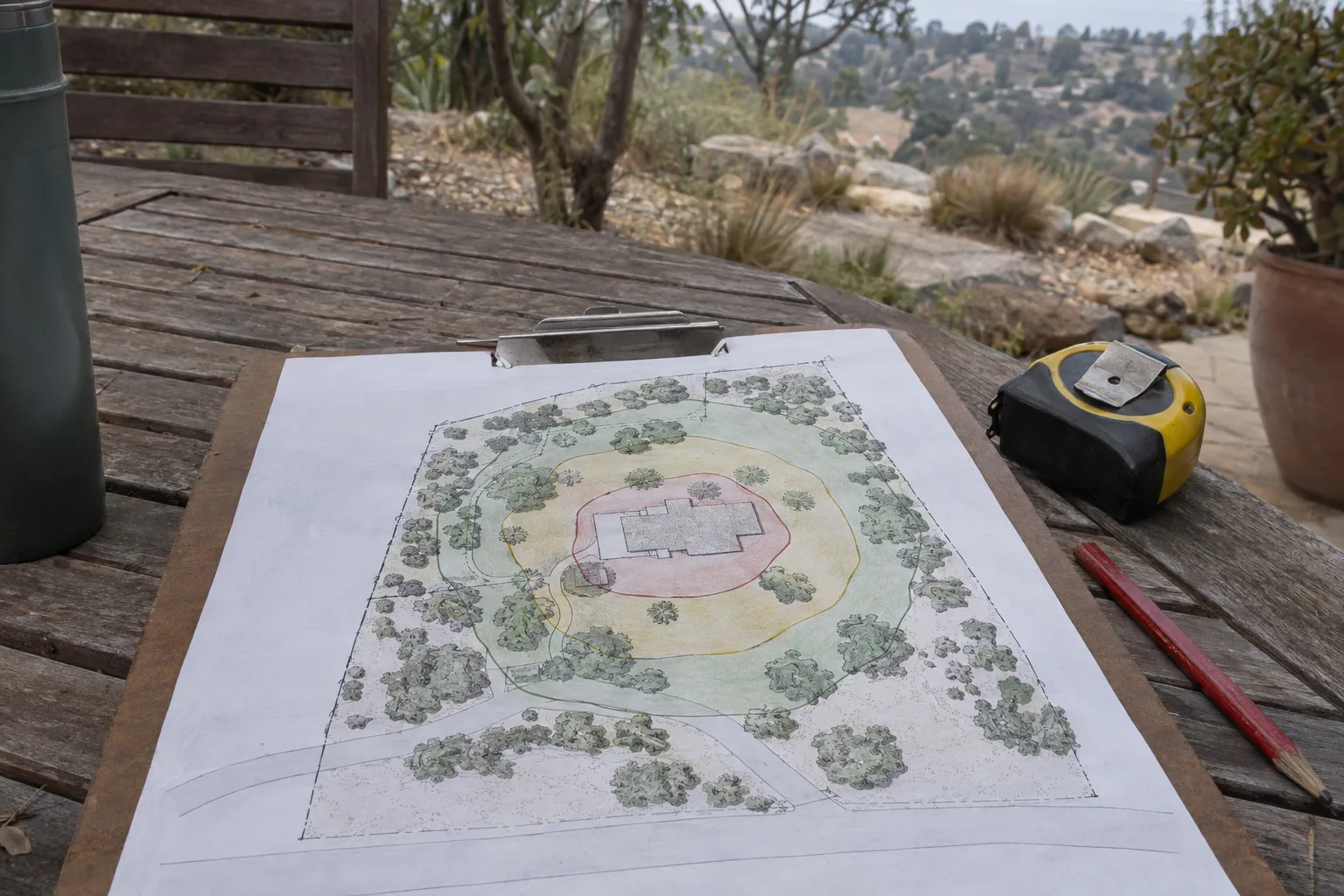
We start on-site. We walk your property boundaries, identify your structure's setback from wildland vegetation, and map your three CAL FIRE zones, the Ember-Resistant Zone, Zone 1, and Zone 2, to your actual topography.
We also assess slope grade, soil type, and existing vegetation. Altadena and Rancho Palos Verdes properties often have entirely different soil profiles within a few hundred feet of each other. The assessment drives every plant and material decision that follows.
We flag any vegetation that must be removed before planting can begin. In most cases, clearance and installation happen in the same project sequence.
Plant Selection, Removal & Installation
Clearance comes first. Our tree trimming and clearance for fire compliance addresses flagged species zone by zone, with all green waste hauled off-site. We never leave debris on a slope, drying plant material is exactly the fuel load you're working to eliminate.
Slope stabilization goes in next on grades that need it. Then planting begins, zone by zone, from the structure outward. Drip irrigation is installed for Zone 1 plantings in the same phase, not as an afterthought.
Plant selection is specific to your slope orientation, sun exposure, and soil drainage. A south-facing Chatsworth slope gets a different palette than a shaded canyon wall in Santa Clarita.
Documentation & Ongoing Compliance Support
We also offer ongoing seasonal yard cleanup before fire season to keep Zone 1 and Zone 2 compliant as plants grow, because overgrown compliant plants eventually become non-compliant ones.
Communities We Serve Across Greater Los Angeles
The Landscapers LA serves fire-risk and hillside communities throughout Greater Los Angeles, the South Bay, and the Inland Empire.
We work regularly in Chatsworth, Altadena, Rancho Palos Verdes, Santa Clarita, Simi Valley, Pasadena, and Burbank. Our territory also covers Long Beach, Torrance, Van Nuys, Thousand Oaks, and the Inland Empire communities of Riverside, Rancho Cucamonga, and San Bernardino, including properties within designated State Responsibility Areas across LA County.
If you're in a hillside or WUI community, we serve you.
Frequently Asked Questions
Does clearing everything on my slope automatically make me compliant?
No. Clearance removes fuel, but bare soil on a slope creates erosion, weed regrowth, and repeat clearance cycles. CAL FIRE's Zone 1 guidelines encourage appropriately spaced, irrigated, low-fuel vegetation. Bare ground is not the goal. We design a compliant plant palette that also stabilizes your slope.
What are the three CAL FIRE defensible space zones?
Zone 0 is the Ember-Resistant Zone (0-5 ft) around your structure with no combustible mulch or plants touching the building. Zone 1 is the Lean, Clean & Green Zone (0-30 ft) with widely spaced, irrigated, low-resin vegetation. Zone 2 is the Reduced Fuel Zone (30-100 ft) where brush and trees are spaced to prevent fire climbing from ground to canopy. We design all three in a single integrated plan.
Can you handle slope stabilization along with fire compliance?
Yes. Slope stabilization is assessed before planting on grades over 15%. We install erosion control netting or biodegradable blankets during plant establishment, and select California-native species with root systems deep enough to hold the hillside. Defensible space and slope stability are solved together, not separately.
Do you provide documentation for my HOA or fire authority?
Yes. Once installation is complete, we photograph the finished zones and prepare a plant-species summary you can present to your fire authority or HOA. If your inspection is scheduled, we can coordinate our timeline to have your property ready.
Which communities do you serve for fire-safe landscaping?
We serve fire-risk and hillside communities across Greater Los Angeles, the South Bay, and the Inland Empire, including Chatsworth, Altadena, Rancho Palos Verdes, Santa Clarita, Simi Valley, Pasadena, Burbank, Long Beach, Torrance, Van Nuys, Thousand Oaks, Riverside, Rancho Cucamonga, and San Bernardino, including properties within designated State Responsibility Areas.
Ready to Meet Your CAL FIRE Requirements?
Getting your defensible space right the first time means fewer clearance notices, a stable slope, and real peace of mind going into fire season.
Call us to schedule your property assessment. Our team is based at 465 N Rodeo Drive in Beverly Hills, with crews positioned across the Greater LA area. Tell us your address and whether you've received a clearance notice. We'll take it from there.
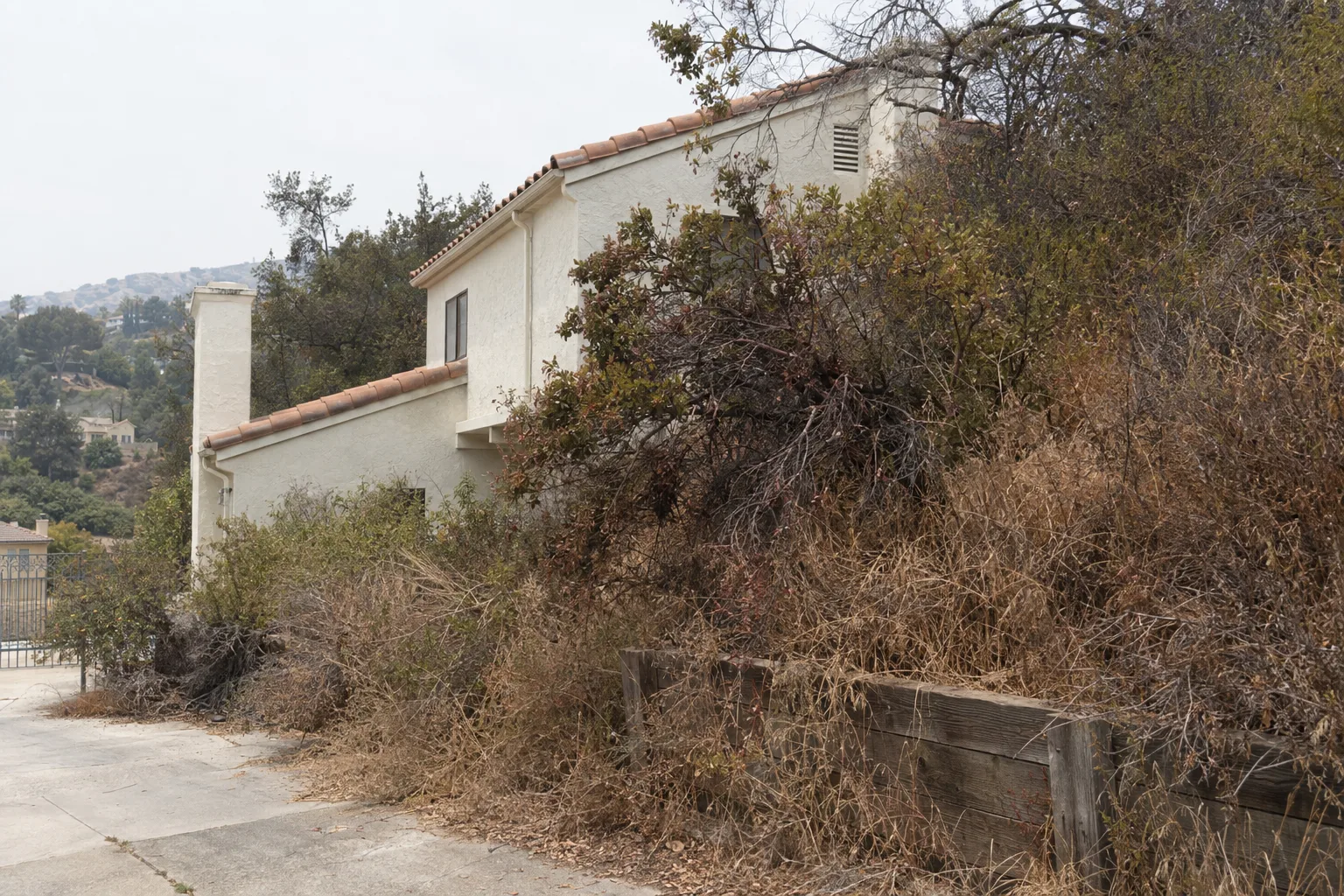
Before and after
Get a free, no-pressure quote
We walk the property, talk through options, and put a real number on paper.
From our blog
Straight answers on what things cost, which rebates you qualify for, and why your lawn is doing that.
CAL FIRE Defensible Space Rules
Zone 0, Zone 1 and Zone 2 explained for Los Angeles properties: what to clear, what to plant, and how inspections work in high fire hazard severity zones.
Read the guide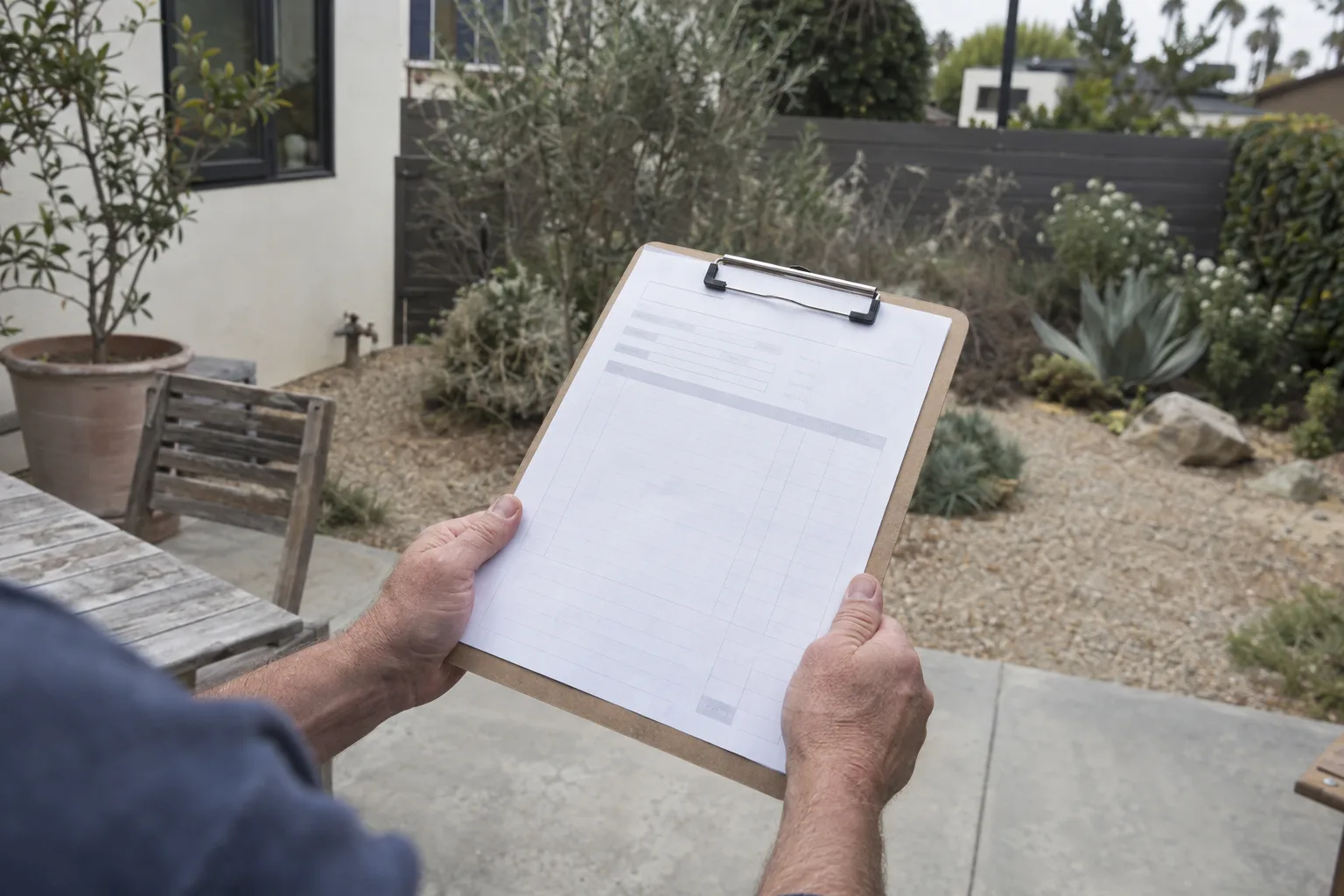
What Does Landscaping Cost in Los Angeles?
Real price ranges for lawn care, design, hardscape, irrigation and turf removal in Los Angeles, plus what actually moves the number on a quote.
Read the guide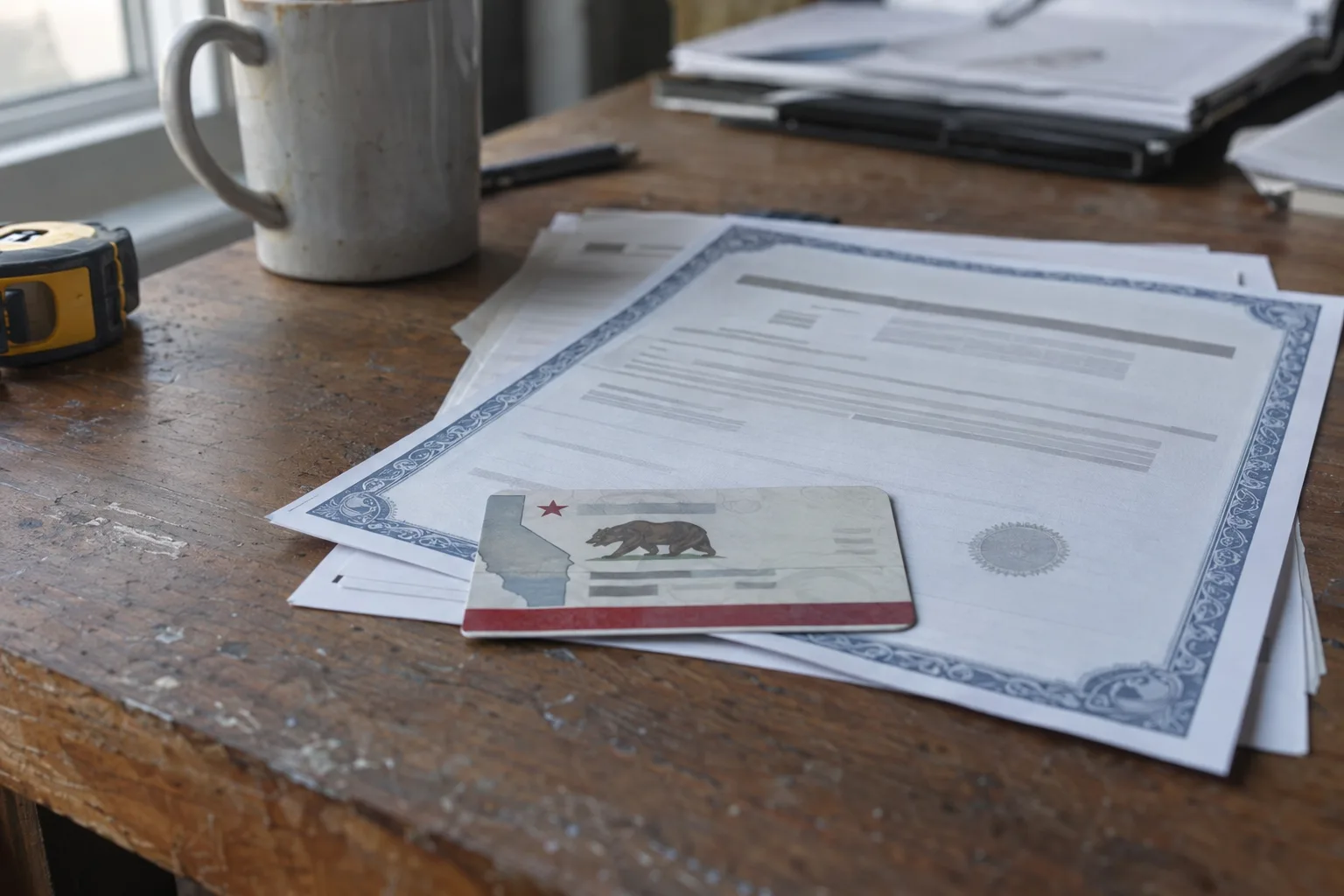
Licensed vs Unlicensed Landscapers
How to verify a CSLB licence, what insurance actually covers, and the questions to ask before you let anyone start work on your Los Angeles property.
Read the guide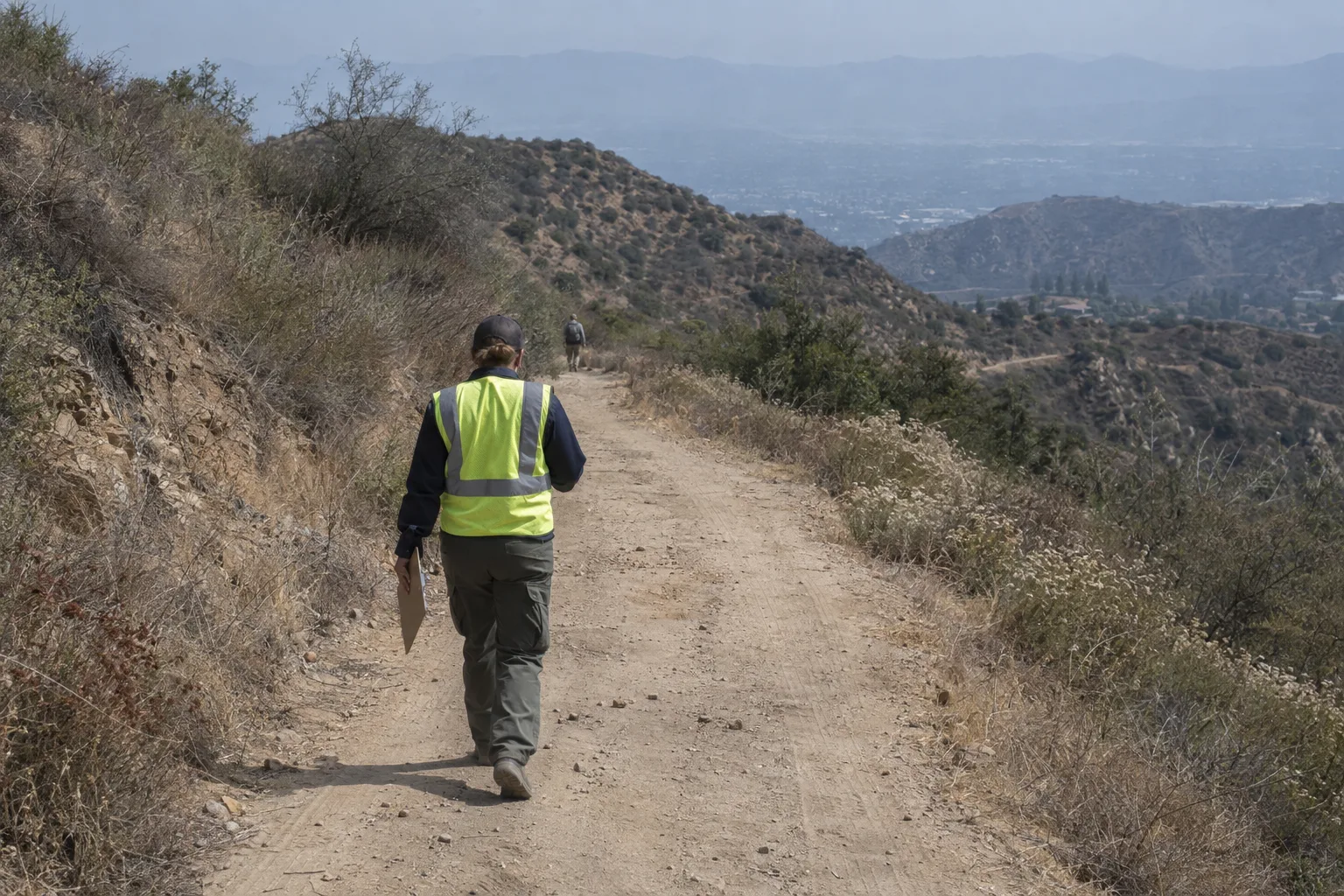
Landscaping by LA Microclimate
Coastal, valley, hillside and Inland Empire properties need different plants, soil prep and irrigation. What changes across Greater LA, and why it matters.
Read the guide